Key Takeaways
A lockout or broken key can become a serious disruption when it happens after hours. These points explain what to expect from 24/7 services in Oahu and how to choose help with confidence.
- Emergency locksmiths can assist with homes, businesses, and vehicles.
- Lost keys, broken locks, and break-ins may require immediate attention.
- Mobile technicians can often complete entry, repair, or key work on-site.
- Non-destructive methods should be attempted whenever the lock allows.
- Licensing, insurance, clear pricing, and communication matter when choosing a provider.
What 24/7 locksmith services in Oahu include
A 24-hour locksmith service is designed for problems that cannot reasonably wait until morning. That may mean being locked out of a home, unable to open a business door, or standing beside a vehicle with no usable key. The right response depends on the lock, the property, and the urgency of the situation. For a broader overview of local options, this Oahu locksmith guide can help organize the questions to ask.
Home, apartment, and hotel lockout assistance
Home and lodging lockouts are common, especially when keys are misplaced, left inside, or damaged in the lock. A technician may verify access rights, assess the lock, and use professional entry methods suited to the door. Apartment and hotel situations can also involve building policies, so it helps to have identification or reservation information available. The aim is to restore entry while avoiding unnecessary damage.
Commercial door and access-point emergencies
A locked office, storefront, or warehouse can interrupt staff access, deliveries, and customer service. Commercial emergency work may involve a main door, side entrance, restricted keyway, keypad, or another access point. The technician first identifies whether the issue is a lockout, broken key, malfunction, or security failure. Double Quick Locksmith describes emergency commercial lockout help for offices, storefronts, and warehouses, including non-destructive entry.
Vehicle lockouts and urgent key solutions
Vehicle assistance can include opening a locked car, extracting a broken key, or creating an on-site replacement when the available equipment supports it. Smart keys, transponders, and push-to-start systems may require different procedures than a traditional metal key. Share the vehicle’s make, model, year, and location when calling. That information helps the technician prepare for the actual problem rather than arriving with incomplete assumptions.
When to call an emergency locksmith
Not every lock concern is an emergency, but waiting can make a small problem worse. A key that is already bending may snap, and a damaged lock may leave a home or business unsecured. If access, safety, or security is affected outside normal hours, calling promptly is sensible. Keep the scene well lit and avoid forcing a key or handle while help is on the way.
Lost, stolen, or broken keys
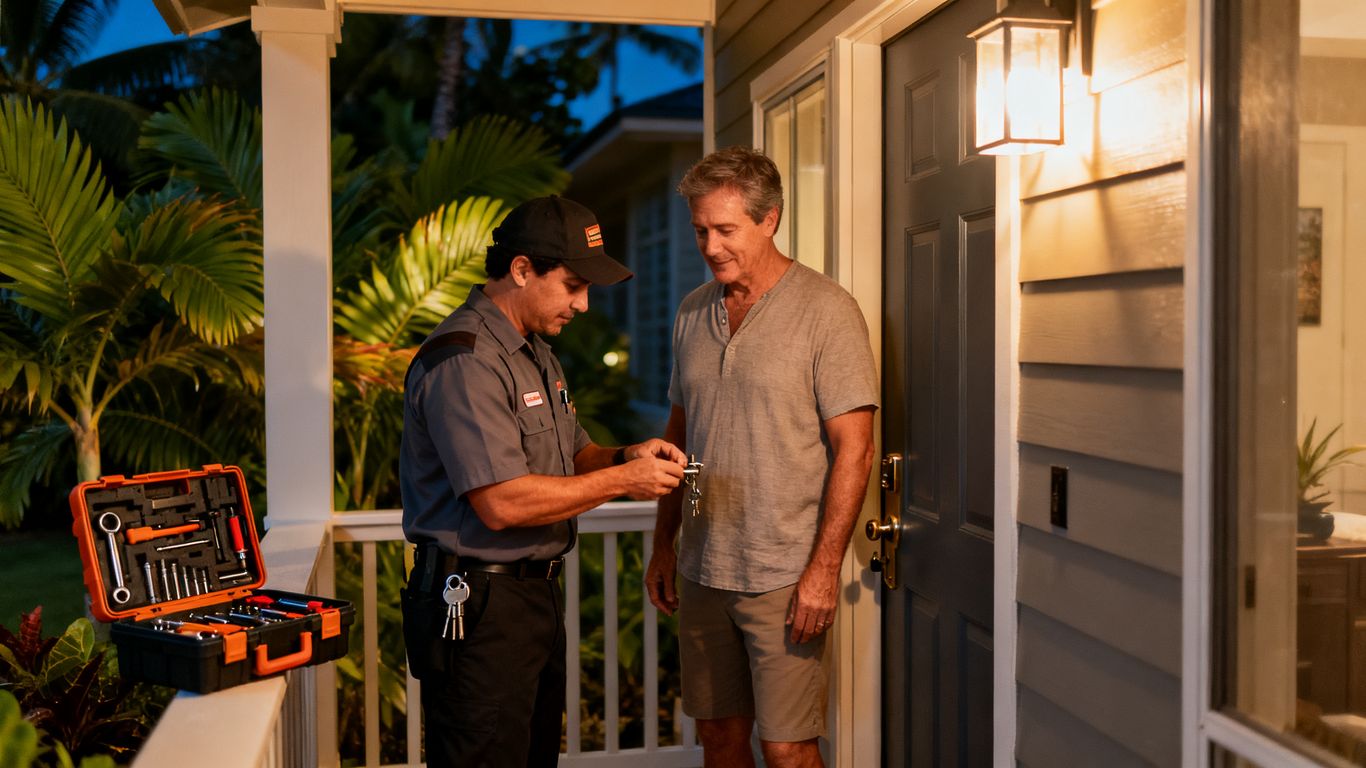
A lost key is more than an inconvenience if it could be traced to your home, vehicle, or workplace. A stolen key may call for rekeying or replacement even if the door still works. When a key breaks inside a cylinder or ignition, extraction should be handled carefully so fragments do not move deeper into the mechanism. Have proof of ownership or authorization ready before service begins.
Damaged, jammed, or malfunctioning locks
A lock that turns without opening, sticks halfway, or refuses a known working key may have an internal problem. Repeatedly forcing it can damage the cylinder, latch, or surrounding door hardware. Describe what happened immediately before the failure, including weather exposure, attempted entry, or a recent repair. That detail can help distinguish a simple alignment issue from a failed mechanism.
After-hours security concerns and urgent rekeying
After a move, employee departure, lost master key, or attempted break-in, access control may need attention even when no one is locked out. Rekeying changes which keys operate an existing lock, while replacement may be more suitable when hardware is damaged or outdated. Make a list of doors and users before the technician arrives. This keeps the work focused and reduces the chance of overlooking a secondary entrance.
How the mobile locksmith response works
Mobile service brings the technician and equipment to the property, parking area, or roadside location. The first conversation is usually about where you are, what is locked, and whether anyone is at risk. Clear information helps dispatch select the right vehicle and tools. It also gives the technician a better chance of completing the work without a second trip.
Sharing your location and emergency details
Give a specific address, building name, parking level, nearby intersection, or visible landmark. Explain whether the issue involves a house, commercial door, vehicle, gate, or electronic access system. Mention any immediate concern, such as a child inside, a running vehicle, a break-in, or a business that cannot open. Accurate details support a faster, more prepared response.
Dispatching the nearest available technician
After the call, dispatch considers the location, service type, and available mobile unit. Island-wide coverage can vary with traffic, weather, and the complexity of another call, so an arrival estimate is an estimate rather than a promise. Keep your phone nearby in case the technician needs directions or access instructions. If the location changes, update dispatch immediately.
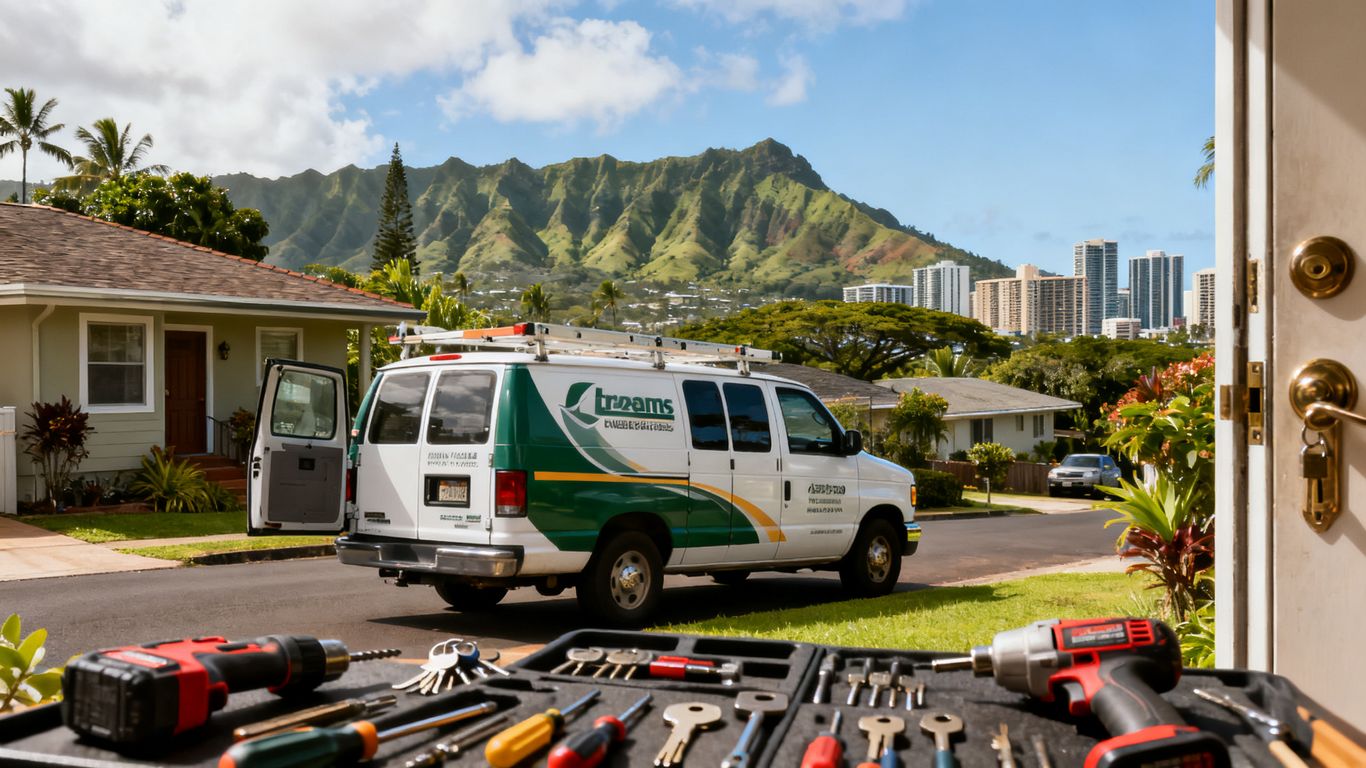
What to expect from a fully equipped service van
A mobile van may carry entry tools, key-cutting equipment, replacement cylinders, and common door hardware. The exact parts depend on the vehicle, lock, and security system involved. A professional should inspect the situation before recommending replacement work. For general context on planning urgent local service, readers may also find this emergency service resource useful, although locksmith work requires a different technician and toolset.
Non-destructive entry methods and property protection
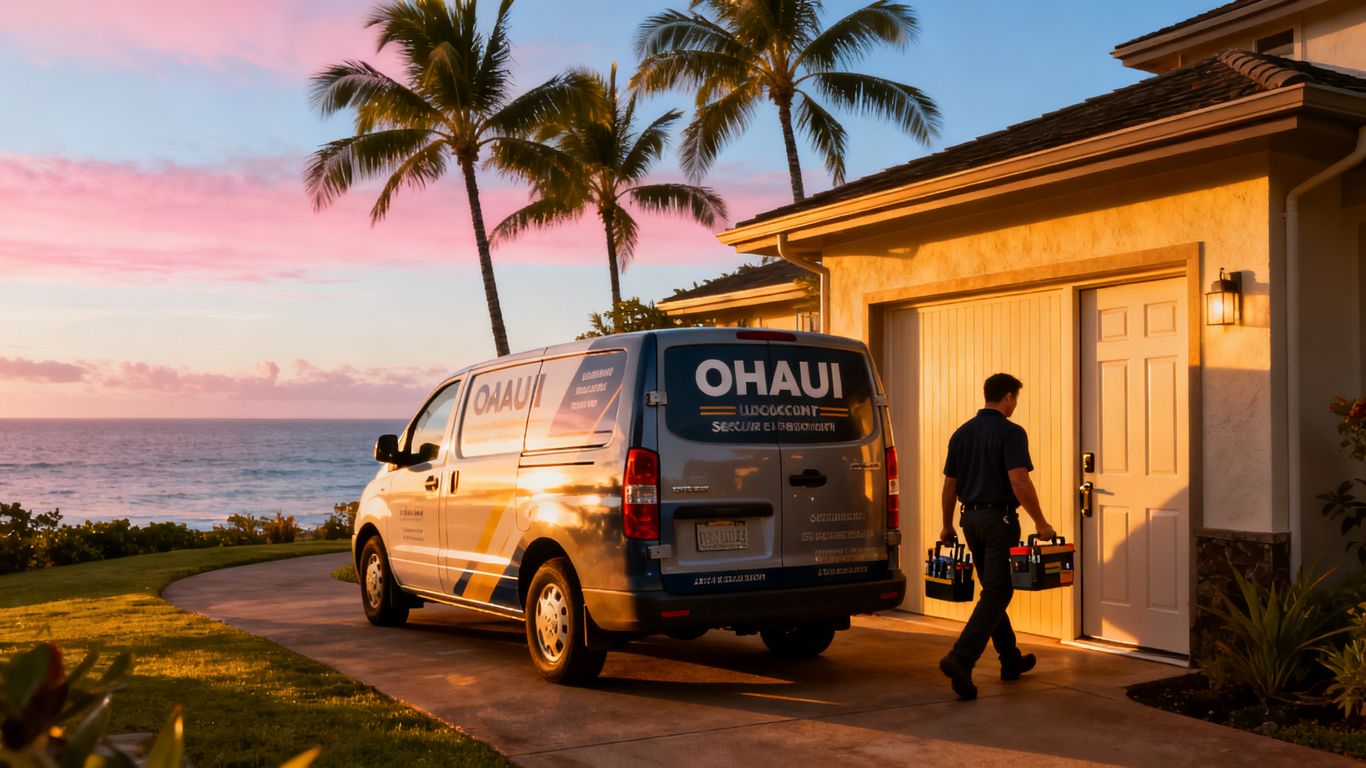
Careful entry begins with identifying the lock and understanding how it is failing. Professional unlocking methods may protect the door, frame, cylinder, and surrounding finish when the hardware allows it. No method is appropriate for every lock, particularly when a mechanism has failed internally. The technician should explain the approach before work starts.
Techniques for standard locks and deadbolts
Standard door locks and deadbolts may be opened with specialized professional tools rather than force. The technician works with the lock’s design and condition, taking care around weather stripping, paint, and trim. If the issue is alignment rather than the cylinder itself, a small adjustment may restore operation. Once inside, test the door several times before leaving it secured.
Handling high-security and electronic systems
High-security systems can include restricted keyways, access control panels, and smart locks. These systems may require authorization, credentials, programming information, or a different service procedure. Do not share access codes in a public message or leave an electronic lock repeatedly cycling. Double Quick Locksmith lists emergency help for home, auto, and commercial lockouts, including high-security and electronic systems.
When drilling or hardware replacement may be necessary
Drilling is generally considered only when the lock cannot be opened through less invasive means, such as severe internal failure or an unusually restricted system. The technician should explain why the option is necessary and what replacement will involve. Damaged cylinders, mechanisms, or door hardware may then be repaired or replaced. A written estimate before additional work helps prevent surprises.
Locksmith solutions for Oahu homes and businesses
Emergency service often ends with more than simply opening a door. The underlying key, cylinder, latch, or access problem may still need attention before the property is secure. Residential and commercial needs differ, but both benefit from a clear assessment and a practical repair plan. The work should match the level of risk rather than defaulting to the most expensive option.
Rekeying and replacing locks after a security incident
Rekeying can be useful when the lock is in reasonable condition but old keys should no longer work. Replacement is more appropriate when the lock is damaged, worn, or no longer suited to the door. After a break-in, inspect every possible entry point, not just the one showing visible damage. Keep a current key list so former occupants, employees, or contractors do not retain unnoticed access.
Repairing cylinders, mechanisms, and door hardware
A lock may fail because of the cylinder, internal mechanism, latch, strike plate, hinge alignment, or door closer. Repairing the actual cause can prevent the same lockout from recurring. In other cases, replacement hardware is the more reliable choice. A technician should check that the door closes, latches, and locks smoothly after the repair.
Supporting offices, storefronts, warehouses, and rental properties
Commercial properties often have several doors and different permission levels. A service call may involve restoring access, repairing a malfunctioning lock, or securing a secondary entrance while permanent work is arranged. Managers should document who is authorized to approve changes. For unrelated household concerns, resources such as professional pest guidance are best kept separate from a locksmith plan; the point is to use a provider whose expertise matches the emergency.
Island-wide coverage and expected arrival times
Oahu’s geography and traffic make location a central part of any emergency response. A mobile technician may serve a dense urban area, a residential neighborhood, or a more distant community from a different starting point. Arrival estimates depend on conditions at the time of the call. Giving dispatch a precise location remains one of the simplest ways to reduce confusion.
Serving Honolulu, Waikiki, and nearby communities
Honolulu and Waikiki calls may involve condos, hotels, businesses, parking structures, and busy roadside locations. Include the building entrance, unit number, parking level, or a safe meeting point when appropriate. If the vehicle is in a restricted lot, check whether security staff need to be notified. Residents looking for local emergency coverage can review 24/7 lockout assistance before deciding what information to provide.
Reaching Windward, Leeward, North Shore, and South Oahu
Windward, Leeward, North Shore, and South Oahu calls require the same basic information, with extra attention to landmarks and access roads. Haleiwa, Kailua, Kapolei, and other communities may have different traffic patterns and travel times. Keep the vehicle or property accessible from a safe, legal location. If you are roadside, move away from traffic when possible and tell dispatch which side of the road you are on.
Understanding typical 20–30-minute response times
A typical 20–30-minute response time may be available in many parts of the island, but the actual arrival depends on traffic, weather, call volume, and the job already in progress. Ask whether the estimate begins at dispatch or after the technician is assigned. You can also ask whether the quoted service includes entry only or possible key and hardware work. That distinction makes the estimate more useful.
Choosing a licensed 24/7 locksmith in Oahu
When the need is urgent, a quick online search can produce many options, but speed should not replace basic verification. Look for a licensed and insured provider that explains what it can do and where it operates. Reviews can help reveal patterns in communication and professionalism, though they should be considered alongside direct answers to your questions. A practical locksmith selection checklist can help you compare providers before an emergency occurs.
Verifying licensing, insurance, and local experience
Ask whether the technician is licensed and insured, and confirm that the business serves your part of Oahu. Local experience may matter when a provider is familiar with condo access, commercial properties, and island travel conditions. You should also be prepared to show identification or proof that you are authorized to enter the property or use the vehicle. These checks protect both the customer and the technician.
Asking about pricing, guarantees, and replacement parts
Request an estimate that separates the service call, labor, parts, and any after-hours charges. Ask what happens if non-destructive entry is not possible and whether replacement hardware is available on the van. Written terms are especially useful for key guarantees or follow-up work. Avoid approving unfamiliar charges simply because the situation feels urgent.
Evaluating communication, reviews, and professional service
A dependable provider communicates clearly about arrival, authorization, method, and price. The technician should arrive with identification, protect the work area, and explain the completed repair. Reviews are most useful when they mention specific service behavior rather than only a star rating. If you need immediate assistance, you can request service after confirming the details that matter to you.
Some people also browse unrelated pages while searching online, from airport pickup service to a privacy policy, a long-distance moving resource, or information about licensed online games. Those links do not replace locksmith guidance; they simply illustrate why it is worth checking that a search result actually matches the emergency in front of you.
Get Help When You Need It
When a lockout, broken key, or security concern cannot wait, contact Double Quick Locksmith for mobile emergency locksmith service across Oahu. Share your location and the problem clearly so the team can direct the right help to you.
Conclusion
A reliable 24/7 locksmith response combines clear communication, careful entry methods, practical repairs, and local mobile coverage. Whether the problem involves a home, business, or vehicle, choosing licensed help and confirming the plan before work begins can make a stressful situation much easier to manage.
Frequently Asked Questions
Can a locksmith help with a home lockout at night?
Yes, emergency locksmith services may assist with residential lockouts outside normal business hours, subject to availability and location.
What information should I provide when calling?
Provide your exact location, the type of property or vehicle, what happened, and any safety or access concerns that could affect the response.
Can a broken key be removed without replacing the lock?
Often, a technician can attempt careful key extraction, but the lock may need repair or replacement if the cylinder or mechanism has been damaged.
Is non-destructive entry always possible?
No. Non-destructive methods are preferred when suitable, but severe malfunction, damage, or certain high-security systems may require drilling or hardware replacement.
How long does an Oahu locksmith usually take to arrive?
Typical estimates may be around 20–30 minutes in many areas, but traffic, weather, distance, and call volume can change the actual arrival time.
Should I rekey locks after losing a key?
Rekeying is worth considering when a lost key could be used to access the property and you want existing hardware to operate with new keys.
How can I avoid unexpected locksmith charges?
Ask for a clear estimate covering the service call, labor, parts, after-hours pricing, and possible replacement work before authorizing the service.