Key Takeaways
Losing your car keys in Honolulu can feel overwhelming, but a calm, orderly response usually makes the next step clearer.
- Retrace your route and check every likely place before ordering a replacement.
- Move somewhere visible and safe if you are stranded after dark.
- Avoid prying doors, breaking windows, or forcing a keyless system.
- Gather your vehicle details, VIN, location, and ownership documents.
- Consider a spare key or backup fob once you are moving again.
Stay safe and confirm the keys are truly lost
Before arranging replacement service, pause long enough to confirm the keys are actually gone. A few minutes of careful searching can save you the cost and wait involved in making a new key. If you are visiting the island, the last stop may be harder to remember, so work backward from the moment you noticed the keys missing.
Retrace your steps around common stopping points
Think through the full route rather than only the place where the vehicle is parked. Check the hotel desk, rental counter, restaurant, gym, workplace, gas station, and parking payment area. Beach trips deserve extra attention because keys can slip beneath towels, chairs, or bags while you are carrying several items at once.
If you are unsure what to do first, this lost car key guide offers another practical sequence for checking your route and organizing the next call. The goal is not to search randomly; it is to revisit each stopping point in the order you used it.
Check your bags, pockets, vehicle, trunk, and nearby areas
Empty every compartment of your bag and turn pockets inside out. Look beneath seats, around floor mats, inside the trunk, and on top of the vehicle, where keys are sometimes placed temporarily. If another person was with you, ask them to search independently; a second set of eyes often notices what a stressed driver misses.
Do not assume a locked car means the keys are lost. They may be inside the cabin or trunk, and a lockout service could retrieve them without replacement. If the key was stolen rather than misplaced, mention that when you ask for help so the security implications can be considered.
Contact lost and found at the airport, stores, beaches, or attractions
Call the most recent businesses or facilities directly and ask whether keys were turned in. Honolulu International Airport, shopping centers, hotels, parks, and attractions may each have a different lost-and-found process. Give a simple description of the key ring, but avoid sharing unnecessary personal information publicly.
Ask when you should call back if the item has not yet been logged. Keep your phone available, since a staff member may need to confirm the vehicle or arrange a return. If you are driving a rental, notify the rental company as well, particularly if the key carries a separate access fob.
Move to a well-lit location if you are stranded at night
If the car is parked in an isolated lot or along a dark roadside, prioritize your personal safety over continued searching. Stay near a staffed business, hotel entrance, or other visible public area, and keep valuables with you. Share your exact location with a trusted person and avoid walking alone through unfamiliar areas while distracted by the missing keys.
A charged phone, water, and a clear description of your surroundings will make any service call easier. Once you are safe, you can compare lockout, replacement, and dealership options without rushing into a risky decision.
Avoid damaging your vehicle while locked out
A locked car can create a strong urge to improvise, especially when plans or children are waiting. Modern doors, windows, alarms, and immobilizers are not forgiving of makeshift tools. The safest response is to identify whether the keys are inside, whether the vehicle is running, and whether anyone is at immediate risk.
Why prying doors or breaking windows can create bigger problems
A coat hanger, wedge, or screwdriver can bend a door frame, tear weather stripping, scratch paint, or damage wiring. A broken window also creates an immediate security and weather problem, even if you eventually recover the keys. Protect the vehicle first unless there is a genuine life-threatening emergency.
Professional automotive lockout work uses non-destructive methods suited to the vehicle. That generally reduces the chance of turning a short lockout into a glass replacement, alarm reset, or body repair.
How modern anti-theft and keyless entry systems affect access
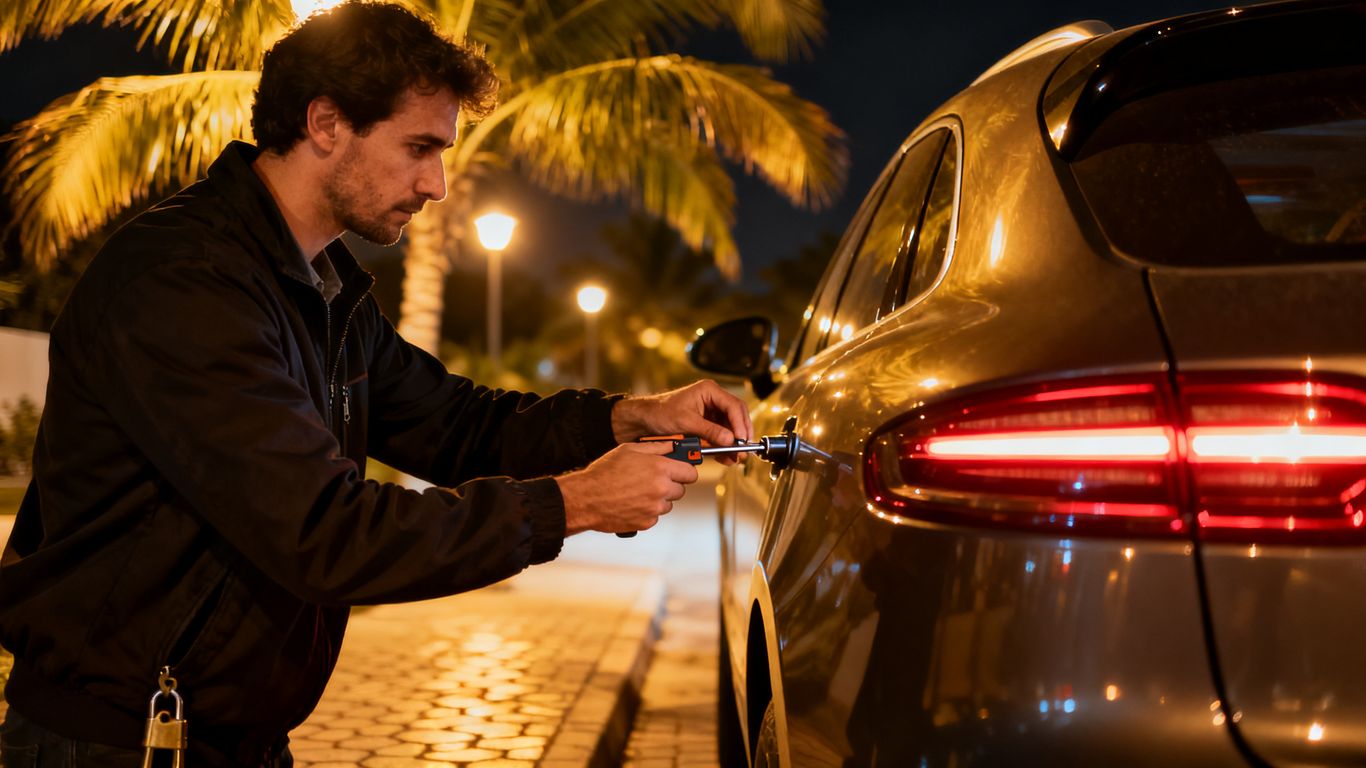
A keyless entry system may unlock doors electronically without authorizing the engine to start. Likewise, a transponder or immobilizer can require a recognized chip even after the door is opened. Pushing, pulling, or repeatedly pressing buttons is unlikely to solve a missing-key problem and may create confusion about whether the issue is the fob, battery, or vehicle.
Tell the technician whether the car uses a physical blade, remote fob, proximity key, or push-to-start button. That detail helps determine whether the visit involves entry only or also cutting and programming.
When roadside assistance may provide a safe lockout solution
Roadside assistance can be useful when the keys are locked inside and the immediate need is simply vehicle entry. Coverage varies, and many plans do not include full cutting or programming for modern smart keys. Before dispatch, ask whether the provider is handling entry only or can also address a lost key.
The car lockout guidance is useful for reviewing ownership checks and safer alternatives before help arrives. If coverage is limited, you may still need a mobile automotive locksmith or dealership for the replacement itself.
What to do if a child, pet, or vulnerable person is inside the car
Treat an occupied locked vehicle as an emergency, especially in heat or direct sun. Call emergency services immediately if a child, pet, or vulnerable person is in distress, and follow the dispatcher’s instructions. Do not delay while searching for a spare or comparing prices.
Stay with the vehicle in a visible place and tell arriving responders exactly who is inside and whether the engine or air conditioning is running. A normal lost-key situation can wait; an occupant’s safety cannot.
Choose the right car key replacement option in Honolulu
The right option depends on whether the key is locked inside, lost completely, damaged, or simply out of battery. Your vehicle’s age and security system matter too. A dealership may be appropriate in some cases, while a mobile service can be more practical when the car cannot be driven.
When a mobile automotive locksmith is the fastest choice
A mobile automotive locksmith comes to the vehicle rather than requiring a tow to a shop. That can be especially helpful at home, in a parking garage, near the airport, or on a roadside location. Depending on the vehicle, the technician may be able to provide entry, cut a replacement, and program the key during one visit.
Car key replacement options can help you compare mobile locksmith service, dealership help, and roadside assistance before choosing. When calling, describe whether you have no keys at all or still have one working key.
Double Quick Locksmith provides 24/7 mobile automotive service across Honolulu and Oʻahu, so it is an option to consider when you need on-site help rather than a tow. Ask what can be completed for your particular make, model, year, and key type.
Situations that may require a dealership
A dealership may be the right route when a vehicle has an uncommon security system, requires a proprietary process, or falls outside the available equipment of a local provider. It may also be preferred when the vehicle is covered by a specific service arrangement. Confirm the required documents, appointment timing, and whether the vehicle must be transported.
Dealership service can involve a longer wait when you have lost all keys and cannot drive the car. Ask for a complete estimate that includes towing, key creation, programming, and any additional fees before committing.
What roadside assistance and insurance may cover
Some roadside plans or insurance policies cover lockout entry, but coverage for a newly cut or programmed key is often narrower. Policies may impose limits on dispatches, locations, or reimbursement. Read the terms or call the provider before assuming the entire replacement will be paid.
Keep receipts, dispatch details, and written estimates if reimbursement may be available. Even when the plan sends a provider, verify whether that visit is intended to unlock the car or replace the key.
Why online and DIY replacement options can be difficult
Online blanks and replacement fobs may look inexpensive, but compatibility is not always obvious from a listing. The blade may need cutting, the chip may need programming, and some vehicles require a working key or specialized diagnostic equipment. A wrong part can cost time and leave you with another unusable item.
For a stranded driver, shipping time and return policies matter as much as the purchase price. If the vehicle is immobilized, compare the total cost of the online route with professional on-site service before ordering.
Understand the type of key your vehicle needs
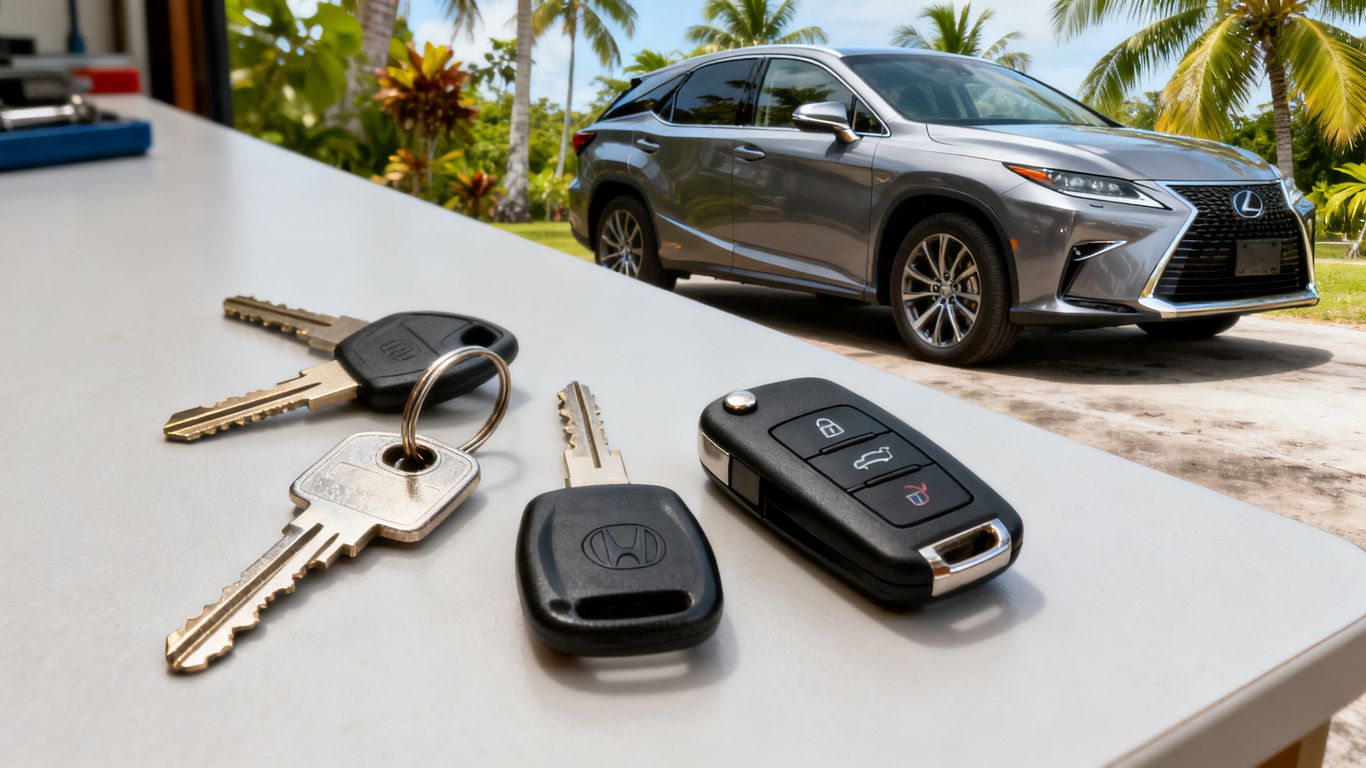
Not every lost key problem calls for the same replacement. A traditional blade, chipped key, remote fob, and proximity device have different cutting and authorization requirements. Providing the correct description at the start can help a locksmith bring suitable equipment and parts.
Traditional metal keys and laser-cut keys
Traditional metal keys operate through the physical shape of the blade and may be relatively straightforward to duplicate. Laser-cut or high-security keys use more precise profiles and may require specialized cutting equipment. The visible blade does not always tell you whether the vehicle also uses an electronic security component.
Bring any remaining key, shell, or photograph if available, but do not rely on appearance alone. The vehicle year, model, and identification number provide a more dependable basis for determining the correct key.
Transponder keys and chip programming
A transponder key contains an electronic chip that communicates with the vehicle’s immobilizer. Cutting the blade may let it fit the lock, but the engine may not start until the chip is programmed correctly. If all keys are missing, the process can involve additional vehicle-specific steps.
The car key programming service page describes on-site work involving keys, fobs, and transponders. Use that as background, then ask the technician to confirm what your vehicle requires rather than assuming every chipped key follows the same process.
Smart keys, key fobs, and push-to-start systems
Smart keys and fobs may control entry, trunk access, and push-to-start authorization. A weak battery can mimic a failed key, although changing the battery will not replace a lost or unpaired device. Tell the locksmith whether buttons stopped working, the car no longer recognizes the fob, or the fob is completely missing.
Here is a quick way to frame the problem when you call:
| Key situation | Likely need | Useful detail to provide |
|---|---|---|
| Blade is lost | Cutting and possibly programming | Whether any spare exists |
| Fob is damaged | Fob replacement or repair assessment | Which buttons still work |
| Car will not recognize key | Battery or programming diagnosis | Dashboard warning message |
| Key is inside locked vehicle | Non-destructive entry | Where the key is believed to be |
This distinction helps separate a simple lockout from a replacement job. It also prevents an unnecessary assumption that a new battery, blank, or remote will solve the entire problem.
Special considerations for luxury and imported vehicles
Luxury and imported vehicles may use less common key systems, higher-security blades, or smart access features. Their replacement process can vary significantly by year, model, and equipment. Ask whether the provider regularly works with your vehicle before arranging service.
Have the exact badge and model information ready, and mention any aftermarket alarm or remote-start system. Those additions can affect the diagnosis even when the original key looks ordinary.
Prepare the information a locksmith will need
A clear first call saves time and reduces the chance of a second visit. The technician needs enough information to assess the key system, verify the service location, and bring appropriate equipment. You do not need to diagnose the vehicle yourself; accurate basics are enough.
Your vehicle’s make, model, and year
Start with the manufacturer, model, and model year. If you know the trim, engine, or whether the vehicle has push-to-start, include that too. Explain whether the keys are lost, locked inside, broken, stolen, or present but not working.
Avoid guessing if the information is available on your registration or insurance app. A small difference between model years can affect the key blank, fob, or programming procedure.
Where to find and safely provide the VIN
The VIN may appear on the dashboard near the windshield, on registration paperwork, or in an insurance record. Only share it through a trusted service channel, and avoid posting a full VIN in a public comment or social media thread. If you cannot access the dashboard, tell the technician what documents you have instead.
The VIN helps identify the vehicle and can support key-cutting decisions, but it does not replace proof of ownership. Keep the registration or title available if requested.
Your exact location in Honolulu or elsewhere on Oʻahu
Give a precise, practical location rather than only a neighborhood. Include the parking garage level, stall area, nearest entrance, cross street, hotel name, or a visible landmark. Tell the provider whether the vehicle is on a public road, private lot, airport property, or restricted garage.
When possible, remain near the car in a safe place so the technician can identify it quickly. If you must move, call back with the updated location instead of leaving vague directions.
Proof of ownership and identification requirements
A reputable locksmith will generally need to confirm that you are authorized to access or make a key for the vehicle. Have a driver’s license, registration, title, rental agreement, or other relevant documentation ready. Requirements can vary depending on the situation and the vehicle.
When preparing for the call, keep these details together:
- Make, model, year, and approximate trim
- VIN or registration information
- Exact location and easiest access point
- Photo identification and ownership documents
These details do not guarantee that the job can be completed, but they give the technician a useful starting point. If the car belongs to a rental company, employer, or family member, explain that before dispatch.
Know what to expect from mobile locksmith service
A mobile visit usually begins with an assessment, not an immediate attempt to make a key. The technician will consider the lock type, vehicle security, location, and your documentation. From there, the work may involve entry, key cutting, programming, ignition service, or a combination of those tasks.
On-site vehicle entry using non-destructive methods
For a standard lockout, the technician should select an entry method appropriate to the vehicle and work carefully around the door, window, and alarm system. Non-destructive entry is intended to avoid damage rather than create a new repair. Tell the technician if the key is in the trunk, cabin, or possibly somewhere else.
After entry, check that the doors, locks, alarm, and handles behave normally. If anything seems unusual, raise it before the technician leaves.
Key cutting, programming, and fob replacement
Key cutting creates the physical shape needed for the lock, while programming pairs an electronic component with the vehicle when required. A fob replacement may involve both functions, depending on the design. Ask whether the quoted work includes the part, cutting, programming, testing, and any available warranty.
A working result should be tested at the vehicle before the visit ends. Check the locks, trunk, remote buttons, and engine start function when those features apply.
Ignition repair or key extraction when necessary
A key that snaps in the ignition or lock should not be twisted, glued, or pushed farther inside. Extraction requires appropriate tools, and the ignition may also need repair or replacement if it is worn or damaged. Describe what happened, including whether the key was difficult to turn beforehand.
Mobile automotive locksmiths may handle ignition repair, replacement, or key extraction depending on the vehicle and situation. Confirm the scope before work begins, particularly if the ignition issue is separate from the lost-key problem.
Questions to ask about licensing, pricing, warranties, and arrival time
Before authorizing work, ask who is being dispatched, what the service includes, and how the price is calculated. A clear conversation is especially valuable after dark or when you are unfamiliar with the area. The Honolulu automotive locksmith overview is another useful reference for comparing common service categories.
Ask these practical questions:
- What is the estimated arrival window?
- Is the quote for entry, replacement, programming, or all three?
- What identification or ownership documents are required?
- Is the work licensed, insured, or covered by a warranty?
A careful provider should be willing to explain the plan before starting. If the scope changes after inspection, request the revised price and reason for the change.
Prevent another lost-key emergency
Once the immediate problem is solved, take a few minutes to reduce the odds of repeating it. A spare key is useful only if it is made before the next emergency and stored somewhere you can actually reach. Small habits matter more than complicated tracking systems.
Have a spare key or backup fob made
If you still have one working key, ask about making a spare before it disappears. Some vehicles need a simple duplicate, while others require cutting and programming. Creating a backup while the original works may be easier than starting with no key at all.
Test the spare at the vehicle and label it discreetly. Avoid attaching identifying information that would reveal your home address if the key ring is lost.
Store your spare securely at home or with a trusted person
A spare hidden in the car is not a reliable backup when you are locked out. Keep it in a secure, known place at home, or with someone you trust who can reach you. For families, decide in advance who may use the spare and how it should be returned.
If you travel frequently, consider the difference between a physical spare and a backup fob. One may be easier to carry, while the other may provide more complete access depending on the vehicle.
Replace weak key fob batteries before they fail
Watch for shorter range, delayed button response, or a dashboard warning. Replace the battery with the correct type and keep the old fob away from moisture while you work. If a new battery does not restore operation, the issue may involve the fob, programming, or vehicle rather than the battery alone.
Do not wait until you are parked far from home to investigate a fob that is becoming unreliable. A quick test after battery replacement can reveal whether the remote and push-to-start functions still work.
Create a routine for checking keys after beach, airport, and parking trips
Make key checks part of leaving any high-distraction location. Before walking away, touch the key or fob, check the bag pocket where it belongs, and glance at the vehicle roof and seats. At beaches, use a small zipped pouch; at airports and garages, keep keys in one consistent pocket.
A short routine is easier to remember than a vague promise to be more careful. If you do lose them again, get mobile help after moving somewhere safe and gathering the vehicle information.
Contact Mobile Locksmith Help
If you have checked the likely places, protected yourself and the vehicle, and gathered the necessary details, contact Double Quick Locksmith for mobile automotive assistance across Honolulu and Oʻahu. Explain whether you need entry, a replacement key, programming, or ignition help so the service can be planned around your vehicle.
Conclusion
If you lose your car keys in Honolulu, start with a careful search, choose safety over improvisation, and identify the key system before selecting a replacement route. With the VIN, vehicle details, exact location, and ownership documents ready, professional help can be arranged more smoothly. A spare key and a simple checking routine can make the next island outing much less stressful.
Frequently Asked Questions
What should I do first if I lose my car keys in Honolulu?
Move to a safe place, retrace your recent stops, check bags and the vehicle carefully, and contact nearby lost-and-found offices before arranging replacement service.
Can a locksmith open my car without damaging it?
A qualified automotive locksmith can often use non-destructive entry methods, but the appropriate approach depends on the vehicle, lock system, and condition of the car.
What if my keys are locked inside the trunk?
Tell the provider that the keys may be in the trunk. The technician can assess the vehicle and use an entry method intended to avoid damage.
Do modern car keys need programming?
Many transponder keys, smart keys, and push-to-start fobs require programming or pairing in addition to physical cutting. Traditional metal keys may not require the same electronic work.
Is the VIN required for car key replacement?
A VIN is often useful for identifying the vehicle and determining the correct key, but the provider may also require proof of ownership and identification.
Will roadside assistance replace a lost smart key?
Roadside assistance commonly focuses on vehicle entry, while complete smart-key cutting and programming may require separate service. Check your plan before relying on it for replacement.
How can I prevent losing my keys again?
Make a spare key or backup fob, keep it in a secure location outside the vehicle, replace weak fob batteries, and check your keys before leaving beaches, airports, and parking areas.