Key Takeaways
The cheapest car key replacement near me is not always the quote with the smallest number. The right comparison includes the key technology, programming, travel, timing, and what happens if the replacement does not work.
- Identify whether your vehicle uses a metal key, transponder key, remote fob, or smart key.
- Compare the full price, including cutting, programming, labor, travel, and emergency charges.
- A mobile automotive locksmith may save towing costs when the car cannot be driven.
- A damaged shell may be repairable without replacing the original electronics.
- Keep your VIN, proof of ownership, and spare-key information ready before requesting quotes.
Understand what affects car key replacement costs
Car key pricing varies because a key is often more than a cut piece of metal. The vehicle’s age, security system, key condition, and location all influence the work involved. Before searching for the cheapest car key replacement near me, identify what you actually need replaced. That makes quotes easier to compare and reduces the chance of paying for an unnecessary service.
Key type and security technology
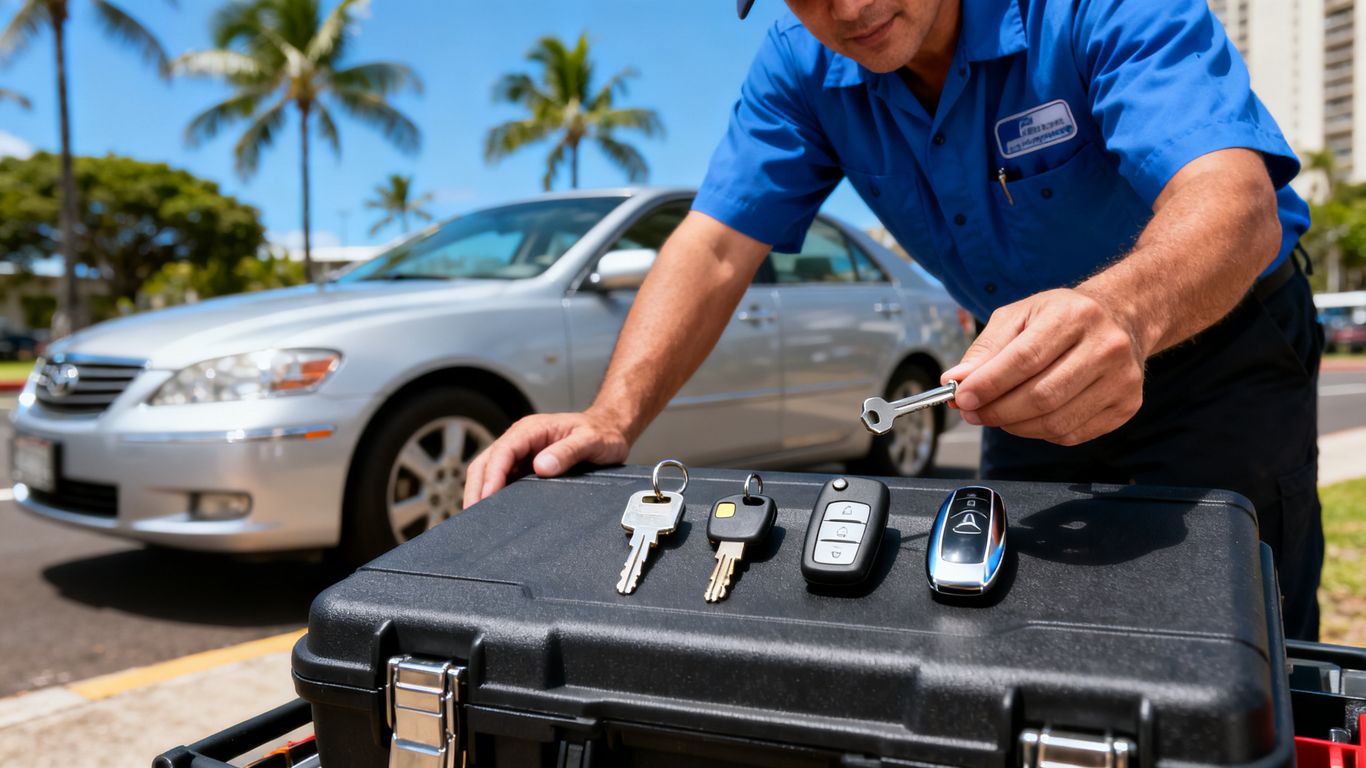
A basic mechanical key is usually the simplest replacement because it only needs to match the vehicle’s lock and ignition. A transponder key adds a chip that must communicate with the immobilizer, while a remote or smart fob may need electronic pairing as well. The more security technology built into the key, the more likely the job will involve specialized equipment and programming.
A key that looks ordinary can still contain a transponder. Cutting the blade alone may produce something that fits the lock but will not allow the engine to remain running. Ask the provider to identify the key system before accepting a price.
Vehicle make, model, and year
Make, model, and year determine which key blank, chip, remote, and programming procedure are compatible with the vehicle. Even two cars from the same manufacturer can use different systems, especially when one is an older model and the other has push-button start. A provider who asks for the VIN is trying to confirm the exact configuration rather than guess from a photograph.
The vehicle’s condition matters too. A worn ignition, broken lock, or key fragment can turn a straightforward replacement into a repair visit. For general planning, the car key cost guide explains why vehicle details and key technology affect the final bill.
Cutting, programming, and labor charges
A complete quote may combine the key blank or fob, blade cutting, transponder programming, remote pairing, diagnostics, and labor. Some providers advertise only the part price, then add programming or service charges later. The complete price matters more than the first number in an advertisement.
Use the following as a comparison framework rather than a promise of what any particular vehicle will cost:
| Replacement type | Work commonly involved | Relative cost tendency | Main question to ask |
|---|---|---|---|
| Traditional metal key | Cutting and testing | Lower | Is a code or original key needed? |
| Transponder key | Cutting and immobilizer programming | Moderate | Is programming included? |
| Remote key fob | Fob setup plus buttons and blade, when applicable | Moderate to high | Are all remote functions tested? |
| Smart or push-to-start key | Electronic pairing and vehicle-specific programming | Higher | Does the estimate include every programming step? |
After reviewing a quote, ask whether the replacement will be tested in the doors, ignition, remote functions, and starting system where applicable. A low part price is not useful if the vehicle still cannot recognize the key.
Emergency, mobile, and after-hours service fees
A mobile visit can add a service-call or travel charge, while nights, weekends, and holidays may carry an after-hours fee. Those charges are not automatically unreasonable: they reflect dispatching a technician and equipment to a vehicle that may be stranded. Still, they should be disclosed before work begins.
Mobile service can also reduce the total cost when the alternative is towing an inoperable car to a dealership. The 2026 locksmith pricing guide offers a useful way to think about parts, labor, location, and timing together rather than treating the key itself as the entire bill.
Compare your cheapest replacement options
There is no single cheapest option for every vehicle or situation. A working spare may make duplication simple, while a total loss on a smart-key vehicle usually requires professional programming. Compare convenience, security, waiting time, and the possibility of extra charges alongside the quoted price.
Mobile automotive locksmiths
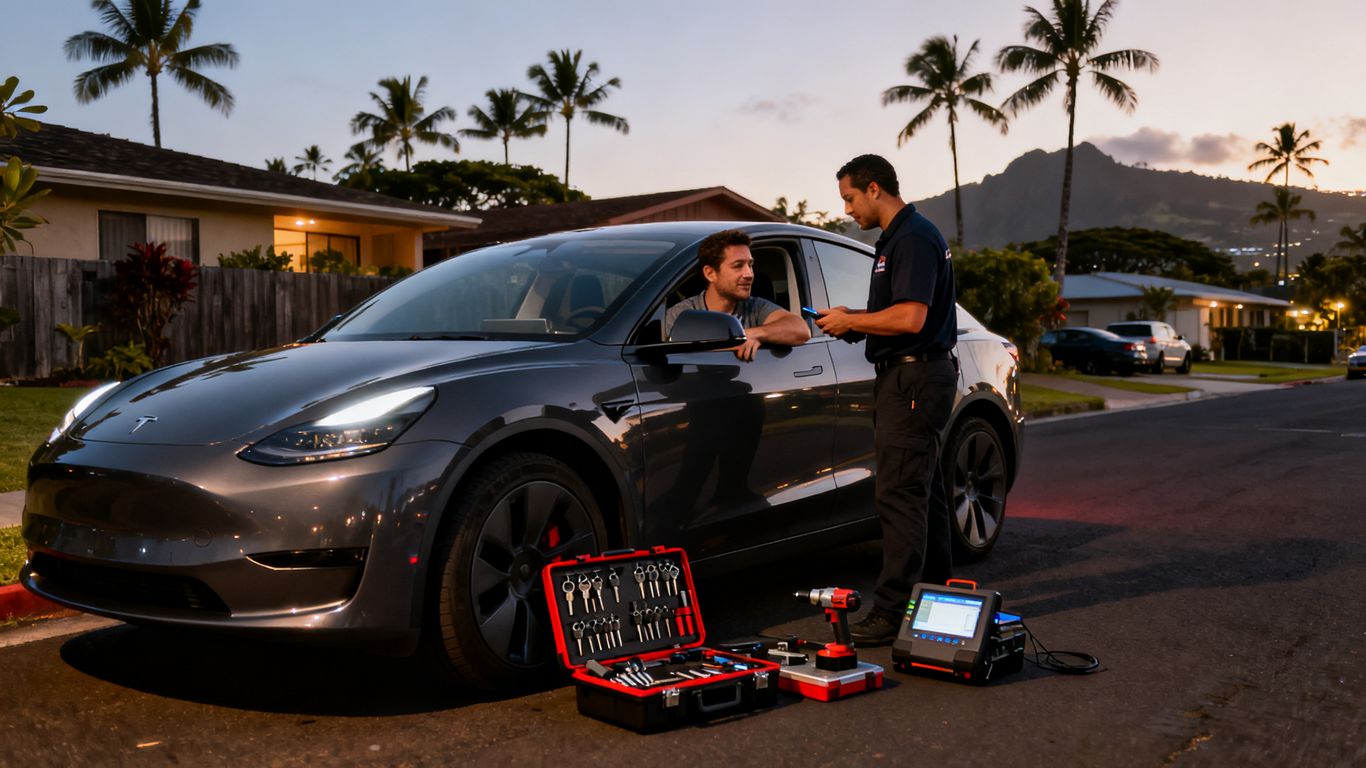
A mobile automotive locksmith brings cutting and programming equipment to the vehicle, which can be useful when the car is parked at home, work, or a roadside location. This may avoid towing and shorten the gap between losing the key and driving again. Ask whether the technician handles your make, model, year, and key type before booking.
For Honolulu and Oʻahu drivers, mobile key replacement is a practical option when on-site service and an upfront estimate matter. The provider should still explain what is included instead of presenting mobility as a substitute for a detailed quote.
Car dealerships and OEM keys
A dealership can order factory keys and may be the appropriate choice when manufacturer-only programming or a warranty-related repair is involved. It can also make sense when you specifically want a factory-issued key and can wait for an appointment or ordered part.
The total may be higher once dealer labor, transportation, and towing are included. If the car cannot be driven, compare the complete dealership cost with a qualified mobile service rather than comparing only the advertised key price.
Online key suppliers and DIY programming
Online parts can cost less when the vehicle supports a simple process and you already have a working key. The risks are fit, compatibility, incomplete functionality, and programming that is not supported by the vehicle. A key can arrive looking correct but still fail to start the car.
DIY is most reasonable only when you have confirmed the exact part and the vehicle’s documented programming procedure. For modern smart keys or a lost-only-key situation, professional help is usually the lower-risk choice. A separate aftermarket key guide can help explain why part quality and compatibility deserve attention.
Roadside assistance and insurance coverage
Roadside assistance may cover vehicle entry or dispatch a provider, but it may not include cutting and programming a replacement key. Insurance policies vary, and some offer limited lockout or key-replacement benefits subject to deductibles and exclusions. Read the service description before assuming that a dispatch covers the full repair.
If the key is locked inside and no cutting or programming is needed, roadside help may solve the immediate problem. If the key is lost, damaged, or electronically unrecognized, ask what additional service will be required after entry.
Identify the right replacement for your vehicle
The first useful question is not “How cheap is the key?” but “Which key system does this vehicle use?” A provider needs that answer to bring the right blank, fob, tools, and programming equipment. If you are unsure, describe the key’s buttons, blade, ignition, and starting method rather than relying on a generic name.
Traditional metal keys
Traditional metal keys have a cut blade and generally no electronic chip. They are usually faster and less expensive to duplicate, especially when a working original is available. Even so, a badly worn key or ignition can make a newly cut key fit poorly.
Ask whether the replacement will be cut from an existing key or generated from a vehicle code. Testing the new key in the lock and ignition helps catch a poor cut before you leave.
Transponder and chip keys
A transponder key contains a chip that communicates with the vehicle’s immobilizer system. The blade may look like a basic key, but the vehicle may refuse to start unless the chip is correctly programmed. This is why a hardware-store copy can be physically accurate yet electronically incomplete.
A working spare can simplify the process, but it does not eliminate the need for compatible programming. If every key is gone, tell the provider that immediately because the procedure may be more involved.
Remote key fobs
Remote fobs operate functions such as locking and unlocking, and some combine remote buttons with a physical blade. A weak battery, damaged buttons, cracked housing, failed electronics, or lost programming can produce similar symptoms. Replacing the whole fob is not always the first answer.
Before ordering a replacement, check whether the battery is the actual problem and ask whether the existing electronics can be tested. The key fob replacement comparison is useful when weighing a mobile visit against a dealership appointment.
Smart and push-to-start keys
Smart keys and push-to-start fobs use more advanced communication with the vehicle. They typically need professional programming or pairing, and losing the only fob can make the job considerably more complex. Do not hide a proximity fob on the vehicle as a spare, since its presence near the car can create a security risk.
A specialist should verify the exact fob and explain whether the vehicle can be serviced on-site. If the car is under warranty or requires manufacturer-only authentication, confirm whether a dealership is necessary before paying for transport.
Get an accurate quote near you
A useful quote starts with accurate information, not just a location and a request for “a car key.” Give the provider enough detail to identify the key system and the likely programming requirements. Written or clearly stated pricing is easier to compare than a vague estimate that changes after arrival.
Provide the vehicle identification number
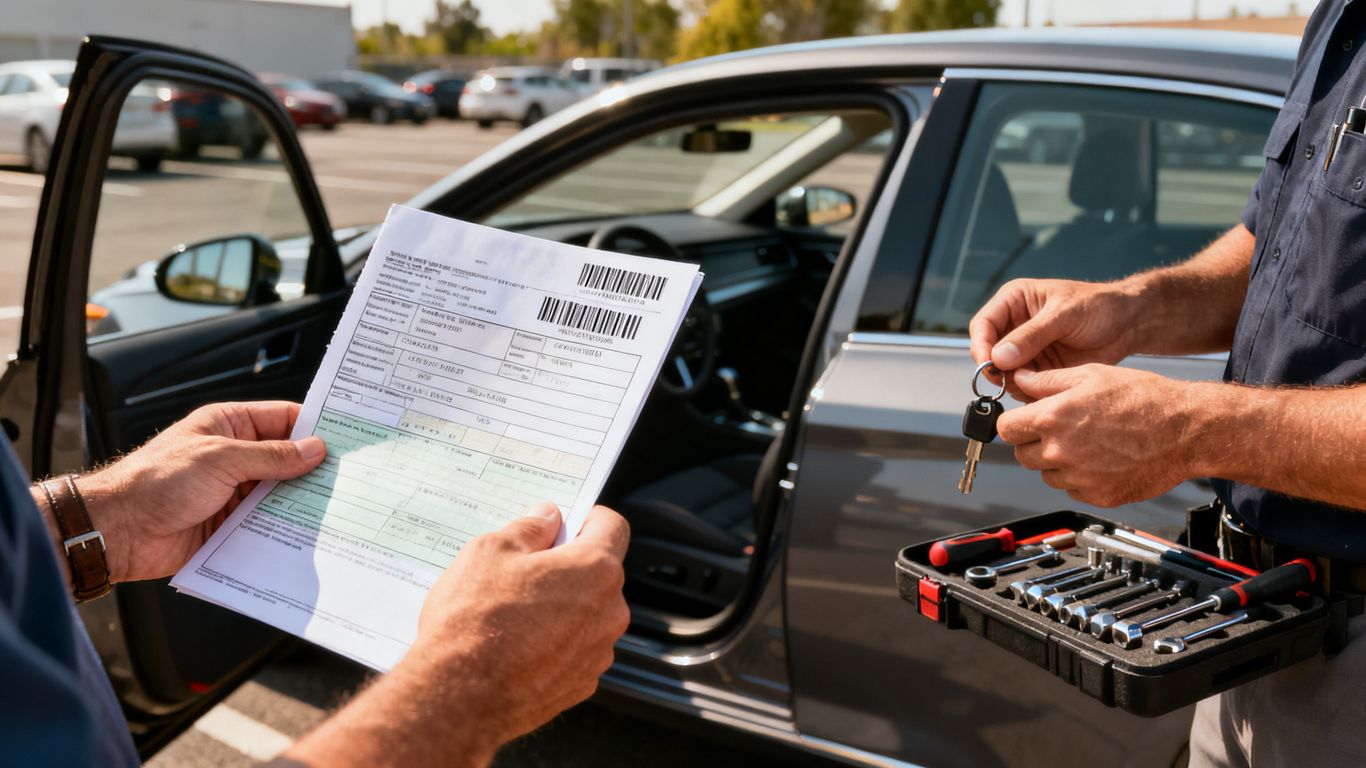
The VIN helps a locksmith verify the vehicle and identify the appropriate key structure or programming path. It is commonly found on the dashboard near the windshield, on registration documents, or on insurance paperwork. Share it through a trusted service channel and follow any ownership-verification requirements.
Also provide the exact location, including a parking level or nearby landmark if the vehicle is in a large lot. Accurate information helps the technician bring suitable equipment and find you without unnecessary delay.
Explain whether you have a working spare
Tell the provider whether you have one functioning key, a damaged key, or no key at all. Duplicating from a working original is often simpler than generating and programming a replacement after every key has been lost. Mention if the spare starts the vehicle but its buttons do not work, since that is a different problem from total key loss.
Be specific about the symptoms. “The car does not detect the fob,” “the blade snapped,” and “the remote stopped locking the doors” each point toward different checks.
Ask what the estimate includes
A reliable estimate should identify the part, cutting, programming, labor, travel, tax, and any emergency or after-hours charge. It should also clarify whether diagnosis is included if the issue may be the vehicle rather than the key. The replacement cost breakdown is a helpful checklist when comparing estimates from different providers.
Before approving work, ask these questions aloud if they are not already answered:
- Is the key or fob OEM, aftermarket, or an equivalent replacement?
- Are cutting, programming, testing, and service-call fees included?
- What happens if the vehicle does not accept the replacement?
- Will an additional spare cost less during the same visit?
The answers reveal whether two apparently similar quotes actually cover the same service. Keep a record of the final price and the promised warranty.
Confirm warranties, guarantees, and payment terms
Ask how long the workmanship and replacement part are covered, and whether the guarantee applies to the shell, electronics, programming, or all of them. Confirm accepted payment methods and whether the quoted amount can change if a hidden ignition or immobilizer problem is found.
A short written summary is worthwhile, especially for an emergency appointment. It gives you something to check after the key has been cut and programmed.
Save money without sacrificing security
Saving money is sensible, but the cheapest part is not necessarily the cheapest complete solution. A failed fob, incorrect chip, or damaged vehicle module can create another service charge. The goal is a compatible replacement that works reliably and preserves the vehicle’s security system.
Consider a quality aftermarket key
A quality aftermarket key or fob may cost less than a factory part, provided it is compatible with the vehicle and includes the functions you need. Ask whether the replacement supports the blade, transponder, remote buttons, proximity detection, and emergency key where applicable. Do not compare an incomplete shell with a fully programmed OEM replacement as though they were equivalent.
A technician should be able to explain the tradeoff between factory and aftermarket choices without pressuring you into one option. The decision should reflect the vehicle, the required functions, and the available warranty.
Repair or re-shell a damaged key fob
If the electronics and transponder still work, a cracked casing, worn buttons, or broken key-ring attachment may only require a new shell. Re-shelling can cost much less than replacing the entire programmed key. The original chip must be transferred correctly, and small springs, battery contacts, and internal components must not be lost.
This option does not suit every failure. If the circuit board is damaged, the key is missing, or programming is required, a complete professional replacement may be more appropriate. A detailed key fob shell repair guide explains the difference between cosmetic damage and an electronic failure.
Request a spare during the same service visit
Once the technician has the vehicle information and equipment available, ask whether a second key or fob can be made during the same appointment. A spare is generally easier to arrange while the vehicle is already being serviced than after another total loss. Store it somewhere safe, away from the vehicle, rather than leaving a smart fob hidden nearby.
This is a small expense compared with arranging an emergency replacement after losing the only working key. It also gives you a fallback if the main key becomes damaged.
Avoid low prices with unclear programming or service fees
An unusually low quote may exclude programming, travel, diagnostics, or the correct replacement electronics. Ask for the out-the-door total and be cautious if the provider cannot explain what happens when the key does not work. Security work deserves clear terms, not just a persuasive starting price.
You can also compare the cheapest replacement options before calling, then use that information to ask focused questions. A fair quote should remain understandable from the first conversation through the final payment.
Prepare for professional key replacement
A little preparation can reduce waiting and prevent a second appointment. Gather documents, identify the vehicle, and describe the problem accurately before the technician arrives. This is especially helpful when the vehicle is in a garage, crowded lot, or unfamiliar roadside location.
Gather proof of ownership and identification
A locksmith may request identification and proof that you are authorized to receive a key for the vehicle. Have a driver’s license, registration, title, or insurance document available, according to the provider’s policy. These checks protect vehicle owners and are a normal part of responsible key service.
If the registration is inside the locked vehicle, explain that when you call and ask what alternative documentation will be accepted. Do not leave original documents unattended at the service location.
Find your vehicle and key information
Write down the make, model, year, VIN, license plate, and exact location. Note whether the key is lost, locked inside, broken, water-damaged, or still present but not detected. Photos of the key and dashboard can help a provider understand the situation, although they do not replace VIN verification.
Keep the vehicle accessible if possible. A technician may need to open doors, inspect the ignition, or test the replacement from several positions around the car.
Choose on-site service when towing is costly
On-site service can be valuable when the vehicle will not start or when a tow would add time and expense. A mobile technician may be able to cut and program the replacement where the car is parked, subject to the vehicle and security system. Ask about access, lighting, weather, and any parking restrictions before the appointment.
If the vehicle has a serious ignition, electrical, or immobilizer fault, it may still require a shop or dealership. A good provider should tell you when mobile service is not the right fit rather than promise a result without inspection.
Check technician experience and service coverage
Confirm that the provider serves your area and works with your vehicle type. Ask whether the technician handles transponder keys, remote fobs, smart keys, and ignition-related issues if those are relevant to your situation. Experience with the particular system matters more than a broad claim to service every vehicle.
For local planning, the Honolulu car key guide covers mobile replacement, dealership delays, and the practical limits of DIY kits. Read the service terms, confirm the estimate, and make sure you know how to reach the provider if a follow-up is needed.
Know when emergency locksmith service is the best value
Emergency service is not always the lowest hourly option, but it can be the best overall value when delay, towing, or a missed shift costs more than the callout. The right choice depends on whether you need entry, a working replacement, programming, or an ignition repair. Explain the whole situation so the technician can bring the correct equipment.
Replacing a lost key at your location
When every key is gone, a mobile automotive locksmith may be able to verify ownership, create a replacement, and program it at the vehicle. This avoids moving a stranded car when the necessary equipment and vehicle system can be handled on-site. Ask in advance whether all-keys-lost service is available for your make and model.
A new key should be tested before the technician leaves. Check the locks, remote functions, ignition, and starting system that apply to your vehicle.
Handling a dead or damaged key fob
First rule out a depleted battery if the fob has suddenly stopped responding. If a new battery does not help, the problem could involve the buttons, circuit board, programming, vehicle receiver, or immobilizer. Avoid repeatedly opening the fob if you are not comfortable handling its chip and small internal parts.
A professional can determine whether the existing fob can be repaired, reprogrammed, or replaced. This may prevent paying for a full replacement when the casing or battery is the only failed component.
Resolving ignition and immobilizer problems
A key replacement will not solve every no-start condition. A worn ignition, broken switch, stuck key fragment, or immobilizer fault can make a correctly cut and programmed key appear defective. Describe warning lights, unusual resistance, and whether the key turns before approving a replacement.
When the problem involves the ignition or vehicle module, the provider may need additional diagnostics or recommend a different repair path. A clear diagnosis protects you from replacing a key that was never the source of the problem.
Getting back on the road after a lockout
If the key is locked inside, check every door, the trunk, and any available spare before forcing anything. Avoid improvised tools that can damage weather seals, wiring, airbags, or the lock mechanism. A non-destructive professional entry is often cheaper than repairing damage caused by a rushed attempt.
For broader planning, car lockout assistance explains why entry service and full key replacement are different needs. If the key is lost after entry, tell the technician immediately so the visit can address access and replacement together.
Conclusion
The best way to find the cheapest car key replacement near me is to compare complete, vehicle-specific quotes rather than chasing the smallest advertised number. Identify the key technology, provide the VIN, ask what programming and labor include, and weigh mobile convenience against towing and waiting costs. A reliable replacement should restore access without compromising the vehicle’s security.
Frequently Asked Questions
What is usually the cheapest type of car key to replace?
A traditional metal key is generally the least expensive because it may only require cutting and testing. The vehicle’s age, key condition, and whether a working original is available can still affect the total.
Are transponder keys more expensive than metal keys?
Usually, yes. A transponder key includes a chip that must be programmed to the vehicle’s immobilizer, so the quote may include both cutting and electronic programming.
Is a dealership always more expensive than a locksmith?
Not always, but dealerships may have higher labor, parts, appointment, and towing costs. Compare the complete out-the-door price and confirm whether the vehicle requires manufacturer-only programming.
Can I program a replacement key myself?
Some older vehicles support limited onboard programming, but many modern vehicles require specialized equipment. Confirm compatibility before buying an online key, since an incorrect part or failed programming attempt can increase the final cost.
Does insurance cover car key replacement?
Some policies or roadside plans provide limited lockout or key-replacement benefits, while others cover only vehicle entry. Check deductibles, exclusions, dispatch limits, and whether programming is included.
Should I replace a damaged fob or buy a new one?
If the electronics and transponder still work, a shell or button repair may be enough. A new fob is more appropriate when the circuit board is damaged, the key is missing, or the vehicle no longer accepts the existing electronics.
What information should I have ready for a quote?
Provide the vehicle make, model, year, VIN, location, key type, and whether you have a working spare. Describe the exact symptoms and ask whether cutting, programming, labor, travel, testing, and warranty coverage are included.
Get Help With Your Key
When you need a mobile automotive solution, Double Quick Locksmith can help you request professional service for a lost, damaged, or malfunctioning car key. Contact the team with your vehicle details and location so the right replacement option can be discussed before work begins.