
How to Replace a Broken Key FOB Shell Without Losing Your Transponder
If the casing on your key FOB is cracked, or the key ring loop has snapped off, you’re dealing with one of the most common problems automotive locksmiths encounter. The good news: in most cases, you don’t need a new key. You don’t need to visit the dealership. And you certainly don’t need to spend hundreds of dollars on a replacement.
What you need to do is transfer your original key’s internal components into a new shell — and do it correctly.
This guide walks you through exactly that, step by step, based on real field experience.
What’s Actually Inside Your Key FOB
Before you open anything, it helps to understand what you’re working with.
Most modern key FOBs contain four main components: an electronic circuit board, battery contact terminals, a flip key blade with a spring mechanism, and — most critically — a transponder chip.
That transponder chip is the heart of the operation. It’s the component that communicates with your vehicle’s immobilizer system. Without it, your key may physically turn, the dashboard may light up, and the engine may even crank — but the car will shut off immediately. You’ll often see an immobilizer error on the dash.
This is why a key shell swap isn’t just about moving plastic around. It’s about preserving the identity your car recognizes.
What You’ll Need
- A replacement key FOB shell (uncut key blade included is fine)
- Your original damaged key
- A small flathead screwdriver
- A clean, flat workspace — not your lap
Work at a table. The internal components are small, and losing even one can turn a five-minute fix into a real problem.
Step 1: Open the New Shell First
Start with the replacement shell, not your original key. Crack the new one open first so you can see how everything is supposed to fit before you ever touch the components inside your original key.
To open the shell, remove the battery cover, find the seam along the edges, and use a flathead screwdriver to gently work around the casing until it separates. Take your time — these shells snap together tightly by design.
Step 2: Open Your Original Key FOB
Now repeat the same process on your damaged key. Remove the back cover, pry gently along the seam, and slowly separate the casing.
Before you touch anything inside, take a photo. Document the layout exactly as it sits. This reference will save you if you second-guess yourself during reassembly.
Step 3: Transfer the Electronic Board
With both shells open, you’ll see the main circuit board. Before lifting it out, take note of its orientation — which direction it’s facing, where the buttons are aligned, how it sits in the casing.
Lift it carefully and place it into the new shell in the exact same orientation. If it goes in wrong, your buttons won’t line up, or may not function at all.
Step 4: Locate and Transfer the Transponder Chip
This is the most important step, and the one most people get wrong.
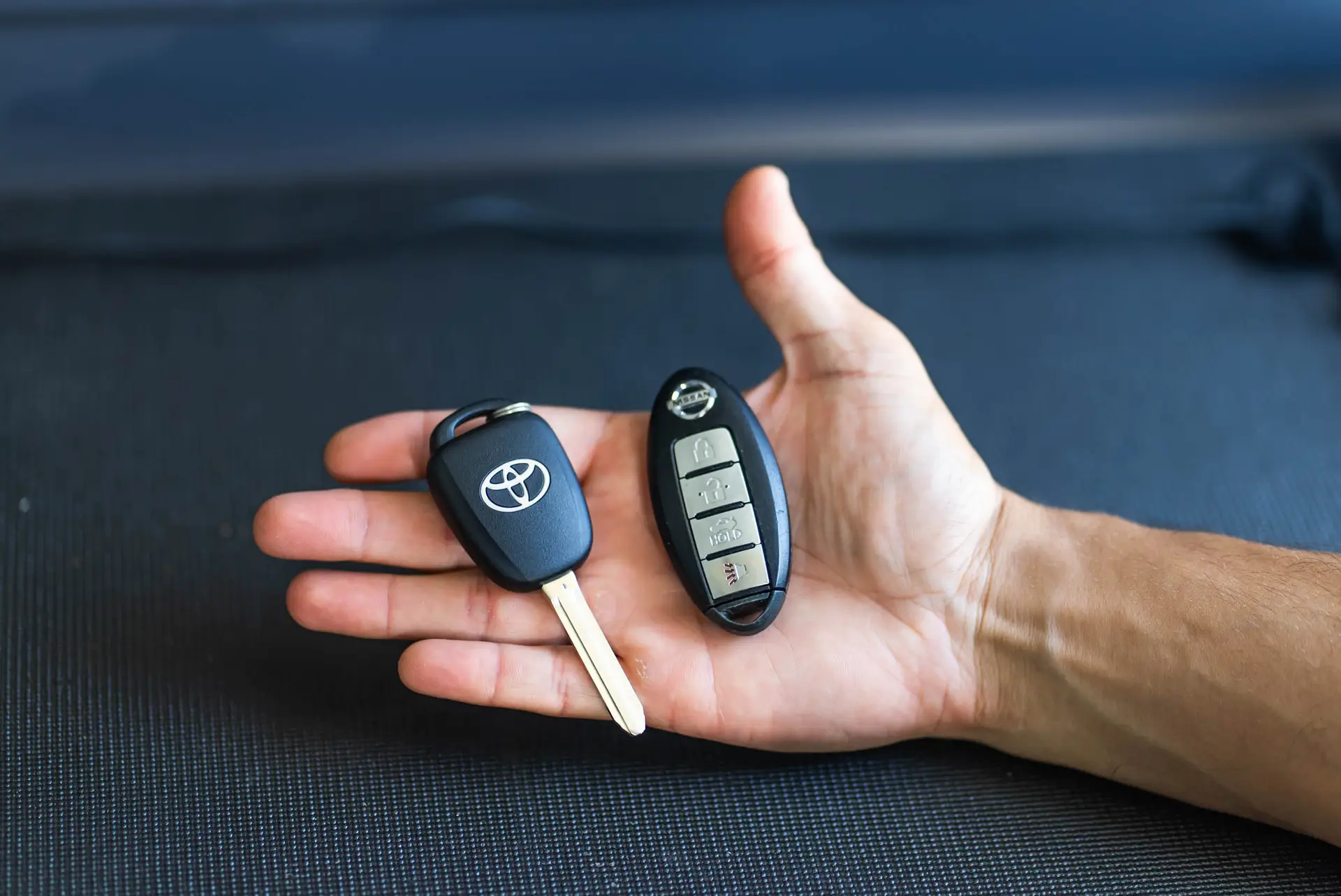
Somewhere inside your key — often tucked under a layer of plastic or at the base of the key blade — is a small chip or bar. This is the transponder. It’s what tells your vehicle that this specific key is authorized to start it.
Carefully pry it out, note its position and orientation, and place it into the new shell exactly the same way. Some keys hide this chip deeper than others. Don’t rush. If you skip this step or install it incorrectly, the car will crank and immediately shut off.
Step 5: Reinstall the Battery Contacts
Inside the shell, you’ll find small metal terminals — the battery connectors and power transfer points. Make sure they seat firmly in their slots and align properly with the battery compartment. If these are off, the key FOB will appear completely dead even if everything else is correct.
Step 6: Transfer the Key Blade
Insert your original cut key blade into the new shell. Make sure it aligns with the hinge and sits correctly before moving on. Test how it moves before you go any further.
Step 7: Install the Spring Mechanism
This is where most people struggle. The spring is what gives the key its snap when you press the release button.
Locate the spring slot inside the shell, insert the spring, align it with the small notch or slit, and rotate it slightly to create tension. That tension is what produces the clean flip-out action. You may need to try this a couple of times to get it right. When it’s correct, pressing the button will snap the key blade open smoothly.
Step 8: Reassemble the Shell
Once every component is in place, align both halves of the shell and snap them firmly together. Reinstall the battery and close the back cover. Everything should sit flush and tight.
Step 9: Test Before You Walk Away
Run through all three checks before calling it done:
Press the release button — does the key blade snap out cleanly? Test the lock and unlock buttons — do they respond? Start the vehicle — does it stay running?
If all three check out, you’ve successfully rebuilt your key FOB and your car will treat it exactly like the original.
The Most Common Mistakes
Forgetting the transponder chip is the number one error. Without it, the car will not stay running — no exceptions.
Installing components in the wrong orientation is a close second. Even a small misalignment can cause the buttons to fail or the board to malfunction.
Losing small internal parts is another common issue, which is why the clean flat workspace matters.
And finally, incorrect spring installation results in a key that won’t flip out or snaps back immediately — frustrating, but fixable if you take it apart and try again.
Why Hardware Store Keys Won’t Solve This
Hardware store key-cutting machines can copy the metal blade perfectly. What they cannot do is replicate the transponder chip. That chip is programmed to your specific vehicle’s immobilizer system. Without a matching chip, the blade is physically functional and electronically useless.
When This Repair Makes Sense
This approach works well when your shell is cracked, the key ring attachment has broken, the buttons are worn through, or the physical casing is damaged but the electronics are still intact. In those cases, a replacement shell costs a fraction of a full key replacement — often saving you $200 to $500 or more compared to going through the dealership.
When to Call a Locksmith Instead
If you’ve lost the original key and have no chip to transfer, you’ll need a professional who can source and program a replacement. The same applies if the circuit board itself is damaged, if you’re working with a smart key or push-to-start system, or if any programming is required. A qualified locksmith can rebuild keys, program new ones, and diagnose electronic issues that a shell swap won’t fix.