Key Takeaways
A lost key does not have to end your beach day or leave you waiting beside your vehicle. A calm search followed by the right mobile locksmith call can often get you moving again quickly.
- Retrace your route, including towels, bags, pockets, and the area around your car.
- Ask beach staff, nearby businesses, and lost-and-found desks before assuming the key is gone.
- Avoid prying open the door or breaking a window, since modern vehicles can be easily damaged.
- A mobile locksmith may unlock the vehicle and cut or program a replacement at your location.
- Keep identification, vehicle details, and a secure spare-key plan ready for next time.
What to do immediately after losing your car key at the beach
A missing car key is especially easy to overlook at the beach, where sand, sunscreen, towels, and changing clothes create plenty of hiding places. Start with a careful search rather than rushing into a costly replacement. If the key is truly gone, getting help at the vehicle is usually simpler than arranging a tow. The steps below can help you stay organized while you decide what to do next.
Retrace your steps and check common hiding places
Walk back through the places you visited, starting with the last moment you clearly remember having the key. Check every pocket, bag compartment, shoe, towel fold, and cooler, then look around the car and beneath nearby seats. Keys can also end up inside the trunk or on top of the vehicle, so check those areas before calling for assistance.
If you were near the water, do not put yourself at risk by searching in rough surf or deep water. A phone flashlight can help with a close look beneath seats and around the parking space, especially as daylight fades. A Hawaii car key guide can also help you work through the first steps if you are still deciding whether the key is lost or simply misplaced.
Ask beach staff, nearby businesses, and lost and found
Beach attendants, lifeguard stations, hotel desks, gyms, and nearby shops often receive keys turned in by visitors. Give them a clear description and your approximate location, and leave a phone number if their lost-and-found process allows it. It is worth checking again after a short search because someone may have found the key after you first asked.
If you rented the vehicle, notify the rental company as well, but ask what emergency options are available before agreeing to a tow. Keep your rental agreement accessible, since the vehicle and key requirements may differ from those of a privately owned car.
Keep your vehicle and belongings safe while you search
Stay near the vehicle when practical, particularly if luggage, phones, wallets, or beach equipment are inside. Do not leave the car unlocked while you search, and avoid displaying valuables through the windows. If the car is in a busy or poorly lit area, move to a visible public spot or ask beach staff for a safer place to wait.
If the key is locked inside, resist using a coat hanger, wedge, or improvised tool. For more detailed advice on a car lockout, review this lockout guidance, then call a qualified professional if the key does not turn up.
Why a mobile locksmith is often the fastest solution
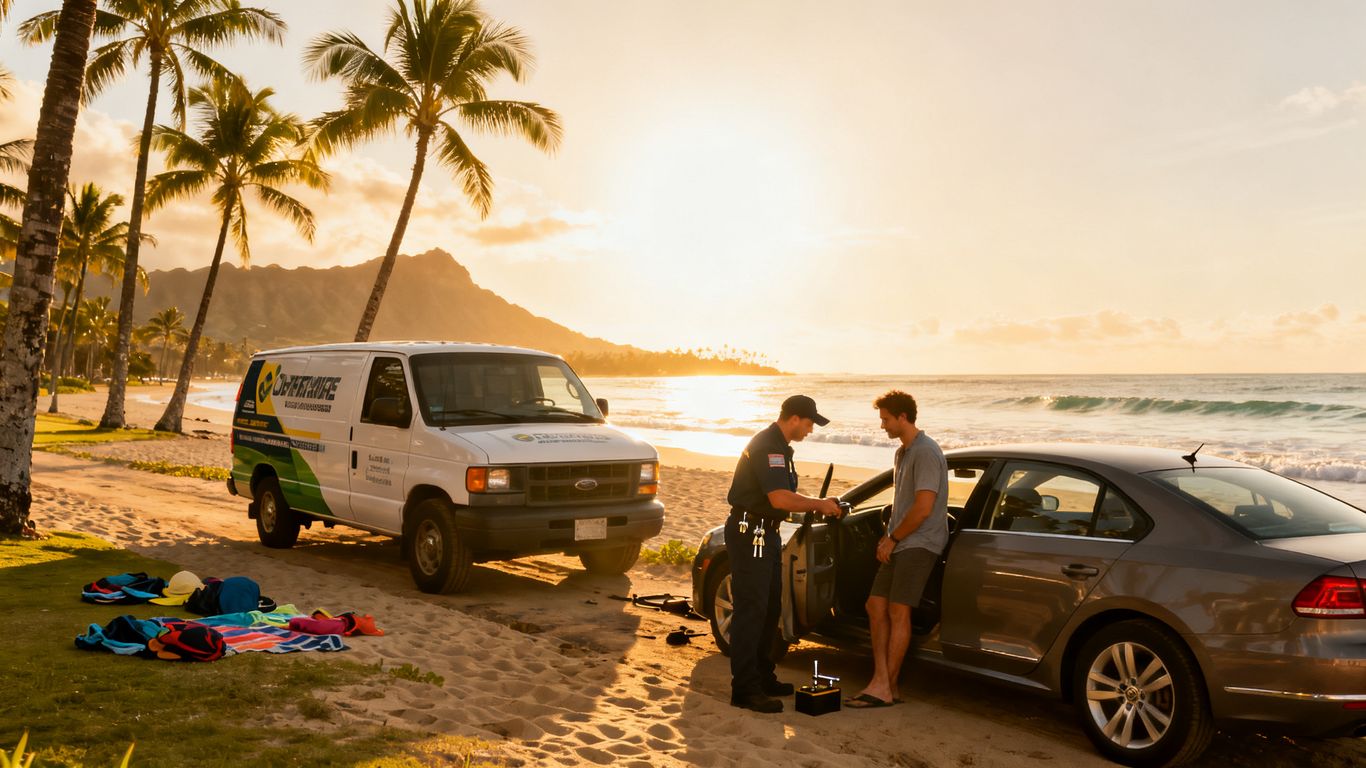
A mobile locksmith brings equipment to the vehicle instead of asking you to transport the vehicle to a shop. That matters when the car is in a beach parking lot, hotel driveway, or airport area and cannot be driven. The technician can first assess whether you need entry, key retrieval, key replacement, or more than one service. In Honolulu and across Oʻahu, Double Quick Locksmith provides 24/7 emergency car key replacement and lockout service, with arrival often within 20 to 30 minutes.
Get help at the beach, parking lot, or hotel
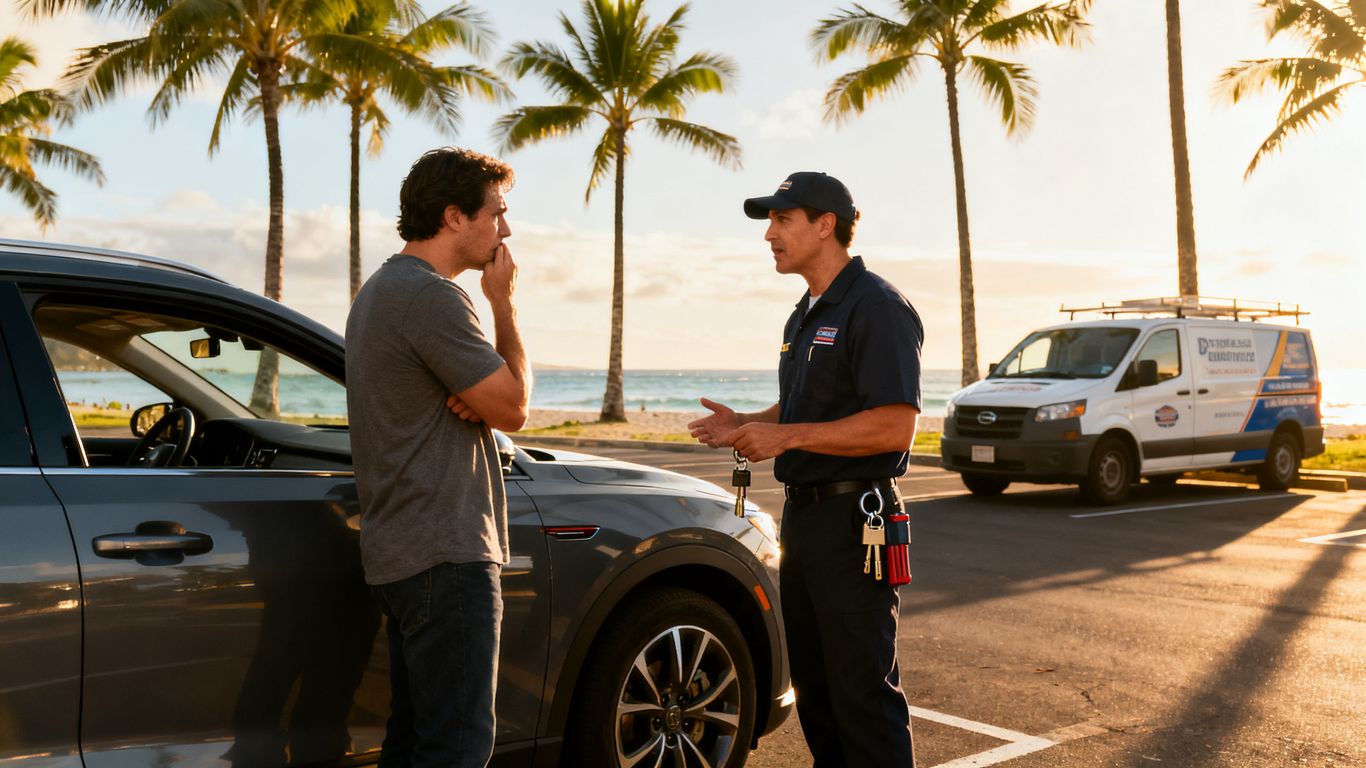
When you call, describe the exact place where the vehicle is parked rather than only naming the beach. A nearby entrance, hotel name, parking level, stall number, or landmark can make it easier for a technician to find you. You can remain with the vehicle while the mobile team brings the tools and key equipment needed for the situation.
This approach is useful for visitors who may not know the area well. It can also help local drivers avoid leaving a vehicle unattended while they search for transportation or arrange a ride.
Avoid dealership appointments and towing delays
A dealership may be able to supply a replacement, but the process can involve an appointment, business-hour restrictions, and getting the vehicle there first. Towing adds another handoff and may be unnecessary when the vehicle can be serviced where it sits. A mobile locksmith can often handle the access and replacement work on-site, depending on the vehicle and key system.
For another perspective on comparing replacement options, see this Honolulu car key guide. The practical question is not only the key price; it is also how long the vehicle will be unavailable and whether towing is required.
Understand how a 20- to 30-minute response works
A stated 20- to 30-minute arrival is an estimate, not a promise that every job will be completed in that time. Traffic, distance, weather, parking restrictions, vehicle complexity, and the type of key can all affect the schedule. Give the dispatcher accurate details and keep your phone available so the technician can reach you if the meeting point changes.
Once on site, the locksmith may need additional time to verify ownership, open the vehicle, cut a key, or program an electronic system. That is why the phrase “lost your car key at the beach? a mobile locksmith service that helps you under 30 minutes” should be understood as a fast-response goal rather than a guaranteed total-job duration. For broader help with urgent automotive service, you can also review this mobile locksmith service.
Car key services a mobile locksmith can provide on-site
The right service depends on the key you lost and the vehicle’s security system. Older cars may use a traditional metal key, while newer vehicles can require a transponder, remote, or smart key programmed to the vehicle. A technician normally identifies the system before choosing the correct blank and procedure. The following services are common examples, though availability can vary by make, model, year, and condition.
Replace lost or broken traditional car keys
A traditional metal key may be cut on-site when the original is missing, worn, or snapped. The locksmith needs accurate vehicle information to match the blade and confirm that it operates the door and ignition. If the key broke in the lock, extraction may need to happen before a replacement can be tested.
Ask whether a spare can be made while the technician is already there. Having a second working key is usually easier than waiting until the next emergency.
Cut and program transponder keys
A transponder key contains a chip that communicates with the vehicle’s ignition system. Cutting the metal blade alone may not be enough; the chip must also be programmed correctly for the car to start. This is one reason a replacement can take longer than making a simple duplicate.
Before work begins, ask whether the quoted service includes both cutting and programming. A car key programming service explains the distinction between creating the physical key and making it communicate with the vehicle.
Replace or reprogram key fobs and smart keys
A key fob may stop working because it is damaged, lost, or no longer paired with the vehicle. Smart keys and push-to-start systems require compatible equipment and programming, and the correct process varies between vehicles. Tell the locksmith whether the fob is missing, intermittently working, water-damaged, or present but not detected.
Do not assume a new battery will solve every problem. A battery can be part of the issue, but a damaged or unpaired fob may require replacement or reprogramming.
Extract broken keys and repair damaged ignitions
A key fragment in the door or ignition should be removed carefully so the cylinder is not damaged further. Specialized extraction tools can help remove the fragment, after which the locksmith can assess whether the key, lock, or ignition needs repair. Ignition service may include repair or replacement for a jammed, worn, or non-turning cylinder.
The key type and vehicle condition affect both time and price. If the ignition has been forced or is already worn, mention that when calling so the technician can bring appropriate equipment.
How locksmiths unlock your vehicle without causing damage
A professional lockout begins with an assessment rather than force. The technician considers the door design, lock type, alarm system, window position, and whether the keys are in the cabin or trunk. Modern vehicles have sensitive trim, wiring, airbags, and anti-theft components, so the safest method is the one matched to that particular vehicle. Careful entry protects both the car and the rest of your day.
Use specialized tools for modern car doors
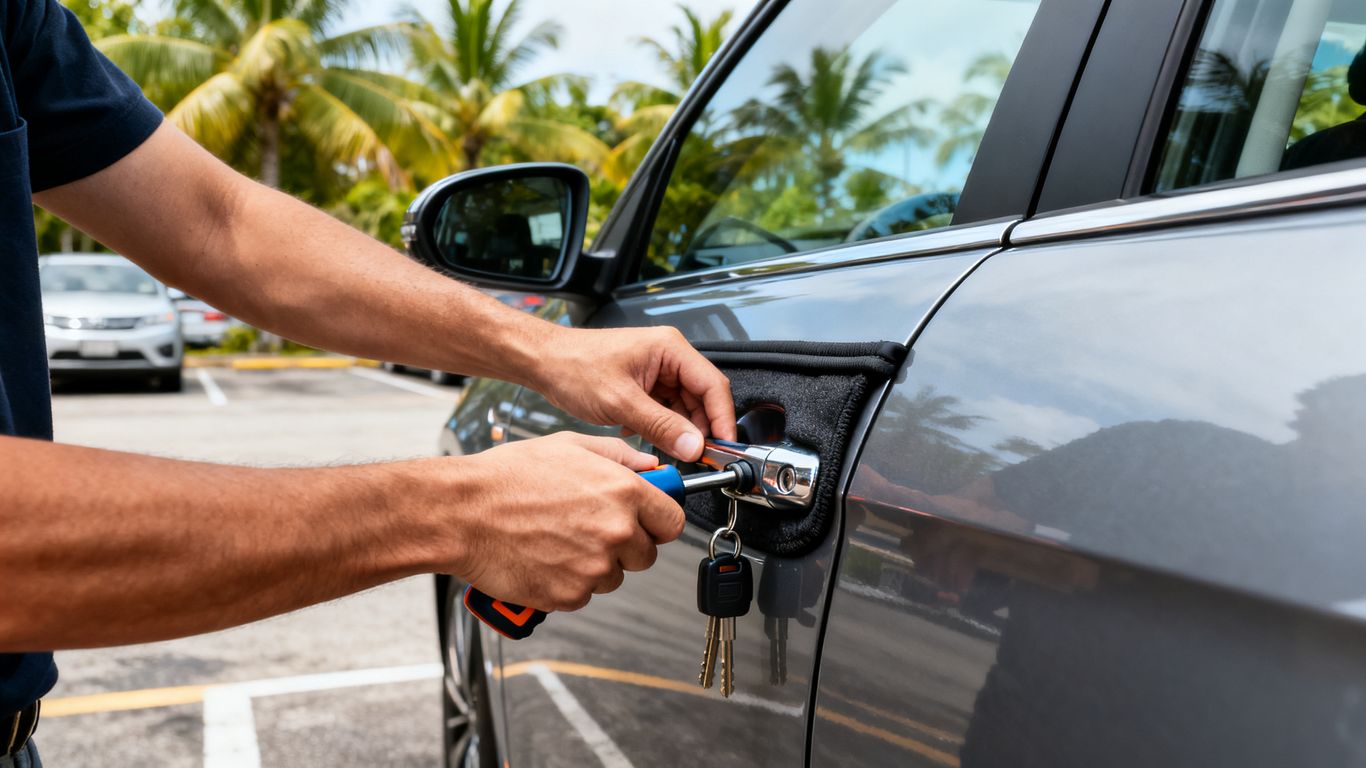
Automotive locksmiths use purpose-built tools and techniques to create controlled access without smashing a window or forcing the handle. The method depends on the vehicle’s construction and lock system. A technician may also confirm whether the vehicle has a keyless entry system before proceeding.
The goal is access, not damage. If a tool or approach begins to put pressure on the wrong part of the door, the technician should stop and reassess rather than improvise.
Protect the paint, windows, locks, and alarm system
Improvised wedges and metal tools can scratch paint, bend a door frame, break weather stripping, or trigger an alarm. A professional takes care around the glass, seals, trim, and lock mechanism. After entry, the lock and key system can be checked for signs of damage or an underlying fault.
The quickest-looking shortcut is not always the quickest way back on the road; avoiding damage prevents a small lockout from becoming a larger repair.
That principle is especially relevant near salt water, where already-exposed metal and electronics may be vulnerable. Professional entry is generally safer than forcing the door yourself.
Handle trunks, glove compartments, and keyless entry systems
Not every lockout involves a front door. Keys may be in the trunk, a glove compartment, or a vehicle with keyless entry and push-to-start features. Explain the exact situation before the technician arrives so the access plan accounts for the affected compartment and the vehicle’s security system.
Once the car is open, confirm that the keys have been retrieved or that a replacement has been tested. If the key is missing, access alone may not solve the problem; cutting or programming may still be needed.
What to have ready before calling a locksmith
A few accurate details can make the first phone call much more useful. The locksmith needs to know where the vehicle is, what kind of vehicle it is, and whether the key is lost, locked inside, broken, or malfunctioning. Good information helps the technician prepare the right tools and gives you a clearer discussion of service and cost. It also reduces back-and-forth while you are waiting.
Share your exact location and vehicle details
Give the dispatcher the beach, hotel, parking structure, street, level, and a nearby landmark. Then provide the vehicle make, model, year, color, and whether it uses a traditional key, transponder, fob, or smart key. If you have the vehicle identification number, keep it available because it may help confirm compatibility and prepare a quote.
A useful call usually includes these details:
- The vehicle’s make, model, year, and color.
- Your exact location and the safest meeting point.
- Whether the key is lost, locked inside, broken, or not working.
- Whether the car is privately owned, leased, or rented.
After sharing this information, repeat the agreed meeting location and ask what you should do while waiting. Clear communication helps the appointment run more smoothly.
Prepare identification and proof of ownership
A locksmith may ask for identification and proof that you are authorized to access or make a key for the vehicle. Have a driver’s license, registration, insurance information, rental agreement, or other relevant documentation ready. Requirements can vary, but the purpose is to protect the vehicle owner and prevent unauthorized service.
If your identification is inside the locked car, say so when you call. The technician can explain what alternative documentation may be acceptable before traveling to the location.
Ask about availability, pricing, warranty, and payment
Request an estimate based on the vehicle details and explain the full situation rather than asking only for a door-opening price. Ask whether the quote includes service call, labor, key cutting, programming, extraction, or ignition work. It is also reasonable to ask about payment methods, availability, and any workmanship or key warranty.
For context, an order processing guide can be useful when thinking about how clear steps, status updates, and accurate details prevent delays, although vehicle service is different from shipping an order. If you are preparing a list of local emergency contacts, unrelated planning resources such as commercial outdoor lighting, keyless rental entry, or at-home bladder care are separate topics and should not be confused with automotive assistance. For a focused car-key resource, see this vehicle replacement guide. Finally, you can request service when you are ready to speak with a provider.
Mobile car key replacement for rental and luxury vehicles
Rental and luxury vehicles can make a beach lockout feel more complicated, but the first step is still the same: identify the vehicle and explain exactly what happened. Rental cars may have additional authorization requirements, while luxury vehicles may use advanced fobs or smart keys. Do not force the door or attempt programming with an unverified device. A qualified mobile technician can tell you what information is needed before beginning.
Get help with Honolulu Airport rental cars
If you lost the key to a rental picked up at Honolulu Airport, contact the rental company and ask for the vehicle details and authorization process. A local mobile locksmith may be able to meet you at the airport, hotel, or another permitted location rather than waiting for a replacement through the rental counter. Keep the rental agreement and vehicle number ready.
The rental company may still need to approve replacement work or explain its fees. Confirm those requirements before service so there are no surprises when the vehicle is returned.
Service popular makes, imports, and luxury models
Many modern vehicles use electronic keys, and imported or luxury models may require vehicle-specific procedures. Bring up the make and model during the first call, particularly if the vehicle is a BMW, Mercedes-Benz, Audi, Volkswagen, Jaguar, Land Rover, Lexus, Genesis, or Infiniti. Double Quick Locksmith documents service for new and luxury models, as well as imported vehicles, but the exact job remains dependent on the vehicle.
For a key replacement involving an unfamiliar model, ask whether the technician has the necessary blank, remote, and programming equipment. That simple check can save time.
Confirm compatibility using the vehicle identification number
The VIN can help the locksmith identify the vehicle’s configuration and determine which key type may be compatible. It is often found on the dashboard near the windshield, the driver-side door frame, registration, insurance documents, or the rental paperwork. Read it carefully because one incorrect character can create confusion.
The VIN does not replace proof of ownership or authorization. It is one useful piece of information alongside the make, model, year, location, and key symptoms.
How to prevent another beach car lockout
Once the immediate problem is solved, take a few minutes to make the next outing easier. Beach conditions are hard on small electronics, and keys are easy to bury under gear or leave on a towel. A small backup plan can protect your time, money, and peace of mind. Prevention does not need to be complicated.
Keep a spare key in a secure location
Have a duplicate made before you need it, and store it with someone you trust or in a secure, access-controlled place. Do not leave a visible spare inside the vehicle or in an obvious magnetic box underneath it. For rental cars, follow the rental company’s rules rather than making an unauthorized duplicate.
A spare is most useful when you know where it is and can reach it without exposing the vehicle to theft. Update your plan when you change cars.
Protect keys from sand, salt water, and moisture
Use a sealed pouch or waterproof case when carrying keys to the beach, and keep electronic fobs away from wet towels and open bags. Shake sand from pockets before placing them in the car, since grit can work into buttons and housings. If a key falls into salt water, dry the exterior and contact a qualified provider rather than repeatedly pressing its buttons.
A protective case will not repair water damage, but it can reduce everyday exposure. Keep the key separate from sunscreen, loose shells, and other items that can press or scratch it.
Save a 24/7 mobile locksmith number before an emergency
Store a local number in your phone while you have service and add the provider’s coverage area, hours, and payment details to the contact. It is also smart to save your vehicle’s make, model, year, and insurance information somewhere secure. If you travel around Oʻahu, a service that comes to the vehicle can be more practical than one that requires a tow.
Double Quick Locksmith offers 24/7 mobile automotive service across Oʻahu, and its technicians can handle documented services such as car lockouts, key replacement, programming, ignition repair, and broken-key extraction. Save a trusted number before the next beach trip so a stressful search has a clear next step.
Get Help Before the Day Ends
If your key is still missing, call a mobile locksmith with your location and vehicle details ready. A professional can assess the lockout, explain the available replacement or repair, and help you return to the road without unnecessary towing or damage.
Conclusion
Losing a car key at the beach is frustrating, but a careful search, secure waiting plan, and prompt mobile locksmith call can keep the problem manageable. Check with nearby lost-and-found services first, then choose professional on-site help when the key is gone, broken, or locked inside the vehicle.
Frequently Asked Questions
Can a locksmith make a car key if the original is lost?
In many cases, a qualified automotive locksmith can identify the vehicle’s key type, cut a replacement, and program it when necessary. The make, model, year, key system, and proof of authorization affect what can be done.
How long does mobile car key replacement usually take?
Arrival and completion times vary with location, traffic, vehicle type, key system, and whether programming or extraction is required. A 20- to 30-minute arrival estimate does not necessarily mean the entire replacement will be finished within that window.
Can a locksmith unlock a car without damaging it?
A trained automotive locksmith generally uses specialized, non-destructive tools matched to the vehicle. Avoid forcing the door or using improvised tools, which can damage paint, seals, windows, locks, wiring, or alarm components.
What should I do if my key breaks in the ignition?
Stop turning or pushing the fragment farther into the ignition. Keep the pieces if possible and contact a professional who can extract the broken key and assess whether the ignition or key needs repair or replacement.
Can a mobile locksmith help with a rental car?
Often, yes, but the rental company may have its own authorization and documentation requirements. Contact the rental provider, gather the rental agreement and vehicle information, and confirm that mobile replacement work is permitted.
What information should I provide when calling?
Give the exact vehicle location, make, model, year, color, VIN if available, and a description of the problem. Tell the provider whether the key is lost, locked inside, broken, water-damaged, or present but not working.
How can I avoid losing my car key at the beach again?
Carry it in a sealed pouch, keep it separate from loose beach gear, and arrange a secure spare key before an emergency. Saving a reliable 24/7 mobile locksmith number also gives you a clear backup plan.