
Key Takeaways
Good lock installation starts with matching the hardware to the door, the people using it, and the level of access control required. A clear estimate and careful final testing help keep the work both practical and affordable.
- Inspect sticking, worn, damaged, or outdated locks before they become an emergency.
- Rekeying may be enough when the hardware is sound and only key control has changed.
- Honolulu homes can use deadbolts, high-security locks, keypads, or smart entry systems.
- Commercial properties often need hardware planned around traffic, staff access, and compliance.
- Choose a local locksmith who explains pricing, service coverage, and after-hours support clearly.
Understanding your lock installation needs
The right solution depends on more than the lock’s appearance. A condo entry, detached home, retail storefront, and warehouse all place different demands on hardware and access. Start by considering how the door is used, who needs a key, and whether the existing frame is still in good condition.
Signs your locks need installation or replacement
A lock that sticks, turns roughly, or fails to latch is already giving you useful information. Rust, loose hardware, a door that no longer closes squarely, or keys that work only when jiggled can all point to a repair or replacement need. Moving into a new home, losing keys, or dealing with a copied key are also sensible reasons to update access.
A professional can determine whether the issue is the cylinder, latch, strike plate, door alignment, or frame. That distinction matters because replacing a lock will not solve a sagging door or a weakened mounting point by itself.
Rekeying versus installing new locks
Rekeying changes which key operates an existing lock, while installation replaces the hardware or adds a new locking point. Rekeying can make sense after a tenant leaves or when keys are lost, provided the lock is in good shape. New hardware is usually more appropriate when the lock is worn, damaged, outdated, or poorly matched to the door.
Ask for both options when they are reasonable. The comparison should include the condition of the current lock, the number of doors involved, and whether you want one key to operate several entry points.
Choosing between residential and commercial hardware
Residential hardware is generally selected around household convenience, appearance, and everyday durability. Commercial hardware must also account for heavier traffic, employee turnover, restricted areas, and sometimes exit or building requirements. A careful locksmith will not treat a warehouse door and a bedroom door as the same project.
For an additional perspective on evaluating an entire property, a whole-home security evaluation can help organize questions about doors, windows, sliding doors, garages, gates, and other entry points. The goal is not to add hardware everywhere, but to identify the places where an upgrade actually helps.
Lock options for Honolulu homes
Homeowners have more choices than a basic keyed knob, but more technology is not automatically better. Salt air, daily use, door construction, and the habits of everyone in the household all deserve attention. A good installation leaves the door operating smoothly while making access easier to manage.
Doorknobs, deadbolts, and entry locks
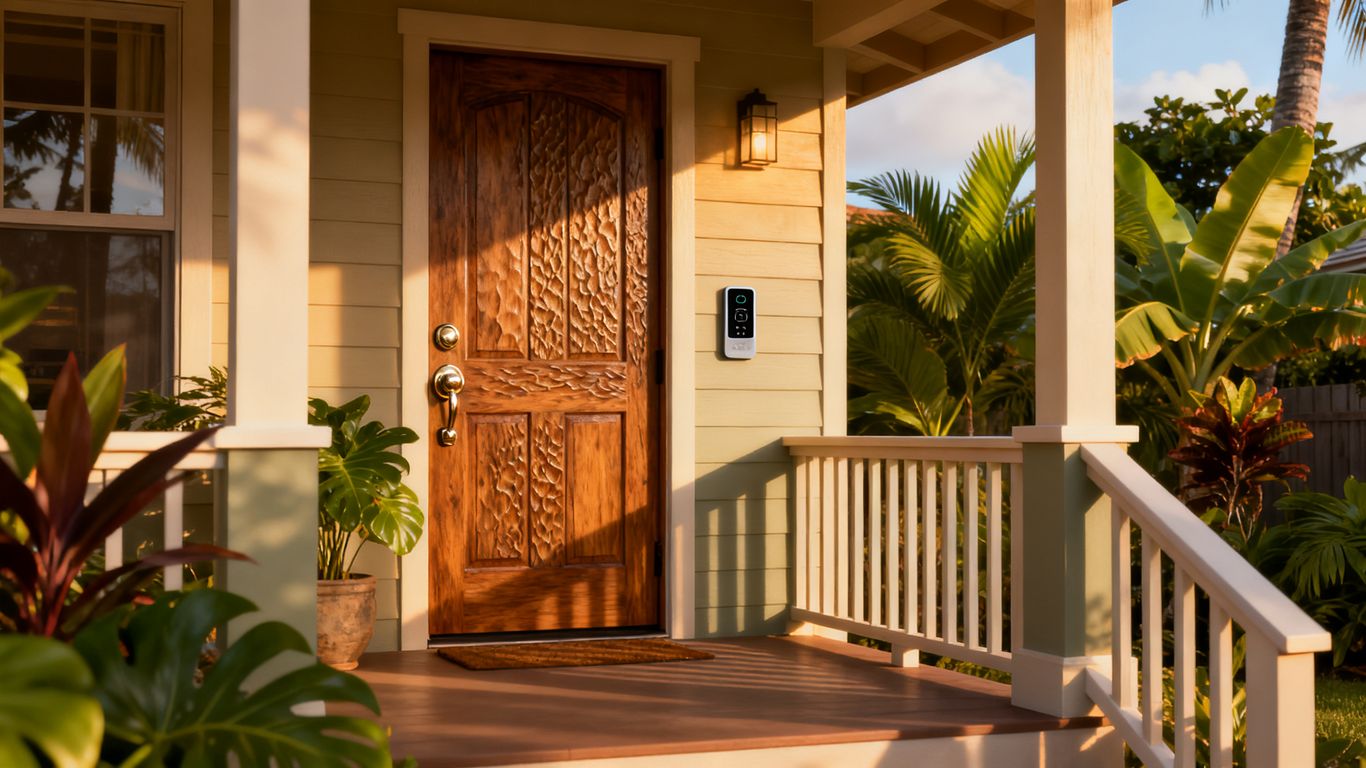
Doorknobs are convenient for interior and some secondary doors, while deadbolts provide a separate locking point for exterior entries. The lock should fit the door’s thickness and bore spacing, and the latch should meet the strike cleanly without forcing the handle. This basic alignment often makes a bigger difference than choosing the most elaborate finish.
When a new deadbolt or doorknob is installed, the technician should also check the screws, strike area, and frame. A strong lock depends on the surface around it, not just the cylinder in the center of the door.
High-security locks for added protection
High-security systems may include features designed to resist picking, bumping, or drilling, along with restricted key duplication. They can be useful for exterior doors, properties with valuable contents, or households that want tighter control over spare keys. The appropriate level depends on the home and the owner’s security priorities.
Compare the protection features with the cost of replacement keys and future servicing. A lock that is difficult to maintain or inconvenient for the household may not be the best long-term choice, even when its specifications look impressive.
Smart locks, keypads, and keyless entry
Keypads and smart locks can reduce reliance on physical keys and make it easier to share or change access. Depending on the model, setup may involve mounting the lock, programming PIN codes, and connecting the system through Wi-Fi or Bluetooth. The door must still close and latch correctly before any electronic feature can work reliably.
The smart lock installation guide is a useful starting point for questions about remote access, activity logs, rekeying, and finding a qualified installer. For households considering connected entry, plan a backup method for power or connectivity issues before choosing a model.
Commercial lock installation across Oʻahu
Business security is closely tied to daily operations. Employees need dependable entry, managers need control over sensitive areas, and customers or deliveries should not create confusion at the door. Commercial installation therefore begins with an access plan rather than a single favorite lock type.
Locks for offices, storefronts, and warehouses
Offices may need controlled access to workrooms, records, and shared spaces. Storefronts often balance customer flow with staff-only areas, while warehouses may require durable hardware at loading points and less frequently used doors. The number, placement, and use of each entry point should shape the recommendation.
For a project involving offices, retail locations, or industrial properties, commercial lock installation describes the kinds of hardware and service planning used across Oʻahu. A written scope helps keep a multi-door job organized and makes later maintenance easier.
Mortise locks, access control, and master key systems
Mortise locks are built into the door and are commonly considered for demanding commercial applications. Access control may use electronic keypads, cards, fobs, or other authorized credentials. A master key system can allow different levels of entry while keeping management simpler than carrying a separate key for every area.
These systems should be designed around real permissions. Decide who needs access to which doors, how quickly credentials must be changed, and what happens when an employee, vendor, or tenant no longer requires entry.
Meeting daily access and security requirements
A commercial lock is successful when it supports the building’s routine without creating avoidable delays. Review opening hours, staff turnover, deliveries, emergency exits, and any relevant building standards before work begins. Hardware should be durable enough for its traffic and simple enough for authorized users to operate correctly.
For broader planning, commercial access control offers a relevant reference point for electronic keypads and card or fob systems. Keep the final design understandable to the people who will administer it; complicated access rules tend to become weak rules when no one can manage them confidently.
What to expect from a professional installation
A professional visit should be more than removing an old lock and fastening a new one. The technician needs to understand the door, frame, entry pattern, and requested level of security. Clear communication at the beginning reduces surprises once the work is underway.
Assessing doors, frames, and entry points
The assessment usually starts with the door’s material, thickness, swing, hinges, frame, and existing cutouts. The technician may also review nearby entry points if the request concerns a wider security upgrade. This is where problems such as a loose strike, damaged jamb, or uneven threshold can be identified before they affect the installation.
Explain any recurring trouble and who uses the door most often. Those details help determine whether the priority should be stronger hardware, easier access, better key control, or a combination of changes.
Installing and aligning the hardware
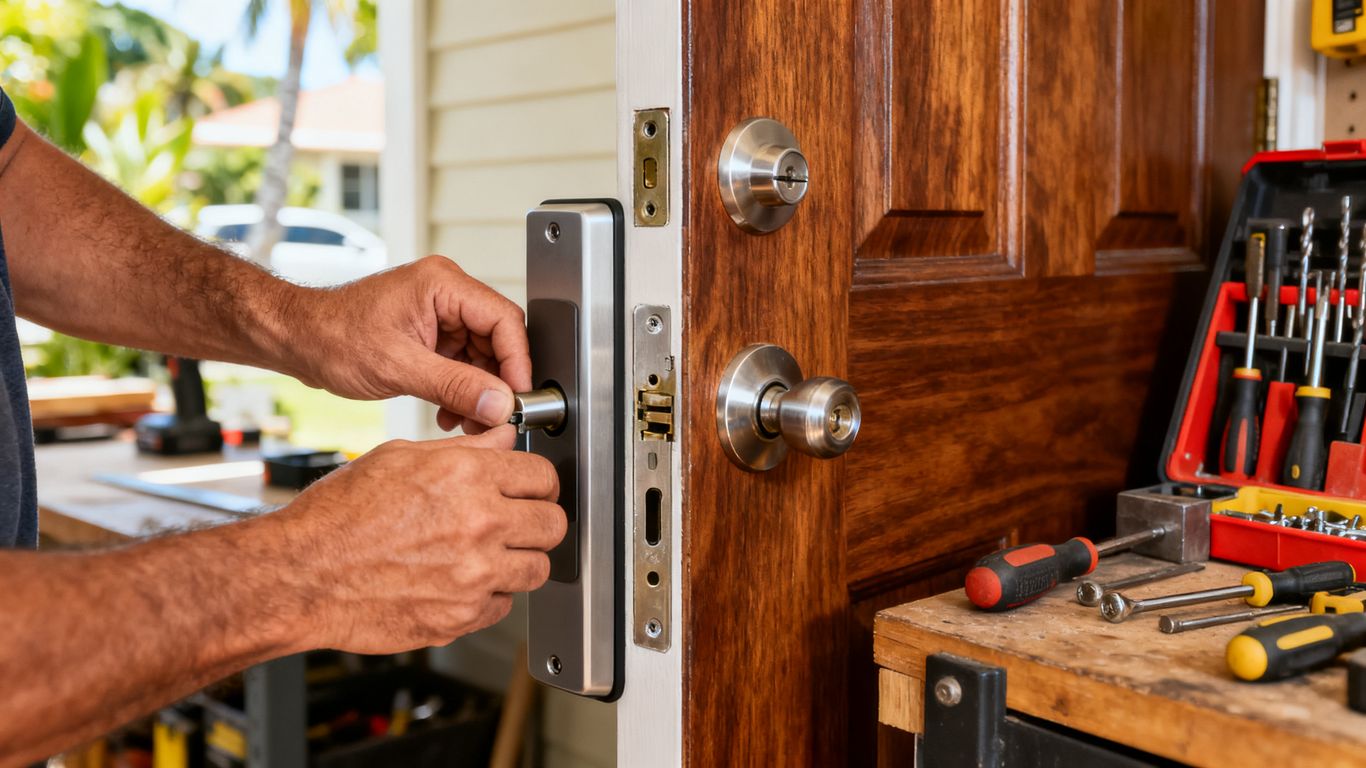
Once the hardware is selected, the installer fits the components, secures the mounting points, and aligns the latch or bolt with the strike. Small adjustments can prevent rubbing, incomplete locking, and unnecessary wear. The work should leave the door easy to close from both sides without forcing the handle or key.
Proper alignment protects the investment because even a quality lock can perform poorly when the door and frame are fighting it. Take a moment to operate the door yourself before the technician packs up.
Testing keys, codes, and access features
Testing should cover every authorized key, code, thumb turn, handle, and electronic function included in the job. A smart lock may also need its app connection or backup entry method checked. If several people will use the door, have the primary users practice the normal entry and locking sequence.
Ask what basic maintenance is recommended and what to do if the lock begins to stick. Written instructions, spare keys, and a clear contact process are small details that make the installation easier to live with.
How to keep lock installation fast and affordable
Fast service does not have to mean rushed decisions. The best way to control cost is to define the job before arrival, choose hardware that fits the actual need, and avoid paying for features no one will use. This also gives the technician a better chance of bringing the right materials.
Requesting a clear service estimate
Describe the number of doors, current symptoms, preferred hardware, and whether the work is urgent. Request an itemized estimate that separates the lock, labor, and any additional repair or reinforcement. The guide to locksmith pricing can help you think through questions about detailed costs, timing, and suspiciously low offers.
If an on-site condition changes the scope, ask what changed and why before approving additional work. Clear answers are more useful than a vague promise of a low final price.
Comparing hardware, labor, and long-term value
The cheapest lock is not always the least expensive choice over several years. Consider durability, key replacement, battery needs, servicing, and how well the hardware suits the door. A simple comparison can keep the conversation focused:
| Option | Useful when | Cost questions | Maintenance consideration |
|---|---|---|---|
| Rekeying | Hardware is sound but key control changed | Cylinder labor and number of locks | Existing wear remains |
| Standard deadbolt | A straightforward exterior upgrade is needed | Hardware grade and installation labor | Lubrication and alignment |
| High-security lock | Stronger resistance or restricted keys matter | Hardware, cylinders, and spare keys | Authorized key management |
| Smart or keypad lock | Keyless access is useful | Device, setup, and connectivity | Batteries, codes, and backup entry |
This comparison does not select a lock for every home. It gives you a practical way to weigh the initial price against convenience, security, and future upkeep.
Avoiding hidden fees and unnecessary upgrades
Before work begins, confirm whether the estimate includes travel, removal of old hardware, frame repairs, programming, extra keys, and after-hours labor. You should also know whether a recommended upgrade addresses a documented weakness or simply adds a feature. A straightforward scope is especially helpful when several doors are involved.
For a second opinion on local service planning, professional locksmith help covers installations, rekeying, key duplication, and lockout support in one place. Use the information to ask sharper questions, not to purchase more equipment than your property needs.
Choosing a Honolulu locksmith
A locksmith is working on the point where your private space meets the outside world, so trust matters as much as speed. Look for a service that communicates clearly, arrives with suitable equipment, and explains the work in plain language. Local knowledge can also make scheduling across Oʻahu more practical.
Checking local experience and service coverage
Ask how long the technician has worked with the type of door and hardware involved. Confirm that the service covers your neighborhood and can handle residential, commercial, or emergency work as appropriate. Reviews and credentials can provide useful context, but the estimate and conversation should still stand on their own.
Double Quick Locksmith describes licensed technicians, mobile service across Oʻahu, and more than a decade serving commercial businesses and properties island-wide. Its commercial locksmith services are most relevant when a business needs access planning, master key solutions, or emergency support.
Confirming emergency and after-hours availability
A lock problem does not always happen during business hours. Before choosing a provider, ask whether after-hours service is genuinely available, how dispatch works, and what information is needed to verify access to the property. Also clarify pricing for urgent visits rather than assuming it will match a scheduled appointment.
For a lockout, have identification and proof of occupancy or authorization ready when possible. That protects both the property and the technician while helping the visit move efficiently.
Scheduling installation, replacement, or maintenance service
When the work is not urgent, schedule a time when the decision-maker and main users can be present. Have the doors accessible, list the keys or codes that should remain active, and mention any sticking or alignment issues in advance. A maintenance visit can be worthwhile when locks are worn but not yet failing.
Double Quick Locksmith provides 24/7 mobile locksmith service for homes, businesses, and vehicles, with fast response across Honolulu and Oʻahu. To arrange the next step, request a free quote and explain whether you need installation, replacement, rekeying, or an assessment.
Contact Double Quick Locksmith
When you need honolulu locks installation, fast and affordable, contact Double Quick Locksmith with the door details and access concerns ready. A clear request helps the team recommend practical hardware and schedule the right service.
Conclusion
Choosing a lock is easier when you begin with the door, the people who use it, and the access risks you actually face. Whether the answer is rekeying, a reinforced deadbolt, high-security hardware, or keyless entry, careful assessment and testing make the finished installation more dependable and easier to budget.
Frequently Asked Questions
Should I rekey or replace my locks after moving?
Rekeying can be suitable when the existing hardware is in good condition and you mainly need new key control. Replace the locks when they are worn, damaged, outdated, or unsuitable for the door.
How do I know whether a deadbolt will fit my door?
A technician should check the door thickness, bore spacing, backset, frame, and strike alignment. These measurements help ensure the new deadbolt operates smoothly and locks securely.
Are smart locks secure for Honolulu homes?
Smart locks can provide keyless entry and easier access management, but their usefulness depends on correct installation, strong account practices, battery upkeep, and a reliable backup entry method.
What should a lock installation estimate include?
Ask for separate details on hardware, labor, travel or service charges, removal, repairs, programming, additional keys, and after-hours costs. The estimate should also explain any recommended upgrade.
Do commercial properties need different locks than homes?
Often, yes. Commercial doors may experience heavier traffic and require controlled access, master keying, panic hardware, or electronic systems suited to employees, deliveries, and restricted areas.
How long does a professional lock installation take?
Timing varies with the number of doors, hardware type, condition of the frame, and any needed repairs. A clear description and photos can help a locksmith prepare more accurately.
What should I do if a newly installed lock sticks?
Stop forcing the key or handle and contact the installer. The issue may involve alignment, the latch, the frame, or the hardware, and correcting it early can prevent further damage.