Key Takeaways
A nonworking key fob is not always a sign that you need a completely new key. Start with the battery and basic diagnosis, then compare the cost, timing, and programming requirements before choosing a service.
- A weak battery, damaged case, failed electronics, or programming issue can produce similar symptoms.
- A new shell may solve physical damage when the original transponder and circuit board still work.
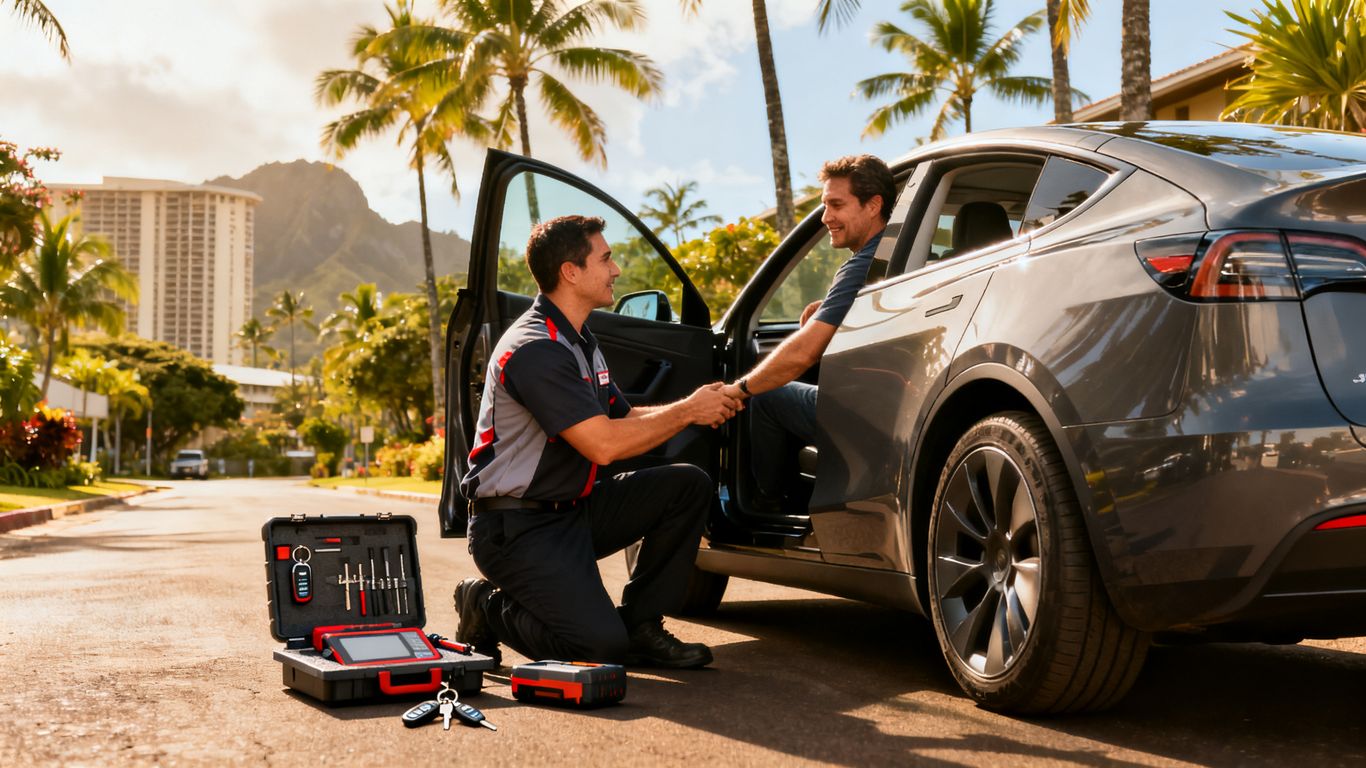
- Mobile locksmiths can often cut, program, and test replacement keys where the vehicle is parked.
- Dealership service may be necessary for some warranty, recall, or manufacturer-only programming situations.
- Have your VIN, vehicle details, ownership documents, and exact location ready before calling.
Identify why your key fob stopped working
A key fob can fail gradually or stop without warning. Before searching for “mobile key fob replacement near me,” take a few minutes to separate a simple battery problem from a damaged remote, a programming issue, or a fault in the vehicle itself. That first distinction can save money and prevent an unnecessary replacement.
Signs of a dead or weak fob battery
A fading battery often causes a shorter operating range, inconsistent lock and unlock commands, or a need to press the button several times. The fob may still work close to the vehicle while failing from across a parking lot. Check the battery type and replace it carefully, while keeping the small electronics clean and dry.
A spare fob can help narrow the diagnosis. If the spare works normally, the original remote is the likely problem; if neither works, look more closely at the vehicle battery, receiver, or programming. This key fob troubleshooting guide can also help you work through basic checks before booking service.
When reprogramming may solve the problem
A fob that has power but is no longer recognized may need to be re-synced or programmed again. This can happen after a battery change, a long period without use, or an internal fault that interrupts communication with the vehicle. The correct procedure varies by make, model, year, and key type, so avoid assuming that an online sequence will work for every car.
If the buttons respond but the vehicle does not recognize the key, professional testing is sensible. A technician can determine whether the remote is transmitting and whether the vehicle is accepting its signal before recommending a replacement.
How vehicle, receiver, or signal issues affect performance
Sometimes the fob is fine and the problem is elsewhere. A weak vehicle battery, a damaged antenna, interference near the car, or a receiver fault can make a working remote appear dead. Push-start vehicles may also behave differently from cars that use a conventional ignition cylinder.
Try the remote away from large electronic devices and test the vehicle with a second key if one is available. If the same failure continues, explain the pattern to the locksmith rather than asking immediately for a new fob. That detail helps direct the diagnosis.
Decide whether you need repair, replacement, or a new shell
The right fix depends on which part has failed. A cracked case is a different job from a dead circuit board, and neither is the same as losing the only key. The original transponder matters because it is part of the security identity the vehicle recognizes.
A careful inspection should come before ordering parts. Look for water exposure, broken button pads, loose battery contacts, a damaged key ring, and signs that the circuit board has been bent or corroded.
Replacing a damaged fob case without losing the transponder
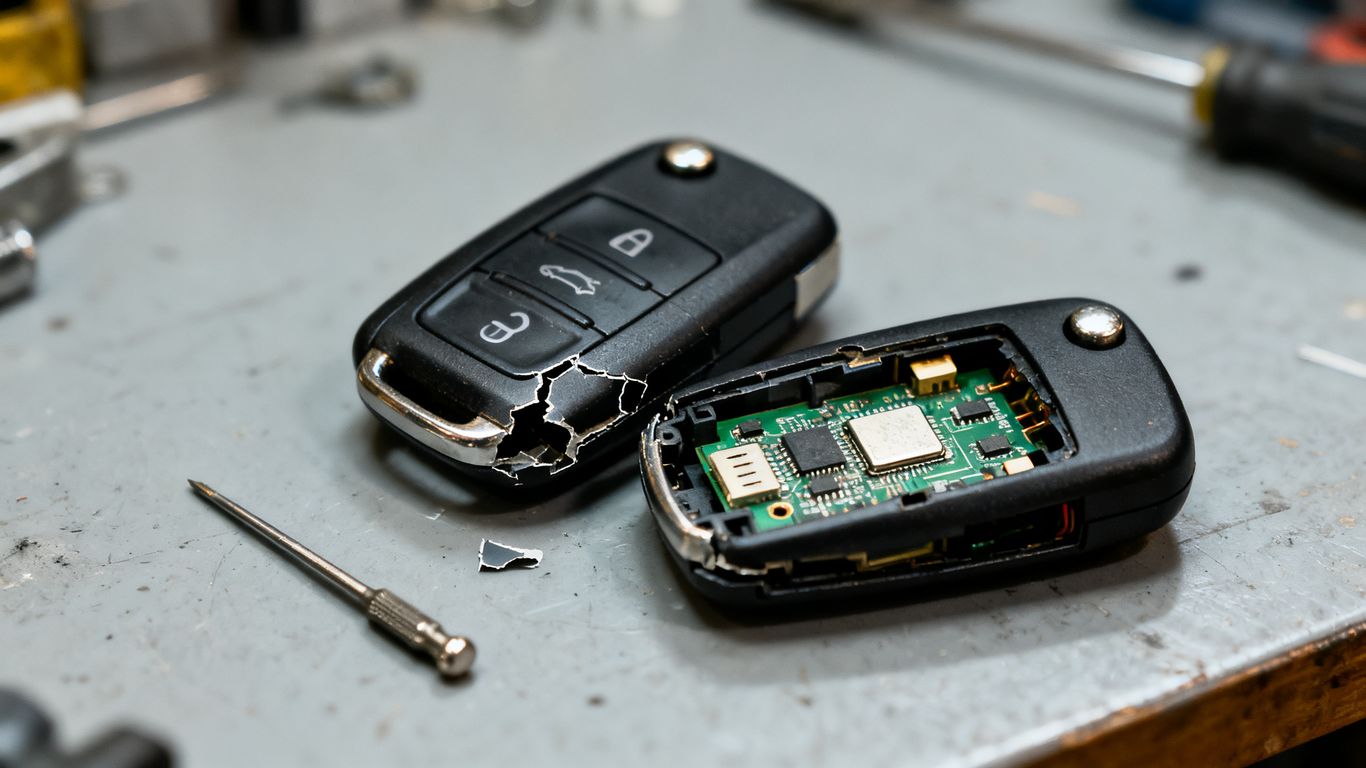
A replacement shell can be a practical answer when the casing is cracked or the key-ring attachment has broken but the electronics still function. The original circuit board, battery contacts, key blade, and transponder must be transferred correctly. Losing or misplacing the transponder can leave a blade that fits the ignition but does not keep the engine running.
The process involves small parts and, in some designs, a spring-loaded blade. If you are comfortable working on a clean table and can identify every component, a shell swap may be reasonable. Otherwise, a locksmith can handle the transfer and test the finished key.
Repairing buttons, contacts, and internal components
Worn buttons, dirty contacts, and loose battery terminals can sometimes be repaired without replacing the whole fob. A remote that works only when squeezed or held at a certain angle may have a physical connection problem rather than a programming failure. Water or heat damage is more concerning because it can affect several internal components at once.
Do not force the case open with a large tool or work over carpet where tiny pieces can disappear. If the board is corroded or the transponder is missing, a basic shell replacement will not resolve the issue.
Knowing when a complete replacement is the safer option
A complete replacement is usually more sensible when the fob is lost, the circuit board is badly damaged, the transponder cannot be recovered, or the vehicle no longer recognizes the remote after proper testing. It may also be the safer route when the key is used for a push-start system and the existing electronics have been exposed to water.
Ask whether the replacement includes cutting, programming, and testing. Those steps are separate from simply purchasing a plastic shell, and the final result should operate the vehicle’s relevant security functions.
Understand the key fob replacement process
A professional replacement is more than handing over a new remote. The technician must identify the correct key, confirm that it matches the vehicle, and complete any cutting or electronic programming required. A mobile visit is especially useful when the vehicle cannot be driven to a shop.
The process may be straightforward for one vehicle and more involved for another. Your existing key status, security system, and whether the vehicle uses a transponder or smart key all affect the work.
Verifying your vehicle’s make, model, and year
Start with the exact make, model, and year, then provide the VIN when possible. Trim level and key style can matter, so a photo of the current fob may also help. If the original is lost, tell the locksmith that immediately; the replacement process may differ from duplicating a working key.
VIN information is useful for confirming the likely key type, but it does not replace on-site verification. The technician may still need to inspect the vehicle and check its existing system before programming.
Cutting and programming transponder or smart keys
A transponder key contains a chip that communicates with the vehicle’s immobilizer system. Smart keys and proximity fobs may also need programming so the car can identify them for entry and starting. Cutting the blade, when there is one, is only the physical part of the job; electronic programming is what connects the replacement to the vehicle.
Be cautious with unverified online parts. An inexpensive remote may have the wrong frequency, incomplete functions, or compatibility limits that are not obvious until programming begins. For background on the difference between physical duplication and electronic replacement, see this car key replacement guide.
Testing the locks, ignition, alarm, and push-start system
A replacement should be tested before the technician leaves. That means checking lock and unlock buttons, the trunk or hatch release when applicable, the alarm response, the ignition, and the push-start system if the vehicle has one. A key that locks the doors but does not start the car is not a completed replacement.
Ask what to do if a function fails later and whether the work carries a warranty. Testing every relevant function at the vehicle is the best way to catch an incorrect part or incomplete programming while help is still on-site.
Compare a mobile locksmith with a dealership
The choice usually comes down to access, timing, key source, and programming requirements. A dealership may be the right fit for a factory-only process, while a mobile locksmith can be more convenient when the vehicle is stranded or immobile. The best option depends on the vehicle and the urgency, not just the advertised price.
For Honolulu drivers, travel and towing can change the practical cost of either route. A service that comes to the vehicle may remove an extra trip from the process.
Differences in response time and convenience
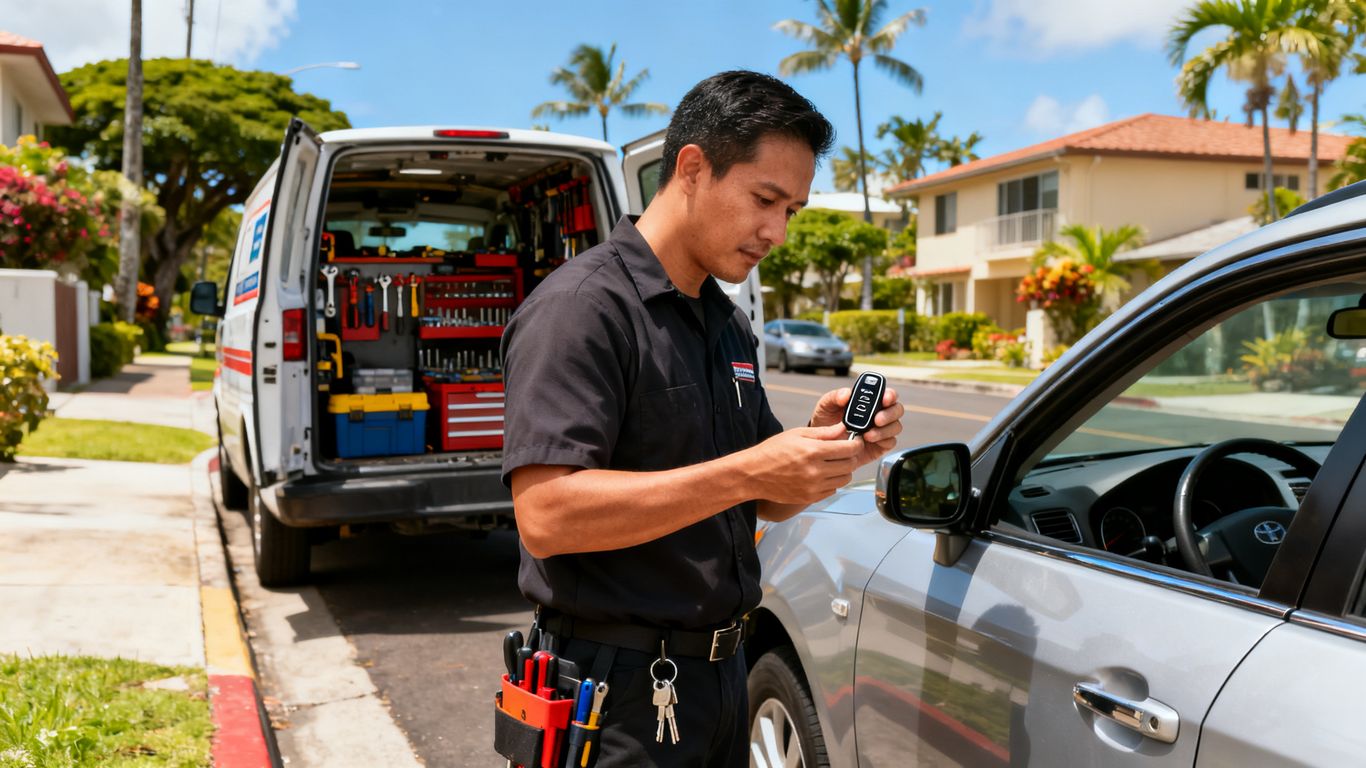
A dealership generally requires an appointment, a service-bay opening, and sometimes an ordered part. If the car cannot start, it may also need to be towed there. A mobile locksmith can inspect the vehicle at home, work, or a parking area and may complete the service without moving it.
Double Quick Locksmith provides fully mobile service in Honolulu and across Oʻahu, with key cutting and programming equipment brought to the vehicle. That documented capability is useful when avoiding a tow is part of the decision.
OEM, aftermarket, and OEM-equivalent fob options
Dealerships typically use genuine OEM parts and factory software. Mobile providers may offer OEM-equivalent or quality aftermarket fobs, depending on the vehicle and the customer’s preference. Ask whether the quoted part supports every function your original key had, including proximity detection, remote start, trunk release, and alarm controls when equipped.
The part should be matched to the vehicle rather than chosen solely by appearance. If you are comparing general automotive key services, confirm who will perform the programming and what testing is included.
Situations where dealership programming may be necessary
A dealership may make more sense when a new vehicle is under a bumper-to-bumper warranty, a factory recall or free programming campaign applies, or the vehicle requires VIN-to-OEM server authentication. Certain high-end European systems can have manufacturer-only requirements. In those cases, a mobile visit may not replace the dealer’s access.
For ordinary replacement needs, ask both providers what they can program before scheduling. A clear answer based on the exact vehicle is more useful than a broad promise covering every make and model.
Estimate the cost of mobile key fob replacement
There is no single price for every key fob. The total depends on the vehicle, the type of key, whether the original is available, and how much cutting or programming is required. A quick phone quote can be helpful, but it should be based on enough information to avoid surprises.
The least expensive solution may be a battery or shell, while a lost smart key can require a new part and more involved programming. Compare the complete service rather than the price of the fob alone.
Factors that affect the final price
Make, model, year, key technology, and the condition of the existing key all matter. A working key that needs a duplicate is often a simpler job than an all-keys-lost situation. Emergency timing, diagnostics, key cutting, and a push-start system can also change the estimate.
This table gives a practical way to discuss the quote without treating broad ranges as a promise:
| Cost factor | What to ask | Why it matters |
|---|---|---|
| Key type | Is it mechanical, transponder, or smart? | Electronic complexity varies |
| Existing key | Can the current key be tested or copied? | A working original may simplify the job |
| Programming | Is programming included? | A compatible fob still needs vehicle pairing |
| Cutting | Does the key blade need to be cut? | Physical fit is separate from programming |
| Service timing | Is this after-hours or emergency work? | Urgency may affect the service charge |
After reviewing the line items, ask whether the quoted total includes the part, labor, programming, and applicable taxes or fees. That makes two estimates easier to compare.
How towing and service fees change the total
A dealership appointment can become more expensive if the vehicle cannot be driven and must be transported. Mobile service may reduce that cost by bringing the technician and equipment to the vehicle. The service call itself still matters, so ask whether travel, after-hours, or difficult-access charges apply.
A parking garage, restricted lot, or remote location can affect the appointment logistics. Giving the exact location in advance helps the provider decide whether there are access concerns.
Why getting an upfront quote matters
An upfront quote gives you a chance to confirm what is included before work begins. Provide the VIN, vehicle details, whether any key remains, and the symptoms you observed. If a diagnosis changes the price, ask the technician to explain the change before authorizing additional work.
For more detail on common variables, review this guide to car key replacement costs. It is also reasonable to ask whether a spare fob can be added during the same visit while the vehicle is already being serviced.
Prepare for an on-site locksmith appointment
Good preparation can shorten the call and help the technician arrive with the right equipment. Write down what happened, what you have already tried, and whether the vehicle still starts. If the fob works intermittently, describe when it fails instead of calling it completely dead.
You can also prepare by gathering documents and choosing a place where the vehicle is accessible. These small details reduce back-and-forth when you are already dealing with a stressful lock or key problem.
Information to provide when you call
Give the make, model, year, VIN if available, key type, and exact symptoms. Say whether the key is lost, locked inside the vehicle, physically broken, or present but unrecognized. Mention push-start operation, an aftermarket alarm, or any recent battery replacement.
A short, accurate description is more useful than guessing which part has failed. It lets the locksmith assess likely compatibility and bring the appropriate cutting or programming equipment.
Documents and ownership details you may need
A locksmith may ask for photo identification, registration, title information, or other proof that you are authorized to receive service. Requirements can vary with the situation, especially when all keys are lost. Have the documents available, but do not leave personal paperwork visible in an unattended vehicle.
When organizing records, use the same care you would when arranging State Farm coverage or checking DBS check providers: verify the details before sharing them. The key information here is your identity, vehicle ownership, and the location of the car.
Choosing a safe and accessible meeting location
Choose a well-lit place with enough room to open the vehicle and work beside it. A driveway, open parking area, or staffed lot is usually easier than a narrow roadside shoulder. Tell the locksmith about garage levels, gate codes, parking restrictions, and landmarks before arrival.
If you are in traffic or feel unsafe, move to a legal location rather than standing beside a disabled vehicle. For a locked-out car, these safe lockout steps can help you avoid damaging the door while assistance is on the way.
A few practical preparations can make the appointment smoother:
- Keep the vehicle accessible and remove items blocking the doors or ignition.
- Have your ID, registration, and VIN ready if available.
- Keep every remaining key or fob nearby for testing.
- Ask for the full price and included services before work begins.
Once the technician arrives, stay available to answer questions and confirm the vehicle functions you need tested. That simple cooperation can prevent delays.
Choose a reliable mobile locksmith near you
Searching for a nearby provider is only the first step. You also want someone who handles automotive keys, carries the right programming equipment, explains the price, and respects ownership verification. A polished website alone does not prove that a provider can service your exact vehicle.
Read the service details carefully and call with specific questions. A reliable answer should cover compatibility, arrival logistics, pricing, and what happens if the first diagnosis changes.
Verifying licensing, insurance, and automotive experience
Ask whether the locksmith is licensed and insured where required, and whether automotive key work is a regular part of the business. Experience with residential locks does not automatically mean experience with transponder or smart keys. Reviews can provide context, but they should not replace direct questions about your vehicle.
Double Quick Locksmith is described in its local service information as licensed, insured, and available 24/7 across Oʻahu. Confirm the details of your own appointment, including the technician’s expected arrival process and the documents required.
Checking programming capabilities for your vehicle
Give the exact make, model, year, and key type before booking. Ask whether the provider can cut and program that system on-site, whether all keys are lost, and whether a working original is required. For unusual or high-security vehicles, ask specifically about manufacturer authentication or dealer-only programming.
You can also ask whether the replacement will be tested against the locks, ignition, alarm, and push-start functions. A provider who asks precise questions is more reassuring than one who gives a vague yes to every vehicle.
Looking for clear pricing, warranties, and emergency availability
Before approving the work, confirm the itemized price, service-call charge, after-hours fees, part type, programming, and warranty terms. Ask what is covered if the replacement fob later fails or does not perform every expected function. Emergency availability matters, but speed should not come at the expense of clear communication.
For broader local guidance, this Honolulu locksmith resource can help you compare the types of automotive services commonly offered. If you need assistance now, you can request mobile service and provide the vehicle details before the appointment.
Get Help With Your Key Fob
When your key fob fails, contact Double Quick Locksmith with your vehicle details and location so the team can discuss an on-site replacement, programming, or diagnosis. Having the VIN and any remaining key ready can make the next step simpler.
Conclusion
A careful diagnosis helps you avoid paying for a complete key when a battery, repair, or shell is enough, while accurate vehicle information helps a locksmith bring the right equipment. Compare mobile and dealership service based on programming requirements, total cost, and whether the car can be moved, then confirm the final functions before the appointment ends.
Frequently Asked Questions
How do I know whether my key fob battery is dead?
A short operating range, inconsistent buttons, or a remote that works only very close to the vehicle often points to a weak battery. Testing a spare fob can help separate a remote problem from a vehicle or receiver issue.
Can a locksmith replace a key fob without the original?
Often, yes, but the exact process depends on the vehicle’s make, model, year, security system, and available programming access. Proof of ownership and the VIN may be needed when all keys are lost.
Is a new shell the same as a new key fob?
No. A shell replaces the outer casing, while a complete fob replacement includes compatible electronics and usually programming. A shell can work when the original circuit board and transponder remain usable.
Will a replacement fob need to be programmed?
Most transponder, proximity, and smart keys need programming or synchronization with the vehicle. A cut metal blade alone may fit the lock but will not necessarily start the vehicle.
Is mobile key fob replacement cheaper than dealership service?
It can be, especially when mobile service avoids towing and dealership labor charges, but the final price depends on the vehicle and key technology. Compare itemized quotes rather than assuming one option is always less expensive.
What should I have ready before calling a locksmith?
Prepare the vehicle’s make, model, year, VIN if available, exact location, key type, and a description of the failure. Photo identification, registration, and any remaining keys may also be requested.
When should I choose a dealership instead?
A dealership may be preferable when a vehicle is under warranty, a recall or free programming campaign applies, or the security system requires manufacturer-only server authentication. Ask about those limitations before scheduling either service.