New keys in your hand don’t always mean a fresh start for your home’s security. After a move or tenant turnover, the useful question is: should you rekey or replace locks after moving in, and which doors need a different answer?
Start with key control and hardware condition, not a shopping list. Sound locks may only need a new key combination. A latch that won’t hold or badly deteriorated hardware needs a different conversation. If the answer is “rekey,” our rekeying service in Honolulu is the next step, offered through a fully mobile service across Oahu, so the assessment comes to the property.
Start With Two Questions at Every Exterior Door
Who could still have a working key?
Previous occupants, former helpers and relatives may have copies even when every labeled key was returned. You don’t need to assume anyone has bad intentions to reset access. Rekeying changes the cylinder’s key combination so the old mechanical keys no longer operate that rekeyed cylinder.
It does not automatically reset a keypad, app account, garage remote or another door’s lock. Treat those as separate entries on your move-in list.
Does the door lock properly without a struggle?
A working key is only part of the picture. Does the door close squarely? Does the latch engage without lifting the handle or leaning on the door? Does the bolt extend fully? Don’t force a sticking mechanism or take apart unfamiliar hardware to find out.
A rekey changes access; it doesn’t repair a bent latch, damaged frame or failing mechanism. If something binds, ask for the cause to be checked before choosing the work.
Rekey, Repair or Replace: A Door-by-Door Decision
| What you notice | What to ask about | Why it matters |
|---|---|---|
| Unknown key copies, but the lock and door work normally | Rekeying the existing cylinder | Resets mechanical key access while retaining suitable hardware |
| Lock works with the door open but binds when closed | Door, hinge and strike alignment assessment | Replacing the cylinder alone may leave the problem unchanged |
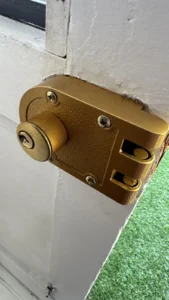
| Pitting, stiffness, loose parts or a latch that doesn’t hold reliably | Repair assessment and, if needed, replacement | Changing the key combination won’t restore damaged parts |
| You want a different locking function or keypad | Hardware suitability and installation assessment | New equipment must match the door and household’s needs |
| You want several doors on one key | Compatibility check before rekeying | Not every cylinder or keyway can share the same key |
These are conversation starters, not a diagnosis from a photo. Different doors at one property can reasonably need different solutions. Keep usable hardware where appropriate; don’t ask a new key to solve a mechanical fault.
What Salt Air Changes — and What It Doesn’t
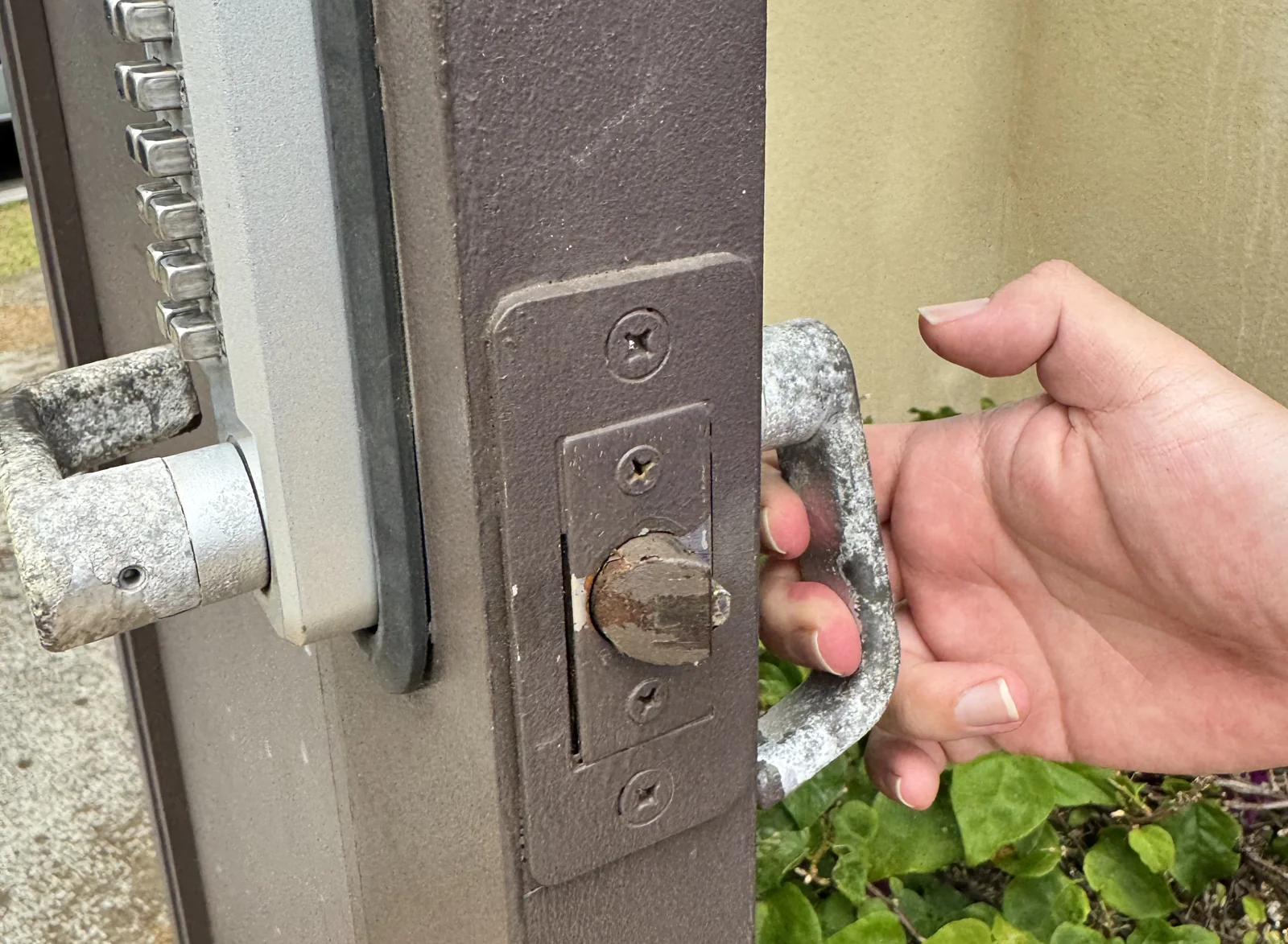
Oahu’s exposed gates and coastal entries deserve a close look at the actual hardware. Surface discoloration alone doesn’t tell you whether a lock needs replacing. Notice whether the latch moves smoothly, the fasteners are secure and the door closes consistently.
If a gate handle feels rough after a Windward rain shower, don’t assume a rekey will fix it. Equally, don’t assume every weathered finish means the entire lock has failed. Ask for a condition assessment and follow the hardware manufacturer’s care guidance rather than applying household products at random.
For a wider look at routine care, read why regular lock maintenance matters. This move-in checklist is about deciding what work to request today, not replacing an ongoing maintenance plan.
Your Move-In or Turnover Walk-Through
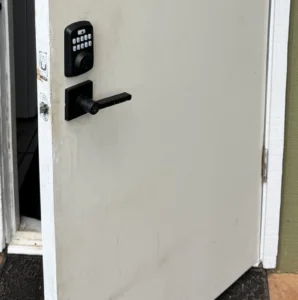
Before the boxes fill the lanai, make a simple door list:
- List every keyed exterior opening. Include side doors, gates and separate storage entries you are authorized to manage. Note shared or association-controlled doors separately.
- Record the access methods. Mechanical key, keypad, app access and garage remotes may need separate changes. Avoid writing active codes on a sheet left in public view.
- Note how each door behaves. “Key turns, latch sticks when closed” is more useful than “bad lock.” Leave any unreliable entry secure by a safe alternative and seek help.
- Confirm permission. Renters should coordinate with their landlord or property manager before changing hardware or key access. Condo owners should check association requirements for shared systems.
- Agree on the scope. Identify which cylinders will be rekeyed, which mechanical faults need attention and which electronic access methods need resetting.
- Plan the handover. Decide who receives keys, where a spare is kept and who is responsible for updating any authorized access list.
This is practical planning, not legal advice. Lease terms and shared-building rules vary; don’t assume a universal right to alter a lock or withhold a key.
What to Have Ready When You Call
Tell us the town, how many doors need review and whether you have a working key. Photos of the visible hardware and door edge can help with initial planning; leave people, private access codes and identifying paperwork out of the image. Don’t dismantle the lock just to photograph it.
Explain whether your goal is to stop old keys working, resolve sticking hardware or change how the door is used. If replacement appears appropriate, our lock installation, repair and replacement service covers that next conversation. Final recommendations depend on the door and hardware assessment.
Our mobile coverage includes Mililani, Kailua and Kāneʻohe, along with the rest of Oahu. Double Quick Locksmith is family-owned, licensed and insured, with 24/7 mobile service and fast response. No storefront visit is needed.
Check the Result Before Closing Out the Job
Ask to test the agreed doors and new keys. For rekeyed cylinders, confirm that the former key no longer operates them when a former key is available for the test. Check normal latching and locking without forcing the door, and verify any separately agreed code or account changes.
Keep the handover simple: label spares without putting the property’s address on the key ring, and give keys only to the people meant to have access. A clear record makes the next turnover easier.
Related Posts
Summary
- Choose door by door: key access and hardware condition are different questions.
- Rekey suitable, working cylinders when you need old mechanical keys to stop working.
- Get sticking, damaged or unreliable hardware assessed before deciding on repair or replacement.
- Coordinate rental and shared-building permissions, and reset electronic access separately.
- Test the agreed work and make a clear key handover plan.
Call for a quote: (808) 758-4599