Key Takeaways
The cost for replacement car key services depends less on the shape of the key than on the vehicle’s security system and the work required to make the replacement function.
- Older mechanical keys are usually the least expensive to replace.
- Transponder keys, remote-head keys, and smart fobs require different levels of programming.
- A working key usually makes duplication simpler and less costly than an all-keys-lost situation.
- Mobile service can reduce towing, travel, and dealership-delay costs.
- An itemized quote should separate the key, cutting, programming, service call, and any repairs.
Understanding the cost for replacement car key services
The cost for replacement car key services can range from a straightforward key copy to a more involved electronic programming job. The vehicle, key system, location, and urgency all shape the final quote. A useful estimate starts with identifying what kind of key you have and whether any working key remains.
Typical price ranges by key type
Older metal car keys commonly fall around $80–$150, while transponder keys often run about $150–$300. Smart keys and proximity fobs may cost $250–$500 or more because they combine hardware with electronic programming. These are planning ranges rather than promises; the exact vehicle and service conditions still matter.
A duplicate made from a working key is often less expensive than creating a replacement when every key is gone. High-security designs, restricted key systems, and unusual parts can also move the quote above a basic range.
Why prices vary between vehicles
Two vehicles that look similar may use very different key technology. One may accept a mechanically cut blade, while another requires a transponder chip, remote synchronization, or proximity pairing. The year, make, model, and trim help determine which parts and programming procedure are appropriate.
A helpful car key cost guide can make these differences easier to understand before you request service. The goal is not to guess a precise price online, but to know which details a locksmith or dealer will need.
Replacement versus duplication costs
Duplication generally begins with a working key that can be copied, tested, or used as part of the programming process. Replacement without an original can involve decoding, key-code cutting, new programming, and additional security steps. That is why losing the only key is usually more expensive than ordering a spare in advance.
The distinction also matters when the shell is damaged but the internal electronics still work. In that situation, transferring the usable components into a compatible shell may avoid the cost of a completely new electronic key, although the parts must be handled carefully.
How regional and service-call fees affect pricing
Prices vary by region because labor, travel distance, availability, and local operating costs are different. A mobile appointment may include a service-call charge, while an after-hours emergency visit may carry a separate premium. Ask whether those amounts are already included in the quoted total.
The same budgeting habit used in an international hiring guide applies here in a smaller way: look beyond the headline price and ask what the complete service includes. A low key price may not include cutting, programming, travel, or testing.
Car key replacement costs by key system
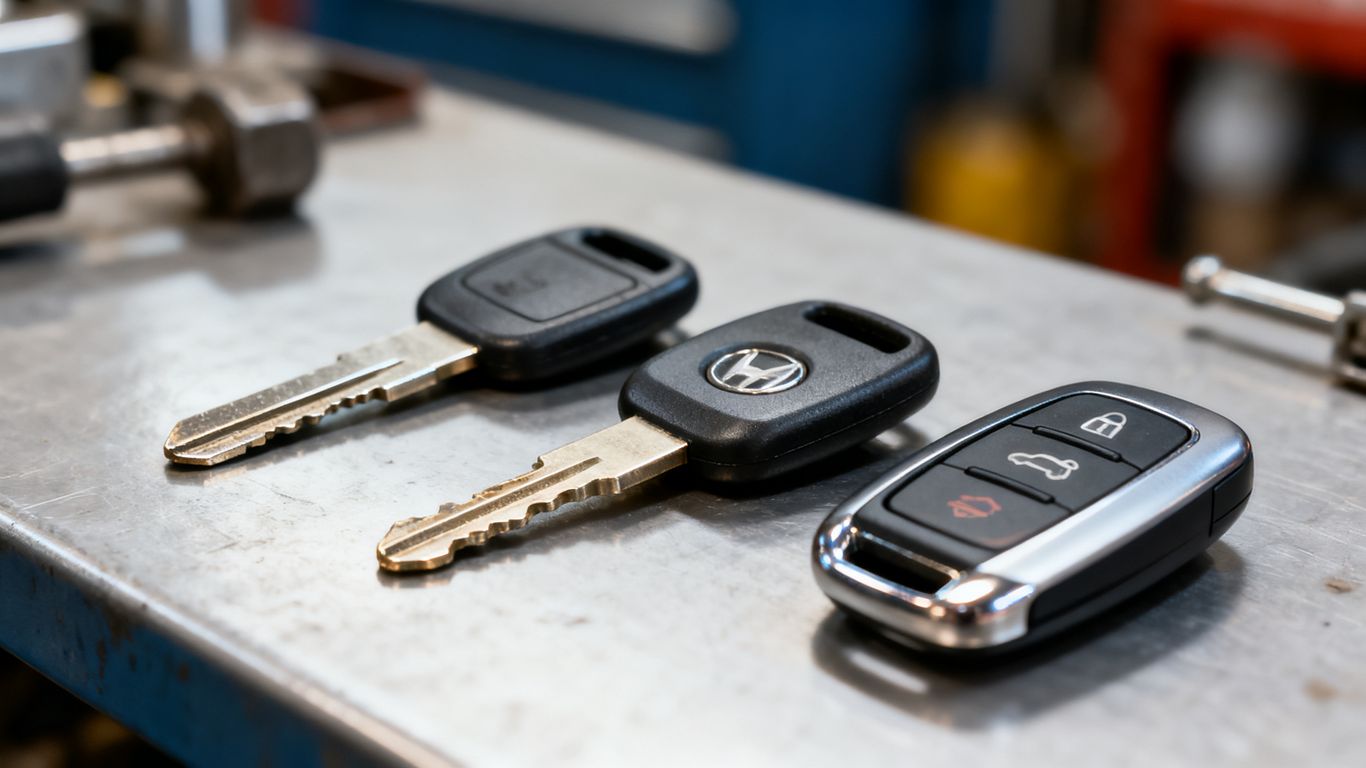
The key system is usually the clearest starting point for understanding a quote. A blade, chip, remote, and proximity fob each require different equipment and steps. The following image illustrates the range of automotive key designs drivers may encounter.
Older metal keys and mechanical duplicates
A traditional metal key has no electronic chip and is cut to match the vehicle’s lock. If the lock is in good condition and the correct blank is available, this is generally the simplest replacement. A duplicate made from an existing key may take less time than creating one from a code or decoding the lock.
Retail key-cutting services may handle some basic blades, but they are not a complete solution for electronic vehicles. The right choice depends on whether the key is purely mechanical or only appears to be one.
Transponder key cutting and programming
A transponder key contains a chip that communicates with the vehicle’s immobilizer system. Cutting the blade does not finish the job; the chip must also be programmed so the vehicle recognizes it. Without that step, the key may fit the ignition but fail to start the car.
Double Quick Locksmith documents Transponder Key Replacement as including transponder key cutting and programming for vehicle makes and models. When requesting a quote, provide the vehicle identification details and say whether a working key is available.
Remote-head keys with built-in buttons
A remote-head key combines a physical blade with buttons for functions such as locking and unlocking. Replacement therefore involves both the cut of the blade and the operation of the remote. A key that turns the ignition but has nonworking buttons is not a complete replacement.
The price can rise when the replacement must support several functions or when the original remote is unavailable. Testing each button and confirming that the vehicle starts should be part of the handoff.
Smart keys and proximity fobs
Smart keys and proximity fobs communicate wirelessly with the vehicle and are common in push-to-start systems. They usually require more advanced programming and electronic pairing than a mechanical or basic transponder key. That added work explains why they often sit at the top of the ordinary replacement ranges.
A professional may be able to program a new smart key even when the original is missing, but the vehicle’s security procedure determines what is possible. Do not assume a visually similar fob will work simply because it has the same buttons.
High-security and laser-cut keys
High-security or laser-cut keys use more precise blade patterns and may require specialized cutting equipment. Some also include transponder or remote functions, so the cutting cost is only one part of the service. Restricted designs can be harder to source and may take longer to verify.
Before ordering one online, confirm the exact part number, blade profile, and programming requirements. A mismatch can leave you with a key that looks correct but cannot operate the vehicle.
The main factors that affect your final quote
A quote is shaped by more than the key category alone. The vehicle’s identity, the number of keys still available, the condition of the lock, and the timing of the appointment all matter. Giving complete information at the start helps a provider avoid an incomplete estimate.
Your vehicle’s year, make, and model
Manufacturers change key systems across model years, and even two trims of the same model may not use identical hardware. The year, make, model, trim, and sometimes the VIN help a provider identify the correct key and programming path. If you have an old key, bring it or describe its buttons and shape.
A vehicle-specific Toyota replacement guide shows why a basic metal key, transponder key, remote-head key, and smart fob can produce very different quotes within one brand. The same principle applies across other makes.
Whether you still have a working key
One working key can make a major difference. It may allow a direct duplicate, provide a reference for the blade, or simplify the programming process. When all keys are lost, the provider may need to generate the replacement from vehicle information and complete a more involved security procedure.
Tell the provider exactly how many keys work, not simply how many you own. A damaged key that still starts the vehicle may be useful, while a spare that only unlocks the door may not serve the same purpose.
Cutting, programming, and synchronization requirements
Some quotes cover only a cut blade; others include programming and final testing. Electronic keys may need to communicate with the immobilizer, remote receiver, or proximity system before they function properly. Ask which of these steps are included rather than treating “replacement key” as one universal service.
For a broader look at the difference between cutting and programming, this VIN key ordering guide explains why vehicle identification alone does not make a new key operational. The physical key and the electronic system still have to match.
Damaged locks, ignitions, or key-related components
A broken key, worn ignition, damaged door lock, or faulty receiver can turn a key replacement into a repair visit. If the new key is cut correctly but the lock will not turn, replacing the key alone will not solve the problem. Diagnostic work and parts can add to the total.
Be clear about symptoms before the appointment. Mention whether the key is stuck, the ignition is difficult to turn, the fob was exposed to water, or the vehicle stopped detecting a previously working key.
Emergency, mobile, and after-hours service
Urgent service may cost more because it requires immediate dispatch, travel, or work outside normal hours. Mobile service can still offer better total value when the alternative is towing an inoperable vehicle to a dealership. Compare the complete out-of-pocket cost, not just the advertised key price.
A sensible quote should identify the service call, replacement hardware, cutting, programming, and any repair work separately. That makes it easier to compare providers without confusing a low starting price with a low final bill.
Comparing replacement options and total value
There is no single best source for every replacement. A mobile locksmith may be practical for a stranded driver, while a dealer may suit someone who specifically wants a factory-issued part. Online purchases and retail duplication can work in limited cases, but the vehicle’s security system sets the boundaries.
Mobile automotive locksmith services
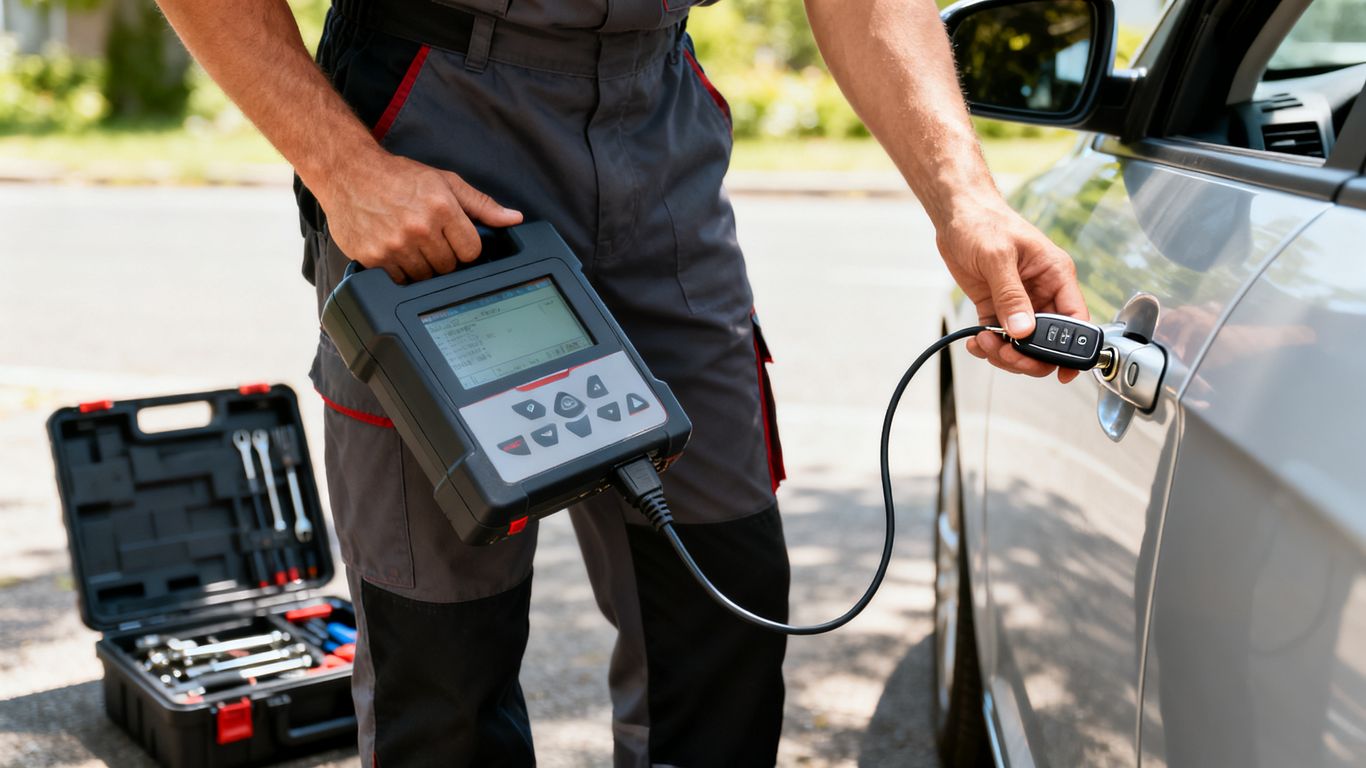
A mobile automotive locksmith brings equipment to the vehicle, which can avoid a tow and reduce the disruption of a dealership visit. This is especially useful for lost keys, nonworking fobs, and vehicles that cannot be driven. Before booking, confirm that the provider handles the exact year, make, model, and key system.
Double Quick Locksmith describes its service as fully mobile and says it can provide an upfront quote over the phone once it has the vehicle’s VIN. Its documented services include key duplication, transponder replacement, key fob replacement, smart key replacement, and programming new keys.
Dealership replacement services
Dealerships can order factory keys and use manufacturer systems for certain vehicles. This may be a good fit when a manufacturer-only procedure is required or when factory parts are your priority. The trade-offs can include appointments, parts delays, service-bay labor, and towing if the vehicle cannot reach the dealership.
The dealer versus locksmith comparison is useful when you want to weigh convenience and hidden costs alongside the parts price. A dealer quote is not automatically excessive, but it should be compared on a complete, like-for-like basis.
Online key purchases and DIY programming
Buying a key online may reduce the hardware price, but compatibility is not guaranteed. The blade, chip, remote frequency, and programming procedure must all match the vehicle. Some older systems permit limited onboard programming, while many newer systems require diagnostic equipment.
DIY work is most reasonable when you understand the system and are dealing with a compatible shell or simple mechanical duplicate. Otherwise, an incorrect purchase can lead to wasted money, a nonworking key, or damage to a lock or security component.
Hardware stores and basic key duplication
Hardware stores can be useful for some ordinary metal keys. They generally cannot replace the programming and security work required by transponder keys, smart fobs, or many remote-head keys. A perfectly cut blade may still be electronically useless.
A general car key replacement overview also distinguishes between physical key cutting and electronic replacement. If you are unsure which type you have, check the original key and ask for a vehicle-specific assessment.
Roadside assistance and insurance coverage
Roadside plans may help with a lockout or dispatch a provider, but coverage for a fully lost and programmed key varies. Some plans pay toward entry or towing rather than the replacement key itself. Insurance may also have limits, deductibles, or documentation requirements.
Check the policy before relying on it during an emergency. If the plan does not include cutting and programming, you may still need a locksmith or dealership after the vehicle is opened.
How to reduce the cost of a replacement car key
The cheapest decision is often made before the original key disappears. Keeping a spare, preserving usable electronics, and requesting a clear quote can prevent avoidable expenses. Cost-saving should not mean skipping the programming or testing that makes the key safe to use.
Reuse a working transponder or key shell when possible
If the outer casing is cracked but the transponder and circuit board still work, a compatible replacement shell may be enough. This option requires care because small internal components can be damaged or lost. A professional can tell you whether the electronics are reusable before you purchase a full replacement.
This approach is different from replacing a lost key: it saves money only when the original internal parts remain available and functional. A new shell still may need a properly cut blade and testing.
Get a spare before your last key is lost
A spare made while you still have a working key is often simpler than an all-keys-lost replacement. It also gives you a backup for future lockouts and makes it less likely that you will need an emergency appointment. Store the spare somewhere secure but accessible.
A spare is particularly useful for smart keys, since those systems tend to cost more and require more specialized work. Planning ahead can also give you time to compare quotes rather than choosing the first available option.
Request an itemized quote in advance
Ask for the total in writing or have the provider repeat each charge over the phone. The quote should clarify whether it includes the key or fob, cutting, programming, service call, travel, testing, and taxes. If the vehicle needs a repair, that should be listed separately.
When preparing your questions, the concise structure of SMS copywriting tips is a useful reminder: give the essential facts first. State the vehicle details, whether a key works, your location, and whether the service is urgent.
Compare OEM and aftermarket key options
An OEM key is made for the vehicle manufacturer, while an aftermarket option comes from another supplier. Quality and compatibility vary, so the cheapest part is not necessarily the best value. Ask whether the option supports every required function and what happens if it cannot be programmed.
A provider should explain the difference without pressuring you into a part you do not need. Compare the complete installed price and warranty, not just the part listed online.
Avoid towing and unnecessary ignition repairs
If the vehicle is safely accessible, mobile service may eliminate the need to tow it elsewhere. Likewise, do not replace an ignition simply because a new key does not work; the issue may be programming, a damaged key, or a separate receiver problem. Diagnosis should come before major replacement.
A professional assessment can prevent a small key issue from becoming a larger repair bill. It also helps confirm whether the lock, ignition, and security system are actually healthy.
What to ask before hiring a locksmith or dealer
A few direct questions can reveal whether a quote is complete and whether the provider is prepared for your vehicle. Have the VIN, location, vehicle details, and information about your working keys ready. Clear answers are a good sign that the appointment has been planned rather than guessed.
Whether cutting and programming are included
Ask whether the price covers both the physical cut and the electronic programming. For a smart key or transponder, also ask whether synchronization and final testing are included. If the provider lists only the cost of the blank, request the installed total.
This is one of the simplest ways to avoid comparing an incomplete retail price with a full-service quote. It also clarifies whether an additional visit might be needed.
If the provider handles your exact vehicle
Give the year, make, model, trim, and key description before the appointment. Ask whether the provider has handled that specific system and whether all keys are lost. A general statement about serving “all vehicles” is less useful than a clear answer about yours.
Luxury vehicles, newer push-to-start systems, and unusual high-security keys may require different tools. Confirming compatibility in advance can save time and a second service call.
What identification and ownership documents are required
Legitimate key replacement normally requires proof that you are authorized to access the vehicle. A driver’s license, registration, title, insurance document, or other ownership evidence may be requested. Requirements vary, so ask before the technician arrives.
Have the documents available, especially during an emergency. This protects both you and the provider and can prevent delays when a replacement key is being created without the original.
Whether mobile service is available at your location
Ask whether the technician can work where the vehicle is parked and whether the location is within the service area. Confirm the service-call charge, expected arrival window, and whether the vehicle needs to be accessible from both sides. If the car is in a garage, mention clearance or access concerns.
Mobile service is most valuable when it removes the need for towing. It should still be appropriate for the vehicle and the key system, not merely convenient in theory.
Warranty coverage and possible additional charges
Ask how long the key, shell, programming, and workmanship are covered. Also ask what could increase the price, such as a damaged ignition, missing security information, an unavailable part, or after-hours work. A provider who explains possible changes clearly gives you a better basis for approval.
The goal is not to eliminate every variable. It is to understand which costs are known, which are conditional, and when you will be asked before extra work begins.
When professional car key replacement is the safest choice
Modern vehicle keys are part of the car’s security system, not just a shaped piece of metal. Incorrect cutting, programming, or disassembly can leave the vehicle unusable or create another repair. Professional help is especially sensible when access, ownership, or electronic security is involved.
Situations involving lost or stolen keys
If a key is lost or stolen, replacement may need to include programming that prevents the old key from continuing to operate the vehicle, depending on the system. Do not assume that finding the key later removes the security concern. Tell the provider whether the key may be in someone else’s possession.
A professional can explain the available security steps and what can be done for that vehicle. This is usually safer than relying on an unverified online key or an improvised workaround.
Modern push-to-start and smart-key systems
Push-to-start vehicles rely on electronic communication between the fob and the car. A battery change may solve a weak signal, but a lost, damaged, or unrecognized fob may require programming and diagnosis. The vehicle may not start simply because a replacement fob has the right appearance.
Double Quick Locksmith lists Smart Key Replacement and programming new keys among its documented automotive services. For any provider, confirm the exact system and whether the replacement will be tested before the appointment is closed.
All-keys-lost programming requirements
When every key is gone, the provider may need the VIN, ownership documents, security access, and specialized diagnostic equipment. The process can take longer than duplicating a working key because the replacement must be introduced to the vehicle without an original reference.
Some vehicles also require additional security steps or the removal of old key entries. Ask what the procedure involves and whether the quote assumes that all keys are unavailable.
Broken keys, damaged fobs, and ignition problems
A broken blade, cracked fob, water-damaged circuit board, or difficult ignition can make a simple replacement misleading. The key may not be the only failed component. A technician can inspect the condition before recommending a new key, shell, ignition, or other repair.
Stop forcing a key that binds or will not turn. Continued pressure can break the blade inside the lock and increase the amount of work required.
Emergency replacement when you are stranded
When you are stuck at work, at home, or in a parking lot, a mobile professional can assess the vehicle where it sits. Keep the area safe, have ownership documents ready, and avoid repeatedly trying incompatible keys or fobs. If the vehicle is in an unsafe location, move yourself to a secure place while waiting.
The safest emergency choice is the one that combines proper identification, compatible hardware, programming, and transparent pricing. Speed matters, but a key that works reliably matters just as much.
Conclusion
The cost for replacement car key services is driven by the key system, vehicle, available working keys, condition of related components, location, and urgency; identify those details first, request an itemized quote, and choose a qualified provider when programming or security work is involved. For mobile help on Oʻahu, request service from Double Quick Locksmith and provide your VIN and key situation so the team can guide you toward the appropriate replacement.
Frequently Asked Questions
How much does a replacement car key usually cost?
Older metal keys commonly cost about $80–$150, transponder keys about $150–$300, and smart keys about $250–$500 or more. The vehicle, location, urgency, and programming requirements can change the final amount.
Is replacing a car key cheaper than replacing the ignition?
Usually, replacing a key is less expensive than replacing the entire ignition or lock. However, if the ignition is damaged or worn, repairing or replacing it may be necessary for the new key to work.
Does a replacement car key need to be programmed?
A basic mechanical key may not need programming. Transponder keys, remote-head keys, and smart fobs generally need programming or synchronization with the vehicle’s security system.
Is it cheaper to duplicate a key while one still works?
Often, yes. A working key can make cutting and programming more straightforward, while an all-keys-lost situation may require additional identification, security access, and diagnostic steps.
Can a hardware store replace a smart car key?
Hardware stores may duplicate some basic metal keys, but smart keys and many transponder systems require specialized programming. Check the full capability of the service before relying on a retail copy.
Can I buy a replacement key online?
You can buy some replacement hardware online, but compatibility and programming are not guaranteed. Confirm the exact part, frequency, blade, chip, and vehicle procedure before purchasing.
What should I have ready for a car key replacement appointment?
Have the vehicle’s year, make, model, VIN if available, location, identification, ownership documents, and details about any working keys. Explain whether the key is lost, damaged, locked inside, or no longer recognized.