
How much is a locksmith for a car? A 2026 cost guide

How much is a locksmith for a car? A 2026 cost guide

Key Takeaways

Car locksmith pricing depends mainly on the vehicle, key technology, location, and urgency. These points will help you estimate the likely cost and avoid surprises.

  • Older metal keys are usually the least expensive to replace.
  • Transponder keys and smart fobs cost more because they require programming.
  • A working spare key can make replacement faster and less expensive.
  • Emergency, after-hours, travel, parts, and programming fees may raise the total.
  • An itemized quote and proof of ownership should be confirmed before work begins.

Typical car locksmith prices by service

The answer to “how much is a locksmith for a car” can range from roughly $80 to $500 or more, depending on the job. A basic key is very different from a proximity fob, and a simple lockout is different from repairing a damaged ignition. The following ranges are planning figures, not guaranteed prices, because local labor, vehicle security, and parts can change the final bill.

Car lockout service and emergency unlocking

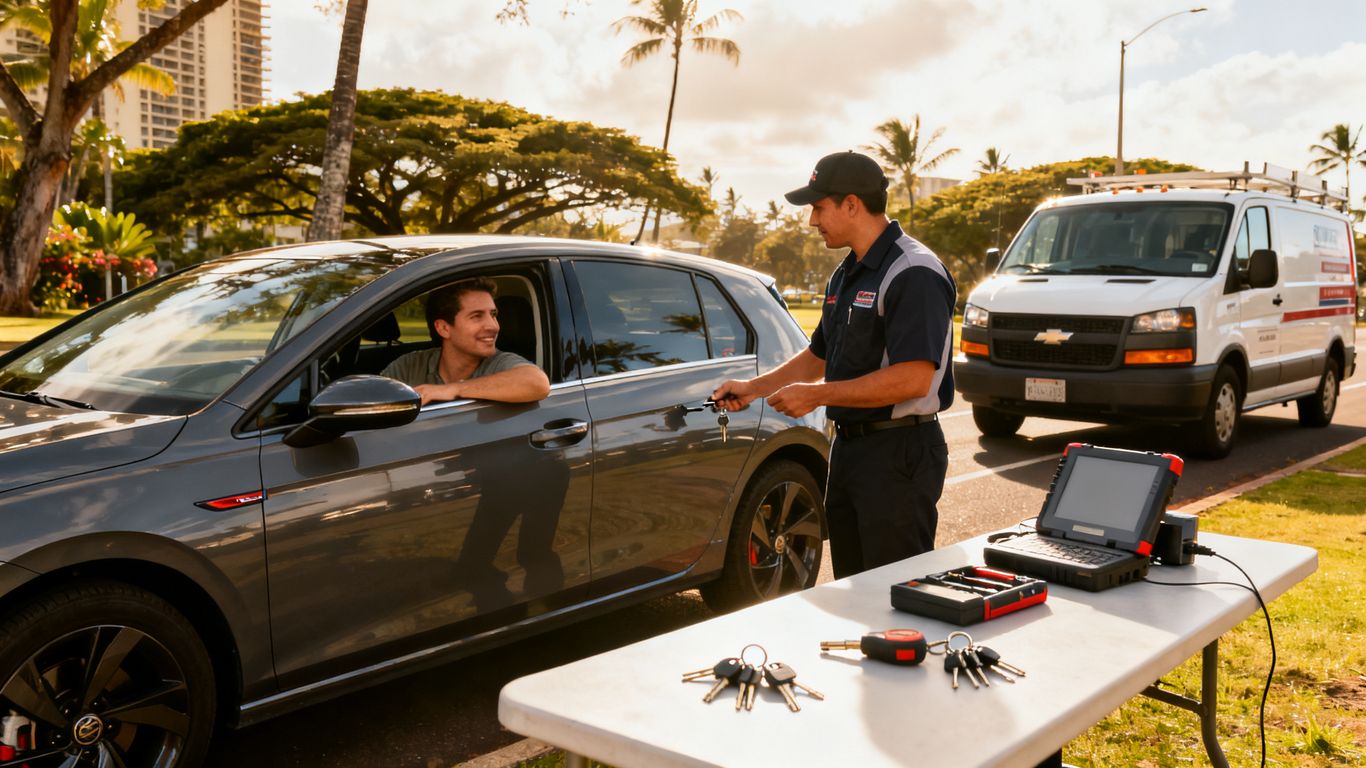
A car lockout commonly costs about $100–$120 in Honolulu, although the final amount may vary with the time, location, and vehicle. A professional should use non-destructive entry methods suited to the vehicle rather than forcing the lock or prying the door. If you are stranded, car lockout assistance can be a useful starting point for understanding what an on-site service includes.

A lockout is often less expensive than replacing a lost programmed key. Still, an after-hours call, longer travel distance, or a lock that is damaged or unusually difficult to open can increase the quote.

Older metal key replacement

Older vehicles with a basic mechanical key generally fall near the lower end of automotive key pricing. A typical range is about $80–$150, assuming the lock and ignition are in usable condition and no electronic programming is required.

The metal blade may be cut from a key code, an existing key, or information obtained from the vehicle. A duplicate made while the original still works is usually simpler than creating a key after every copy has been lost.

Transponder key cutting and programming

Transponder keys often cost about $150–$300. They include a chip that must communicate with the vehicle’s immobilizer system, so cutting the blade alone is not enough. Programming may require diagnostic equipment and, for some vehicles, security information or additional steps.

The price usually includes some combination of the key blank, cutting, programming, and labor. A physically perfect key that has not been programmed may still fail to start the vehicle, which is why a professional assessment matters.

Smart key and proximity fob replacement

Smart keys and proximity fobs commonly cost about $250–$500 or more. These systems communicate wirelessly with the vehicle and may control entry, ignition, and push-to-start functions. The replacement process can involve sourcing the correct fob, pairing it with the vehicle, and checking that each function works.

A spare smart key is often less expensive to make while another working fob is available. If all keys are gone, the technician may need to complete a more involved programming process, which can add both time and cost.

What affects the cost of a car locksmith

Two drivers can request the same general service and receive different estimates. The vehicle’s security system, the condition of the lock, and whether a usable key remains all matter. Location and urgency can affect the total as well, particularly when a mobile technician must travel or work outside normal hours.

Car key types beside modern vehicle

Vehicle make, model, and year

Vehicle make, model, and year help determine which key blank, chip, fob, and programming procedure are appropriate. Older models may use a simple metal key, while newer vehicles may use transponders or proximity systems. Even within one make, different trims and production years can use different key technology.

Providing accurate vehicle details before the appointment helps the locksmith bring suitable equipment and parts. It also makes a phone estimate more realistic.

Key type and security technology

The key’s technology is one of the clearest pricing differences. A metal blade requires cutting, while a transponder key adds chip programming and a smart fob adds wireless pairing and electronic functions. More advanced systems generally require more specialized tools and labor.

This is why a key that looks simple may not be simple to replace. The visible blade is only one part of the vehicle’s security system.

Whether the original key is available

A working original key can make duplication relatively straightforward. Without one, the locksmith may need to decode the lock, use a manufacturer key code when available, and program a new key from scratch. Modern vehicles may still be serviceable without the original, but the process is usually more involved.

Before calling, gather any remaining key, remote, or fob, even if it is damaged. A broken shell may still contain usable electronic components.

Damage to the lock, door, or ignition

A worn lock, broken key, damaged door mechanism, or faulty ignition can turn a key replacement into a repair job. The technician may need to extract a broken key, repair the lock, or replace hardware before a new key can be used reliably. Those parts and extra labor are separate from the cost of cutting or programming.

A careful inspection is preferable to guessing. The condition of the vehicle matters because replacing a key will not solve a mechanical problem in the ignition or lock.

Locksmith cost versus dealership pricing

A dealership and an automotive locksmith may both be able to provide a replacement key, but the process and total cost can differ. Dealership pricing may include OEM parts, service-bay labor, diagnostic charges, and towing if the vehicle cannot be driven. A mobile locksmith may instead complete the work at the vehicle’s location, reducing logistical costs.

The best option depends on the vehicle and the exact security issue. Dealer versus locksmith pricing offers another way to compare overhead, towing, programming, and situations where dealership support may be necessary.

When a locksmith is usually more affordable

A locksmith is often more affordable for common metal keys, transponder keys, fobs, lockouts, and some ignition services. Wholesale parts access, lower overhead, and on-site work can reduce the total compared with a dealership visit. The difference is especially noticeable when the car is not drivable and would otherwise need to be towed.

Prices still vary by vehicle and key type, so an unusually low quote deserves clarification. Ask whether programming, parts, service calls, and tax are included.

Convenience of mobile, on-site service

Mobile service means the technician comes to the vehicle rather than requiring the driver to arrange transportation. That can be useful at home, at work, in a parking lot, or on the roadside. It may also save time when the car cannot start because the only key is missing or the fob is not recognized.

On-site work does not automatically mean every job can be completed immediately. Parts availability, security procedures, and the condition of the vehicle still affect the appointment.

Situations that may require dealership support

Some vehicles or warranty situations may call for dealership involvement. A dealer may be necessary when a specific factory-authenticated part is required, when manufacturer records must be accessed, or when the vehicle has a security system the available locksmith equipment cannot service.

A locksmith can often explain whether the job is within their scope before beginning. If not, asking for that answer early can prevent a wasted service call.

Comparing total costs, including towing and programming

Compare the complete out-of-pocket cost rather than the advertised key price alone. Include the key or fob, cutting, programming, diagnostic work, service-call charges, travel, taxes, and towing. A lower base price can become more expensive if the vehicle must be transported to another location.

The following comparison is a practical way to organize the decision:

Cost element Mobile locksmith Dealership visit
Travel to vehicle Often included or separately listed Usually arranged by the customer
Key or fob Varies by type and source Often factory-supplied
Programming May be completed on-site when supported Usually performed at the service department
Towing May be avoided for on-site work May be needed if the car cannot be driven

After adding each item, compare the final totals and the expected wait. A written estimate makes the comparison much more useful than comparing a single starting price.

Extra automotive locksmith services and their prices

Key replacement is only one part of automotive locksmith work. A technician may also duplicate a functioning key, repair a fob shell, address a damaged ignition, or restore a vehicle door lock. Costs depend on whether the job involves a small part, a complete replacement, or electronic programming.

Mobile locksmith working beside parked car

Car key duplication and spare keys

A duplicate key is generally less expensive when a working original is available. Basic duplicates may cost around $2–$25 for simple keys, while transponder or remote-head duplicates cost more because they require compatible electronics and programming.

Making a spare before the only key disappears is one of the simplest ways to reduce future emergency costs. The correct blank and programming method depend on the vehicle.

Key fob repair, re-shelling, and replacement

A cracked casing, worn buttons, or broken key-ring attachment does not always mean the electronics need replacement. If the circuit board and transponder remain functional, a re-shell may be enough. A new fob is more appropriate when the electronics are lost, badly damaged, or no longer communicate with the vehicle.

A shell replacement can cost much less than a complete programmed fob, but transferring internal parts requires care. The chip must not be discarded with the old casing.

Ignition repair or replacement

Ignition service may cost about $50–$350 or more, depending on whether the issue involves extraction, repair, rekeying, or complete replacement. A key that will not turn may indicate a worn ignition, a damaged key, or a steering-lock problem rather than a missing key alone.

Repairing the existing unit may be less expensive than replacing it, but the technician must inspect the vehicle first. Parts, labor, and any required key programming should be listed separately.

Car door lock repair and replacement

Car door lock repair or replacement can range from about $50–$350, depending on the vehicle and the damage. A worn cylinder, broken linkage, failed actuator, or damaged door hardware may each require a different solution.

Replacing the key alone will not correct a door mechanism that is physically failing. Describe the symptoms clearly, including whether the key turns, whether the remote works, and whether the door can be opened from inside.

Emergency fees and possible additional charges

An advertised starting price rarely tells the whole story of an emergency visit. The final bill may combine service, travel, labor, parts, programming, and tax. Asking for the complete estimate before work begins is the best way to understand what you are paying for.

For broader context, this automotive locksmith cost guide explains why lockouts, duplication, programming, and ignition work can fall into different price ranges.

After-hours, weekend, and holiday pricing

Emergency calls outside regular business hours may include an additional $30–$120, depending on timing and location. Nights, weekends, holidays, and urgent roadside appointments can require a higher rate because staffing and dispatch costs differ.

Ask whether the quoted price already includes the emergency surcharge. If the situation is not urgent, scheduling during normal hours may reduce the total.

Service-call and travel fees

A service-call fee covers dispatch, travel, and the initial assessment. In Honolulu, a common starting point is around $69, though providers use different pricing structures. A longer trip outside the normal service area may add a travel surcharge.

The fee should be explained before the technician begins. Confirm whether it is credited toward labor or charged in addition to the work.

Programming, decoding, and advanced security fees

Programming a transponder or smart key can add to the price because it requires specialized equipment and vehicle-specific procedures. Decoding a lock or creating a key without the original may also take more time than duplicating a working key. Some vehicles require security PIN access or additional diagnostic steps.

These charges are not necessarily unreasonable, but they should be described clearly. Ask what part of the estimate covers equipment, programming, decoding, and labor.

Parts, labor, and tax considerations

A complete quote should distinguish the replacement key or fob from labor and other charges. Taxes may be added, and a damaged lock or ignition can require parts that were not part of the initial lockout estimate. If the technician discovers a new issue, request approval before the scope of work changes.

A clear invoice protects both sides. It also makes it easier to compare estimates from different providers on equal terms.

How to get an accurate locksmith quote

A phone estimate becomes more useful when the locksmith has precise information. Describe what happened, where the vehicle is, what keys remain, and whether the car is locked, running, or damaged. If you are in Honolulu or elsewhere on Oʻahu, mention the exact service location because travel may affect the quote.

Provide the vehicle identification number and key details

Give the VIN, make, model, year, and trim when available. Explain whether you need a lockout, a duplicate, a lost-key replacement, a transponder, a remote-head key, or a smart fob. Photos of the existing key can also help identify the correct system.

A VIN may help identify the vehicle and support key-code research, but it does not always replace physical cutting or programming. The correct key still has to be made compatible with the car.

Ask for an itemized estimate before work begins

Request the total in writing or ask for each component over the phone. A useful estimate identifies the service call, labor, parts, programming, travel, emergency surcharge, and tax when applicable. It should also explain what could change the price after inspection.

A straightforward quote is more valuable than a low starting number. Upfront pricing advice can help you prepare questions about surcharges, warranties, and service scope.

Confirm ownership and required documentation

A locksmith will normally want proof that you are authorized to access the vehicle. Keep identification, registration, insurance information, or another acceptable ownership document available. This protects vehicle owners and helps the appointment proceed without unnecessary delay.

If the vehicle belongs to someone else, ask in advance what authorization is needed. Requirements can differ depending on the situation and provider.

Compare credentials, warranties, and reviews

Price should be considered alongside professionalism and accountability. Check licensing and insurance where applicable, read recent reviews for consistent patterns, and ask what warranty covers the key, parts, and labor. A provider that explains limitations clearly is often easier to work with if the job becomes more complicated.

When comparing options, use this short checklist:

  • Verify licensing, insurance, and relevant automotive experience.
  • Ask for the full price before authorizing work.
  • Confirm whether the parts are new, used, OEM, or compatible aftermarket.
  • Ask what warranty applies to the key, fob, programming, and labor.

These questions do not guarantee the lowest price, but they make it easier to avoid unclear charges and unsuitable parts. Professional locksmith selection covers similar considerations for vehicle owners on Oʻahu.

Ways to reduce your car locksmith costs

The least expensive locksmith visit is often the one you can plan before an emergency. Keeping a spare, protecting the electronics in your current key, and dealing with a minor problem early can prevent a more involved call later. Safe prevention is better than forcing entry or experimenting with an unfamiliar vehicle system.

Use a spare key when possible

A spare key can avoid an emergency lockout charge, towing, and damage from an attempted DIY entry. Keep it somewhere secure and accessible to a trusted person, but do not hide a proximity fob on the vehicle. A nearby fob may create a security risk on some systems.

If you have a spare, tell the locksmith whether it starts the car and operates the locks. That detail helps determine whether you need a duplicate or a more complex repair.

Re-shell a damaged key instead of replacing it

If the buttons or outer casing are damaged but the circuit board and transponder still work, re-shelling may be a sensible lower-cost option. The internal parts must be transferred correctly, and not every damaged key is suitable for this repair.

A shell swap will not solve a lost chip, broken circuit board, or programming failure. In those cases, a replacement and programming service may still be necessary.

Make a duplicate before losing your only key

Duplicating a working key is usually easier than replacing an only key. It may also avoid decoding, emergency travel, and more extensive programming. For a modern vehicle, ask whether the spare should be a full smart fob, a remote-head key, or another supported backup option.

Drivers researching car key replacement costs can use the vehicle’s key type and whether a spare remains to make a more realistic budget.

Avoid DIY methods that can damage the vehicle

Improvised tools, forced locks, and incorrect programming attempts can damage weather stripping, door linkages, glass, the lock cylinder, or the security system. The resulting repair can cost far more than professional entry or key service.

If you are locked out, first check every door and the trunk, then look for a spare. If those options fail, professional help is generally the lower-risk choice. Double Quick Locksmith provides 24/7 mobile automotive locksmith service in Honolulu and can assess the vehicle at its location.

Conclusion

Car locksmith pricing in 2026 generally ranges from about $80 for some older metal keys to $500 or more for advanced smart fobs, with lockouts, programming, travel, parts, and urgency shaping the final total. Gather the VIN and key details, confirm ownership, request an itemized quote, and compare the complete cost rather than a starting price. A spare key and careful professional service can save both money and stress.

Frequently Asked Questions

How much does a car locksmith usually cost?

A basic older metal key may cost about $80–$150, while transponder keys often run $150–$300 and smart keys may cost $250–$500 or more. Lockouts and emergency fees vary by location, timing, and vehicle.

Is a locksmith cheaper than a dealership for car keys?

Often, yes, particularly when mobile service avoids towing and dealership labor charges. The better value depends on the vehicle, key type, parts, programming, and whether factory support is required.

Can a locksmith make a car key without the original?

For many vehicles, a locksmith can create and program a replacement without the original by using vehicle information, decoding, key codes, and diagnostic equipment. Some models have limitations, so confirm before scheduling.

Does a VIN provide everything needed for a replacement key?

A VIN helps identify the vehicle and may support key-code or parts research, but it does not always complete the physical cutting and electronic programming. Documentation and vehicle-specific procedures may still be required.

Why are smart keys more expensive than metal keys?

Smart keys communicate wirelessly with the vehicle and may operate entry and push-to-start functions. Their cost includes electronic hardware, pairing or programming, and more specialized labor.

Can a damaged key fob be repaired instead of replaced?

Sometimes. A re-shell may work when the casing or buttons are damaged but the internal electronics remain usable. A damaged circuit board, missing chip, or programming failure generally calls for a different solution.

What should I ask before approving locksmith work?

Ask for the complete price, including service, travel, labor, parts, programming, emergency fees, and tax where applicable. Also confirm ownership requirements, credentials, warranty coverage, and what happens if the initial diagnosis changes.