
Key Takeaways
ECU programming costs depend on the vehicle, the module, and whether the underlying fault has been identified first. A clear diagnosis and written estimate can prevent an inexpensive electrical problem from becoming an unnecessary module replacement.
- Basic ECU programming may start around $200, while complex jobs can cost several hundred dollars or more.
- Cloning transfers data from an original module to a replacement; programming configures a module for the vehicle.
- Immobilizer, key, VIN, and security-system work can add labor and equipment costs.
- Dealerships, independent shops, and mobile specialists price the same type of work differently.
- Ask whether diagnostics, parts, programming, testing, travel, and warranty coverage are included.
What ECU reprogramming involves
An ECU, or engine control unit, stores software and vehicle-specific information used by the engine and security systems. When a module, key, ignition, or related component changes, the vehicle may need new information written or matched before it will start. The phrase “ECU reprogrammed” can describe several different services, so the exact task matters more than the label alone.
Programming, coding, and ECU cloning compared
Programming generally means installing or configuring software and vehicle information in a module. Coding can involve setting options, writing the VIN, or adapting the module to the vehicle. Cloning is different: data such as EEPROM, Flash, or MCU information is transferred from an old module to a replacement so the vehicle can recognize its configuration and security data.
The right method depends on whether the original module still communicates, whether the replacement is new or used, and what the vehicle platform permits. A service described as ECU programming and cloning may therefore include diagnosis, data transfer, immobilizer alignment, or module coding rather than one single operation.
When a vehicle needs its ECU reprogrammed
Programming is commonly considered after an ECU, PCM, ECM, BCM, ignition, or key has been replaced. It may also be needed after a failed software flash, water damage, a battery-related loss of synchronization, or a no-start condition involving the immobilizer. Push-button-start and transponder-key vehicles are especially dependent on communication between the key, ignition, immobilizer, and engine computer.
A warning light or no-start symptom does not prove the ECU is defective. The same symptom can come from a weak battery, wiring fault, fuse, or a key that is not being recognized.
Other modules that may require programming
The engine computer is only one of several control units that may need coding or adaptation. Depending on the vehicle, technicians may work with transmission modules, body control modules, steering modules, ABS units, airbag modules, or manufacturer-specific security modules.
A transmission replacement, for example, may require TCU coding and adaptations rather than ECU work. Likewise, replacing a body module after water damage may call for data transfer and configuration. The module named on the invoice should match the module actually being tested or programmed.
Why diagnostics should come before programming
Programming a healthy module will not repair a missing power feed, damaged CAN wiring, or a failing ignition switch. A proper process checks power, grounds, network communication, immobilizer status, and relevant fault codes before writing data. That diagnostic step protects both the vehicle and the customer from paying for a procedure that cannot address the real cause.
Typical costs to get an ECU reprogrammed
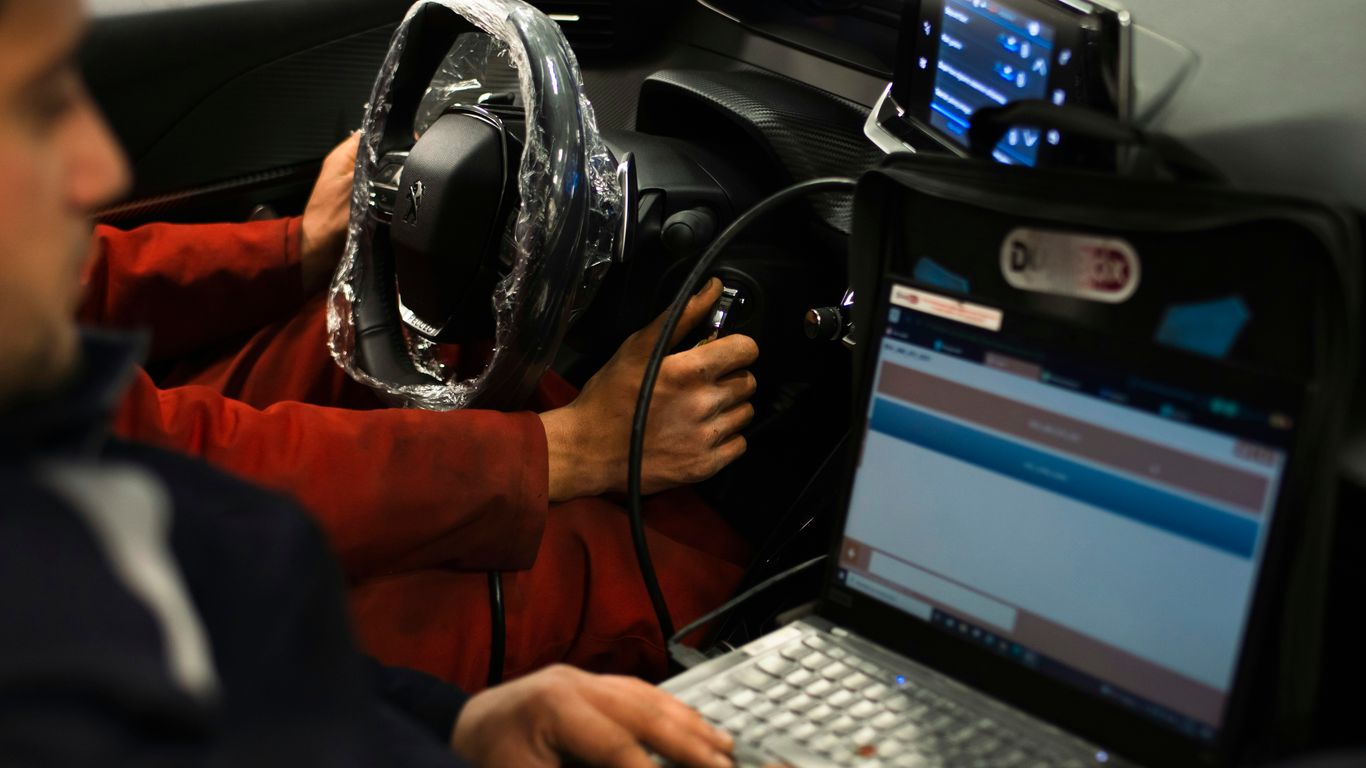
There is no single national price for ECU work because vehicles use different hardware, software, and security procedures. As a planning figure, basic mobile programming services may start around $200, while dealership or highly involved work can reach several hundred dollars or more. The final quote should identify whether it covers only software work or also includes a replacement module, diagnostics, keys, and travel.
Average price ranges for common ECU services
A simple reflash or coding appointment is usually less involved than cloning a damaged module and aligning the immobilizer. Older vehicles may have fewer security steps, while newer luxury and European platforms can require specialized access and additional testing. Regional labor rates also make a meaningful difference.
| Service type | Typical planning range | What can change the price |
|---|---|---|
| Basic ECU programming or coding | Around $200 and up | Vehicle platform and access method |
| Replacement module programming | Several hundred dollars or more | Module cost, VIN setup, and adaptations |
| ECU cloning or data transfer | Several hundred dollars or more | Module condition and bench work |
| Key or immobilizer pairing | Additional charge possible | Number of keys and security procedure |
These are budgeting ranges, not a guaranteed quote. A written estimate should separate labor from parts and explain which tests are included.
Cost of programming a replacement ECU
A replacement ECU may be new, used, rebuilt, or supplied by the customer. A new unit can cost more but may arrive without vehicle-specific configuration, while a used donor unit may need VIN writing, coding, and immobilizer alignment. If the original unit still contains readable data, transferring that information may reduce programming complexity, though it does not make every donor compatible.
Ask whether the quoted price includes the module itself. Programming a customer-supplied part may also have different warranty terms than installing a part supplied by the service provider.
Cost of ECU cloning and data transfer
Cloning involves extracting usable data from the original module and transferring it to a donor or replacement unit. It can be useful when the original housing is damaged but its memory remains readable, or when a compatible replacement is available. Bench access, corrupted data, physical damage, and the need to open a module can all increase labor.
The goal is not simply to copy a file. The replacement must communicate correctly with the vehicle, retain the appropriate configuration, and pass starting and scan checks. If cloning is not supported for that module, fresh programming or repair may be the better route.
Additional charges for keys and immobilizer pairing
A vehicle may start only after the ECU, immobilizer, and key agree on authorization data. If a replacement key, lost key, ignition, or security module is part of the problem, key programming can be billed separately from ECU work. The number of keys, whether any working key remains, and the security level of the vehicle can all affect the total.
For perspective, ordinary automotive key services range widely, with transponder and smart-key work generally costing more than a basic metal key. Confirm whether key cutting, fob supply, signal testing, and immobilizer pairing are separate line items.
Factors that affect the final price
The same phrase—ECU reprogramming—can describe a quick configuration procedure or a multi-step electronic repair. Vehicle age, software architecture, part availability, and security requirements all shape the labor involved. Complications discovered during testing can also change the estimate, which is why a phone quote should be treated as preliminary unless the symptoms and module details are clear.
Vehicle make, model, year, and software platform
Make, model, year, engine, transmission, and market specification help determine which tools and procedures are required. A vehicle with an accessible diagnostic port may follow a different process from one requiring bench access or direct module connections. Imported vehicles and advanced European systems may also have region-specific software or stronger component protection.
Give the technician the full vehicle identification number when possible. A model name alone may not identify the correct engine computer or security architecture.
New, used, rebuilt, or donor control modules
A new module may need configuration from scratch. A used or donor module may need its previous vehicle data cleared, replaced, or adapted, and a rebuilt module may carry its own warranty limitations. The lowest part price is not always the lowest installed cost if compatibility testing or additional data work is required.
Before buying a donor unit, verify the part number and ask whether the original module can be read. A mismatched unit can add shipping, testing, and return costs without solving the no-start condition.
Immobilizer, key, and security-system complexity
Security systems can connect the ECU with the immobilizer, ignition, steering lock, body module, and one or more keys. A “Start Authorization” or “No Key Detected” message may require alignment rather than engine-computer replacement. Some platforms also require proof of ownership and controlled access to security functions.
Because these systems protect the vehicle, a reputable provider should explain what authorization is required. Lawful programming should be limited to vehicles owned by, or legitimately authorized by, the customer.
Diagnostic, mobile service, and travel fees
Some quotes include diagnosis and travel; others charge them separately. Mobile work can reduce towing and waiting, but distance, roadside conditions, after-hours scheduling, and the need to remove a module may still affect the total. Ask whether the technician can complete the job at the vehicle or whether the module must go to a workshop.
When comparing offers, include the costs you would otherwise overlook:
- Initial scan and electrical diagnosis.
- Travel, roadside, or after-hours service.
- Module removal, bench testing, or shipping.
- Key, fob, or immobilizer pairing.
- Post-programming testing and warranty coverage.
That comparison gives a more realistic total than looking only at the advertised programming fee. It also makes clear whether mobile convenience offsets the cost of towing and a second appointment.
Water damage, corrupted data, and other complications
Flood exposure can damage a module, its connectors, or the wiring around it. A failed flash may leave incomplete or corrupted software, while a physically damaged unit may not communicate well enough to clone. These cases can require data recovery, a donor unit, wiring repair, or replacement rather than a straightforward reprogramming session.
Do not approve programming solely because a fault code mentions the ECU. The code may reflect a power, network, or sensor problem outside the module itself.
How ECU programming prices compare by provider
Price comparisons are useful only when the services are equivalent. One provider may quote software access alone, while another includes diagnosis, immobilizer work, mobile travel, verification, and a written workmanship warranty. Read the scope before deciding that one option is cheaper.

Dealership programming and associated fees
Dealerships may be the appropriate choice when a warranty, recall, manufacturer authorization, or highly restricted procedure is involved. Their invoice can include diagnosis, programming, parts, shop labor, towing, and security-related charges. Ask for an itemized estimate and whether the vehicle must remain at the dealership for additional testing.
A dealer quote may also specify a new module when a compatible used or repairable unit could be considered elsewhere. That is a decision to discuss with the technician, not an assumption to make from the price alone.
Independent repair shop pricing
An independent shop may combine ECU diagnosis with broader electrical and mechanical testing. Pricing varies according to its scan tools, software subscriptions, experience with the vehicle platform, and whether it handles module work in-house. Some shops program only parts they supply; others will evaluate a customer-provided module.
Ask whether the shop has completed the same type of procedure on your vehicle family. Experience with the exact platform can matter as much as the hourly labor rate.
Mobile automotive locksmith services
A mobile automotive locksmith can be useful when the vehicle will not start or cannot be driven to a shop. On-site service may include no-start diagnostics, key and immobilizer alignment, module programming, or cloning where supported. Double Quick Locksmith describes its ECU service as mobile across Oʻahu, with a written plan and fixed quote before programming begins.
The practical savings may come from avoiding a tow and a second appointment. Confirm the service area, module limitations, ownership requirements, and what happens if the vehicle needs physical repair rather than programming.
DIY tools, software, and potential risks
DIY programming tools range from basic scan devices to expensive equipment with subscriptions and manufacturer-specific access. Buying the tool is only part of the cost; the wrong procedure, interrupted voltage, incorrect file, or mismatched module can leave the vehicle inoperable. Security functions may also require authorization that consumer equipment cannot provide.
A professional ECU cloning guide can help explain the difference between cloning and flash reprogramming before you approve work. If the job involves immobilizer data or a replacement module, the cost of correcting a failed attempt can exceed the original service price.
What happens during an ECU programming appointment
A sound appointment begins with questions, not a cable plugged into the diagnostic port. The technician should learn what changed, inspect the vehicle’s electrical condition, and identify the relevant module and security system. Only then can programming be separated from repair, replacement, or key service.
Initial vehicle and no-start diagnostics
You may be asked for the year, make, model, symptoms, and recent changes such as a battery replacement, flood, ECU swap, ignition work, or failed flash. Testing should cover power, grounds, network communication, immobilizer status, and fault data. These checks help establish whether the module is actually responding and whether programming is likely to solve the complaint.
A no-start diagnosis may end with a wiring or battery repair instead of ECU work. That is a useful result because it avoids unnecessary programming.
Written plan and fixed-price estimate
After the initial checks, the provider should explain what was found and recommend a specific path. That might be fresh programming, cloning, a key procedure, module repair, or further electrical diagnosis. A written estimate should state what is included and identify conditions that could change the price.
This is the point to ask about parts sourcing, data backups, warranty coverage, and what happens if the module cannot be read. Clear limits are more helpful than a vague promise of a quick fix.
Programming, cloning, and immobilizer alignment
The technician may program a replacement module, transfer data to a donor unit, write vehicle information, adapt sensors or actuators, and align the immobilizer and keys. Some procedures use the diagnostic connector; others require bench access or direct work on the module. The method depends on the vehicle and the condition of the original data.
Security work should be performed only with proper authorization. A legitimate provider will not bypass or disable factory security for unlawful use.
Scan testing, starting checks, and verification drive
After programming, the vehicle should be scanned again for relevant faults and checked for starting, shifting, warning lights, and communication. A verification drive may be appropriate when the vehicle can be operated safely. The final scan data and observed behavior help confirm that the work addressed the original complaint rather than merely changing a code.
Keep the invoice and any module or key information supplied by the provider. Those records can help if a related issue appears later.
Typical appointment time and service limitations
A straightforward appointment may take about 60 to 180 minutes, depending on the platform and condition. A damaged module, corrupted data, unavailable part, or required bench repair can extend that time. Mobile technicians may also need to stop if the vehicle has a mechanical, wiring, or water-damage problem that programming cannot safely resolve.
Ask about the expected time before work begins, but allow room for diagnosis. The most responsible estimate includes the possibility that the initial assumption is wrong.
How to get an accurate ECU reprogramming quote
The best quote contains enough information for the provider to identify the platform and the likely service. A description such as “the car will not start” is a useful beginning, but it rarely identifies the cause. Photos of warning messages, module labels, scan results, and recent repair history can make the estimate more precise.
Information to provide about the vehicle and symptoms
Share the VIN, year, make, model, engine, transmission, location, and whether the car cranks. Explain when the issue began and what changed immediately beforehand. Mention battery work, key loss, ignition replacement, water exposure, module swaps, tuning, or a failed software update.
If a scan tool produced codes, send the exact codes rather than a general description. Also say whether any key works, whether warning lights are present, and whether the vehicle can be driven.
Questions to ask about parts, labor, and warranties
Ask whether the provider is programming your module or supplying another one. Clarify whether the part is new, used, rebuilt, or donor-sourced, and whether the quote includes removal and installation. Warranty terms should identify whether they cover labor, the part, the programming, or only workmanship.
A useful quote answers these questions directly:
- Is the diagnosis included if programming is not the repair?
- Are parts, labor, travel, and security procedures itemized?
- Will the original data be backed up when possible?
- What happens if the supplied module is incompatible?
Written answers make it easier to compare providers without guessing what each price means. They also reduce the chance of approving one service while expecting another.
Confirming whether the quote includes diagnostics
Some providers advertise a programming price that begins after the vehicle has already been diagnosed. Others include an initial scan, power and ground checks, and immobilizer testing. Ask specifically whether diagnostic labor is included and whether it is credited toward the repair.
If the diagnosis finds a battery, fuse, wiring, or key fault, you should know whether the provider can address that issue or will stop and provide a revised estimate.
Checking authorization, security, and ownership requirements
ECU and immobilizer work affects vehicle security, so a provider may request identification, registration, title, or other proof that you own or are authorized to service the vehicle. Have the available keys and module information ready. The exact requirements vary by vehicle and service.
Do not ask a technician to defeat factory protection. Legitimate programming matches authorized components and restores normal communication rather than removing security controls.
When ECU reprogramming may not be the right repair
Programming is a precise electronic procedure, not a universal cure for a no-start or warning light. Faults outside the ECU can create nearly identical symptoms, and writing new data will not repair a broken circuit or damaged engine. A careful provider should be willing to stop when testing points elsewhere.
Battery, power, ground, and fuse-related faults
Low voltage during programming can interrupt a procedure, and poor grounds or blown fuses can make a healthy module appear dead. Battery condition and charging voltage should be checked before deeper electronic work. A loose connector or corroded ground may be a much less expensive repair than an ECU replacement.
If the vehicle recently received a jump-start or battery change, mention that timing. It can help distinguish a synchronization issue from a basic power fault.
CAN-bus communication and wiring problems
Control modules communicate over vehicle networks, commonly referred to as CAN bus systems. A shorted wire, damaged connector, water intrusion, or failed neighboring module can prevent the ECU from communicating. In that situation, programming may fail because the vehicle cannot maintain a reliable connection.
Network testing and wiring inspection should come before repeated programming attempts. Otherwise, the same failed procedure may be billed more than once without changing the fault.
Physically damaged or water-damaged modules
A cracked housing, corrosion, burned circuit board, or flood exposure may require module repair or replacement. If the memory is readable, cloning may still be possible, but the result depends on the condition of the data and the donor unit. Severe damage can make data recovery impractical.
Photograph water levels, corrosion, and connector condition before parts are discarded. That information may help explain why a simple programming quote changed into a repair estimate.
Key, ignition, and immobilizer issues outside the ECU
The ECU may be working while the key, transponder, ignition switch, steering lock, or body module is not communicating correctly. Symptoms such as “No Key Detected” or an immobilizer warning need testing across the entire authorization system. A replacement key or ignition service may solve the issue without replacing or reprogramming the engine computer.
The same principle applies to a damaged key fob. Programming a new ECU will not restore a key whose battery, circuit board, or transponder has failed.
Mechanical problems that can cause similar symptoms
Low fuel pressure, a failed starter, poor compression, a broken timing component, or a sensor problem can all produce a no-start complaint. A scan tool may show a code without identifying the underlying mechanical cause. Engine and fuel-system checks remain important even when an electronic warning is present.
If the ECU communicates normally and authorizes starting, further mechanical diagnosis may be the sensible next step. For broader automotive troubleshooting, keep the repair scope separate from the programming quote.
Conclusion
Getting an ECU reprogrammed can cost around $200 for a straightforward service and several hundred dollars or more when replacement modules, cloning, keys, immobilizer alignment, or difficult diagnosis are involved. The fairest price is the one tied to a clear diagnosis, itemized scope, proper security authorization, and post-programming verification—not simply the lowest number in an advertisement.
Frequently Asked Questions
How much does ECU reprogramming usually cost?
Basic services may start around $200, while replacement-module programming, cloning, immobilizer work, and complex diagnosis can bring the total into the several-hundred-dollar range or higher.
Does a replacement ECU always need programming?
Many modern vehicles require configuration, coding, or immobilizer alignment after an ECU or related module is replaced. The exact requirement depends on the vehicle and the replacement part.
Is ECU cloning the same as programming?
No. Programming generally installs or configures software and vehicle information, while cloning transfers usable data from an original module to a replacement or donor unit.
Can a weak battery cause an ECU-related no-start?
Yes. Low voltage, poor grounds, blown fuses, or a battery-related loss of synchronization can create symptoms that resemble an ECU failure.
How long does ECU programming take?
A straightforward appointment may take about 60 to 180 minutes, but diagnosis, module condition, data recovery, parts availability, and security procedures can extend the service.
Can ECU programming be done at the vehicle?
Some programming, key, immobilizer, and cloning services can be performed on-site, while damaged modules or procedures requiring bench access may need to be removed or transported.
What should I ask before approving the work?
Ask whether the quote includes diagnostics, parts, labor, travel, keys, immobilizer alignment, testing, and warranty coverage. Also confirm ownership or authorization requirements and what happens if programming is not the correct repair.
Get a Clear Quote
If your vehicle will not start or a replacement module needs coding, request a quote with the VIN, symptoms, recent changes, and any scan information available. A clear description helps a qualified provider plan the right diagnostic and programming path before work begins.