Key Takeaways
Replacing a car key is easier when you identify the key type, gather the right vehicle details, and compare service options before agreeing to the work.
- Confirm whether you have a mechanical key, transponder key, fob, or smart key.
- Keep your VIN, identification, and proof of ownership available.
- Compare mobile locksmith, dealership, DIY, and roadside options carefully.
- Ask what cutting, programming, pairing, or shell replacement your key needs.
- Test every function and make a spare before another lockout happens.
Identify the type of car key you need replaced
The first step in learning how to get a car key replacement is figuring out what kind of key your vehicle uses. A simple metal key can often be cut quickly, while electronic keys may need programming before the engine will start. Your vehicle’s age, trim, and security system all matter, so do not rely only on the shape of the key.
Traditional mechanical keys
Traditional keys have a metal blade and no electronic chip. They operate the door lock and ignition mechanically, which usually makes them the simplest and least expensive type to replace. Even so, the replacement must match the vehicle’s cut precisely, and a worn ignition or damaged lock can make a new copy feel unreliable.
If you have lost the only key, a locksmith may be able to create one from vehicle information or by working with the lock, depending on the vehicle. A hardware-store copy may not be suitable if the original blade is badly worn or the car uses additional security components.
Transponder and chipped keys
A transponder key includes a small chip that communicates with the vehicle’s immobilizer system. Cutting the metal blade is only part of the job; the chip must also be programmed so the car recognizes it. Without that step, the key may turn the ignition but fail to start the engine.
When requesting a quote, ask whether cutting and programming are included. This distinction helps explain why a chipped key costs more than a basic duplicate and prevents an apparently inexpensive copy from becoming an unfinished repair.
Key fobs and remote-entry keys
A key fob may control door locks, the trunk, an alarm, or other remote functions. Some fobs include a physical key blade, while others work alongside a separate emergency key. A dead battery is sometimes the whole problem, but physical damage, lost pairing, or a failed circuit board can require a replacement or reprogramming.
Before replacing the entire unit, describe exactly what has stopped working. Lock and unlock buttons may fail while the vehicle still starts, or the remote may work intermittently because of a worn casing or battery contact.
Smart keys and push-to-start systems
Smart keys and push-to-start systems use proximity detection rather than a conventional ignition slot. The vehicle must detect an authorized fob inside or near the cabin before it will start. Replacing one generally involves sourcing the correct fob and pairing it with the car’s security system.
These systems are less forgiving of trial-and-error programming. If the smart key is lost, not detected, or damaged, professional service is usually the safer route, particularly when no working key remains.
Gather the information needed for a replacement
Having the right information ready can shorten the call and help a technician bring the correct blank, fob, and programming equipment. It also helps distinguish a key replacement from a lockout, ignition, or battery problem. Before choosing a provider, collect the vehicle details and explain what happened as clearly as possible.
Vehicle make, model, and year
Give the provider the make, model, year, and, if known, the trim level. Two vehicles from the same manufacturer and model line can use different key systems, especially when one has push-button start and another has a traditional ignition.
Mention whether the key is a blade, switchblade-style key, remote fob, or smart key. If you still have the damaged key, a clear photo may help with an initial discussion, but the technician may need to inspect it in person.
Vehicle Identification Number (VIN)
The VIN helps identify the vehicle and can assist with determining the correct key structure. It is commonly found on the dashboard near the windshield, on registration documents, and on insurance paperwork. A VIN alone may not complete the process for a modern key, since programming and security verification may still be required.
Keep the VIN private until you are speaking with a legitimate provider. For more detail on what the VIN can and cannot do, this VIN key replacement guide explains why identification is only one part of the process.
Proof of ownership and identification
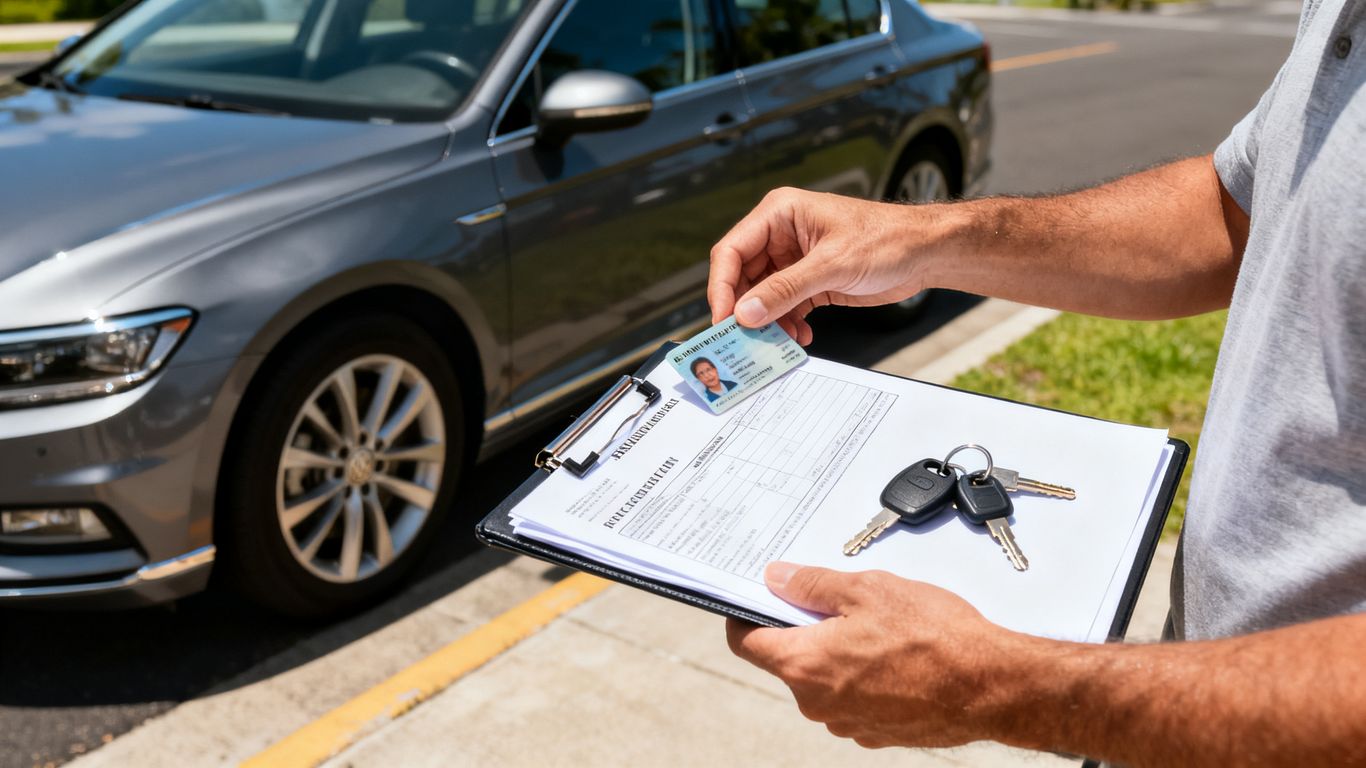
A reputable provider may ask for identification and proof that you are authorized to access the vehicle. This protects you and other vehicle owners from unauthorized key creation. Have a driver’s license, registration, title, or insurance information available, although the exact documents accepted can vary.
If the vehicle is rented, leased, or owned by a business, explain that before service begins. You may need authorization from the rental company, leasing company, or fleet manager.
Your current location and key symptoms
State where the vehicle is parked and whether it is accessible. A precise location such as a parking-garage level, nearby intersection, or landmark is more useful than a broad neighborhood. Then describe whether the key is lost, locked inside, broken, not detected, or simply failing to turn.
A short symptom list keeps the call focused:
- The key is missing and no spare is available.
- The fob buttons work inconsistently or not at all.
- The blade is bent, broken, or stuck in the ignition.
- The vehicle does not recognize the key or smart fob.
This detail helps the provider prepare for the right kind of service rather than arriving with equipment suited only to a basic lockout.
Choose the best car key replacement option
There is no single best provider for every vehicle or situation. The right choice depends on the key technology, whether the car can be driven, how quickly you need help, and whether you need cutting, programming, or only entry. Comparing the full service—not just the advertised key price—usually produces a better result.
Mobile automotive locksmith service
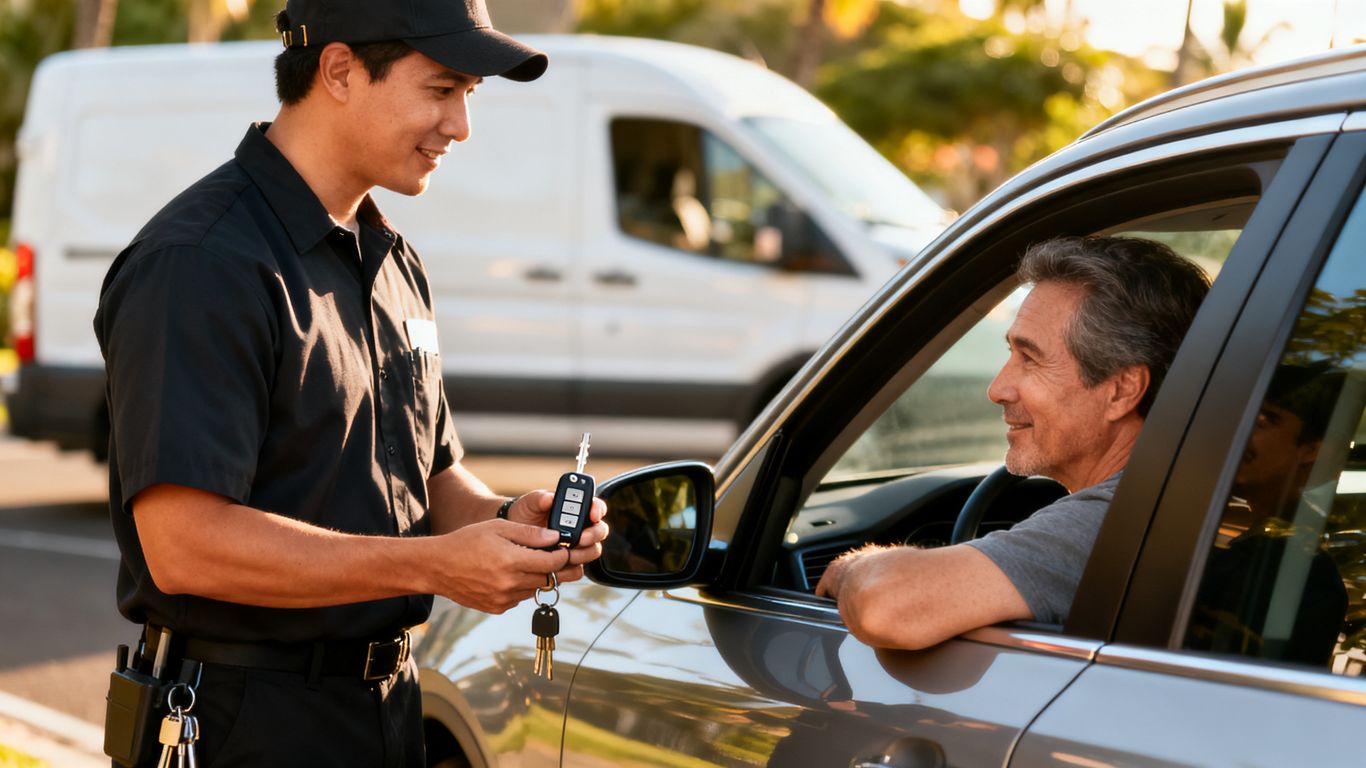
A mobile automotive locksmith comes to the vehicle, which can remove the need for a tow when the car will not start. Double Quick Locksmith provides fully mobile service and states that its technicians can cut and program replacement keys on-site for many makes and models, including transponder keys, smart keys, push-to-start systems, and key fobs.
For Honolulu and Oʻahu drivers, this can be practical when the vehicle is at home, work, or in a parking lot. You can also review this mobile car key service before calling so you know what information to have ready.
Car dealership replacement
A dealership can order factory keys and program them using manufacturer systems. This may suit a newer vehicle with manufacturer-only requirements or an owner who specifically wants a factory-issued key. The tradeoff can include an appointment, parts delays, service-bay scheduling, and towing when the vehicle cannot be driven.
Ask whether the quoted price includes the key, cutting, programming, labor, and any vehicle transport. A dealership can be appropriate, but it is not automatically the fastest option for an urgent situation.
Online and DIY key services
Online keys and DIY programming may work in limited cases, particularly when you still have a working key and the vehicle supports onboard programming. Compatibility is not guaranteed, however, and aftermarket products may lack some functions or fail to program without specialized tools.
A shell replacement is a different matter from replacing the electronics. If the circuit board and transponder are intact, transferring them to a matching shell may solve a cracked casing or broken key ring. This key fob shell guide explains why that repair is only suitable when the original electronics can be reused.
Roadside assistance and insurance programs
Roadside assistance may unlock the vehicle, but a lockout service is not always the same as full key replacement. Many plans do not cut or program modern smart keys and fobs, so you may still need a locksmith or dealership afterward. Insurance may offer reimbursement or limited coverage, depending on the policy.
Check the service limits before dispatching help. If the key is merely locked inside and no cutting or programming is needed, roadside assistance may be enough; if the key is lost or damaged, ask specifically what happens next.
Understand what the replacement process involves
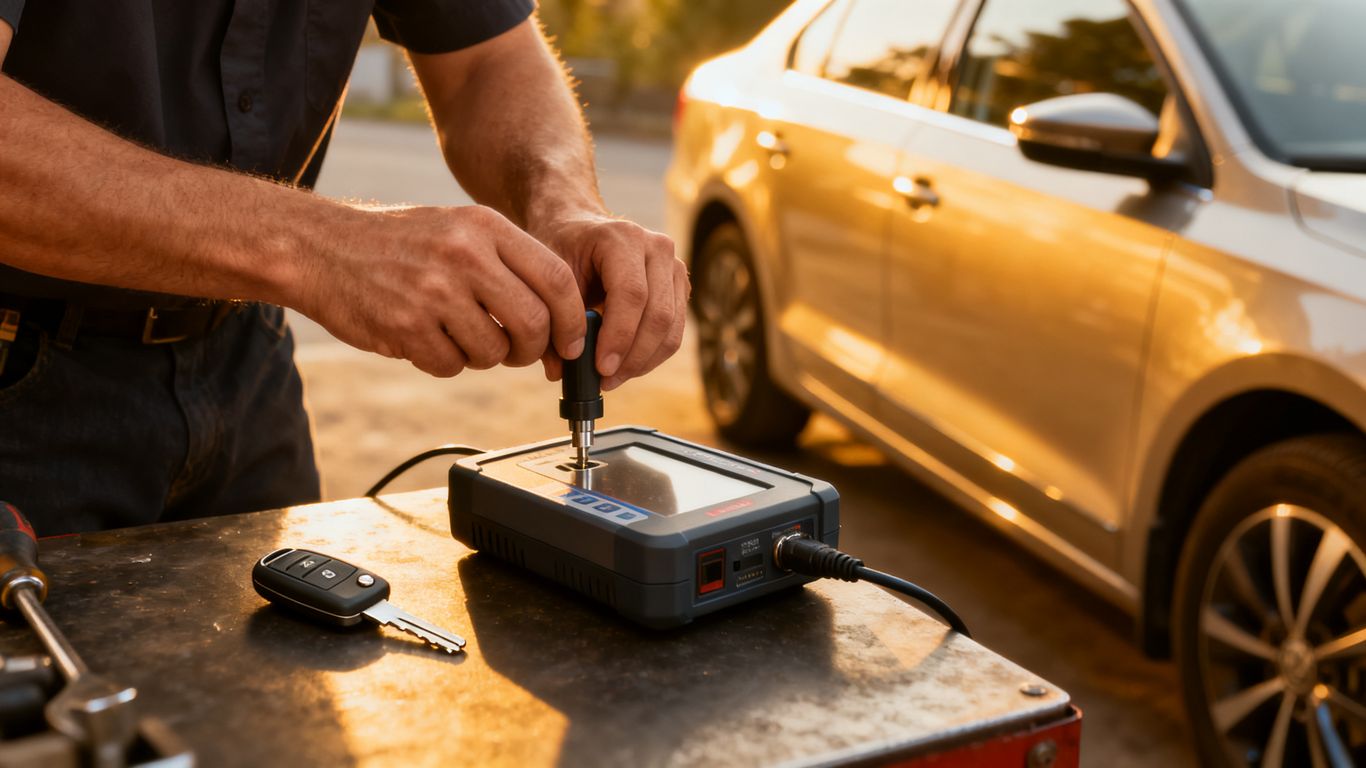
A replacement can involve one task or several. The technician may cut a blade, program an immobilizer chip, pair a remote, repair a shell, or diagnose an ignition fault. Knowing the stages makes it easier to understand a quote and recognize when a proposed repair does not address the actual problem.
Cutting a new key blade
Key cutting shapes a blank blade to match the vehicle’s lock and ignition. The cut can be based on an existing key, a code, or information gathered from the vehicle, depending on the model and available equipment. A correctly cut blade should turn smoothly without forcing the ignition.
A blade that works in the door but not the ignition may indicate an incorrect cut, a worn ignition cylinder, or a deeper mechanical issue. Do not keep twisting a key that binds, since it can snap inside the cylinder.
Programming the transponder chip
The transponder chip must communicate with the vehicle’s immobilizer before the engine will start. Programming procedures vary by vehicle, and some require specialized equipment or security access. This is why a perfectly cut metal key can still be electronically unusable.
Ask the provider to confirm whether programming is included in the service. Double Quick Locksmith describes its service as transponder key cutting and programming for all makes and models, along with programming for new keys and fobs.
Pairing a key fob or smart key
Pairing connects a replacement remote or smart key to the vehicle. After pairing, the key may operate the locks, trunk, alarm, and push-to-start system, depending on the vehicle. Some vehicles require existing keys to be present, while others can be programmed when all keys are lost.
Do not assume that a fob that locks the doors is fully ready. The engine-start function, emergency blade, proximity detection, and every button should be checked before the technician leaves.
Replacing a damaged key shell
A damaged shell can make a working key look unusable. If the chip, circuit board, battery contacts, and blade are still sound, those parts may be moved into a new casing. This is often less costly than replacing the complete electronic key.
A shell swap will not fix a failed circuit board, missing transponder, or programming problem. Keep small components organized if attempting a repair, and stop if the key uses a smart system or the electronics are damaged.
Handle urgent lost, broken, or nonworking keys
Urgent key problems call for a calm, safe sequence rather than improvised entry methods. First confirm that the key is truly missing or defective, then move the vehicle and yourself away from traffic if possible. Never force a window, pry a door, or keep turning a key that is stuck.
What to do when all keys are lost
When every key is gone, gather the VIN, registration, identification, and vehicle location before calling. Tell the provider that no working key remains, because an all-keys-lost job may require different equipment and programming than a simple duplicate.
A professional may be able to create and program a replacement without the original, depending on the vehicle. This lost-key replacement guide gives additional background on why replacing the entire lock is not always necessary.
Steps to take after a key is stolen
If a key was stolen, treat the situation as a security concern rather than only a convenience problem. Move the vehicle to a safer location if you can, report the theft when appropriate, and ask whether the stolen key can be removed from the vehicle’s authorized-key list.
Do not leave registration papers or identifying documents inside an unattended vehicle. A replacement should address both access and the risk that the old key may still operate the car.
Responding to a broken key or ignition problem
If a blade breaks in the lock or ignition, avoid pushing the fragment farther inside. Do not use glue, pliers that can damage the cylinder, or another key to force the pieces together. An ignition that is jammed or worn may need repair or replacement in addition to a new key.
Describe where the break occurred and whether the vehicle still turns over. That information helps separate key extraction from an ignition repair and can prevent unnecessary damage.
Getting replacement service at your location
Mobile service is useful when the vehicle is stranded at home, work, a shopping center, or a parking garage. Double Quick Locksmith offers emergency replacement and programming at the vehicle’s location across Oʻahu, including service for lost, broken, and nonworking keys.
When help arrives, stay near the vehicle with your identification and ownership documents. If you are in a hazardous roadside position, tell the provider exactly where you are and follow local safety guidance while waiting.
Compare car key replacement costs and timing
The price of a replacement depends on more than the blank itself. Key technology, programming, vehicle security, labor, travel, and whether the car needs ignition work can all change the total. A useful comparison looks at the complete job and the time required, not only the lowest advertised starting price.
Factors that affect the total price
A basic mechanical duplicate generally requires less work than an all-keys-lost smart-key replacement. Additional cost may come from extracting a broken key, repairing an ignition, sourcing a special fob, or traveling to a remote location. After-hours service can also affect the quote.
Before approving the work, ask whether the estimate covers cutting, programming, the physical key or fob, labor, and the service call. This car key cost guide offers a useful way to compare the main price factors.
How vehicle make and security features matter
Make, model, year, trim, and security system affect both equipment and procedure. A standard transponder may be relatively straightforward, while a luxury vehicle or advanced smart-key system may require specialized programming. The same-looking fob can also vary significantly across model years.
Provide the VIN and key symptoms early. That gives the provider a better chance of confirming compatibility before traveling to the vehicle.
When a spare key reduces future costs
A spare is usually easiest to make while one working key is still available. Once all keys are lost, the job may require additional identification, programming, and vehicle-specific steps. Keeping a backup can also prevent a lockout from becoming an emergency service call.
Store the spare somewhere secure but separate from the primary key. Do not hide a proximity fob on the vehicle, since its presence could undermine the vehicle’s security.
Why upfront quotes can prevent surprises
An upfront quote should state what is included and identify anything that could change after inspection. Ask whether the estimate is for a duplicate, a replacement with no original, a shell repair, or a complete smart-key solution. Also ask about warranty terms and payment methods before work begins.
For Honolulu drivers, a mobile provider may also reduce towing costs when the vehicle cannot be driven. Clear details on the phone make the final bill easier to understand and compare.
| Key situation | Work commonly involved | Questions to ask |
|---|---|---|
| Basic metal key | Cutting a matching blade | Is the cut based on the original or vehicle information? |
| Transponder key | Blade cutting and chip programming | Is immobilizer programming included? |
| Remote fob | Fob supply, pairing, and function testing | Will every button and remote feature be checked? |
| Smart key | Replacement fob and vehicle pairing | Can the vehicle be programmed with no working key? |
Use the table as a starting point, not a substitute for a vehicle-specific quote. The actual work depends on the car’s security system and the condition of the locks and ignition.
Test the new key and prevent future lockouts
The job is not finished when the new key is handed over. Test it while the technician is present, when a correction is easier to make. A few deliberate checks can reveal a programming issue, weak battery, incorrect blade cut, or damaged remote before you drive away.
Check the ignition and engine start
Insert the blade gently and confirm that it turns smoothly through the expected positions. Start the engine, then switch it off and try again if appropriate. A transponder key should start the vehicle without repeated attempts or warning messages.
If the key turns but the engine does not start, stop testing and report the issue. The blade may be correct while the chip is unprogrammed, or the vehicle may have a separate immobilizer fault.
Test locks, buttons, and remote functions
Check each door, the trunk or hatch, lock and unlock buttons, the panic function if present, and any physical emergency blade. Stand at a reasonable distance and test the remote more than once. A button that works only when pressed unusually hard may indicate a casing or contact problem.
Keep the key dry and avoid dropping it while checking. If the remote uses a replaceable battery, confirm that the battery compartment closes securely.
Confirm smart-key detection
For a push-to-start vehicle, confirm that the car detects the smart key in the normal locations. Test the start button, door-handle detection if equipped, and the emergency-start procedure described in the owner’s manual. The vehicle should not display a key-not-detected warning under ordinary conditions.
Make sure the new fob is not left next to another smart key during testing, since proximity between devices can make symptoms confusing. Ask the technician what warning signs should prompt a follow-up call.
Make and safely store a spare key
Once the replacement works, consider making a spare while the vehicle is already available for service. Keep it in a secure location separate from your daily keys, and avoid placing a proximity fob in a hiding spot on the car. A simple mechanical emergency key may be useful for some vehicles, but it does not replace a programmed smart key.
For broader automotive guidance, this car key resource library can help you review common fob, programming, and replacement questions over time.
Conclusion
The fastest affordable path to a replacement usually begins with identifying the key type, preparing your VIN and ownership documents, and comparing the complete service rather than the key price alone. A qualified provider can explain whether you need cutting, programming, pairing, extraction, or a shell repair. Once the new key works, test every function and make a securely stored spare so the next problem is easier to handle.
Frequently Asked Questions
Can I replace a car key without the original?
Often, yes, depending on the vehicle. A provider may use the VIN, lock information, and specialized programming equipment, but you will generally need to prove that you are authorized to access the vehicle.
How long does car key replacement take?
Timing varies by key type, vehicle, parts availability, location, and whether programming is needed. A basic duplicate may be quick, while an all-keys-lost smart-key job can take longer.
Is a dealership always required for a smart key?
No. Some mobile automotive locksmiths can supply and program smart keys for many vehicles. Certain manufacturer-specific systems may still require dealer equipment or procedures.
Can a dead key-fob battery prevent the car from starting?
It can, depending on the vehicle and its emergency-start design. Replace the battery if appropriate and consult the owner’s manual for the backup detection or starting method.
Is it cheaper to replace a key fob shell?
It can be, but only when the original electronics and transponder are still usable. A shell replacement will not solve a missing chip, failed circuit board, or programming problem.
What documents do I need for a replacement key?
You may need identification and proof of ownership such as registration, a title, or insurance documents. Requirements vary, so ask the provider what it accepts before service.
Should I make a spare after replacing a lost key?
Yes. A working spare can reduce the cost and disruption of a future lockout, especially for vehicles that use transponders or smart keys. Store it securely and separately from your primary key.
Get Help With Your Key
If you need a mobile replacement or programming service in Honolulu or across Oʻahu, contact Double Quick Locksmith for help at your vehicle’s location. You can also request assistance and have your vehicle details ready for a clearer conversation about the next step.