Key Takeaways
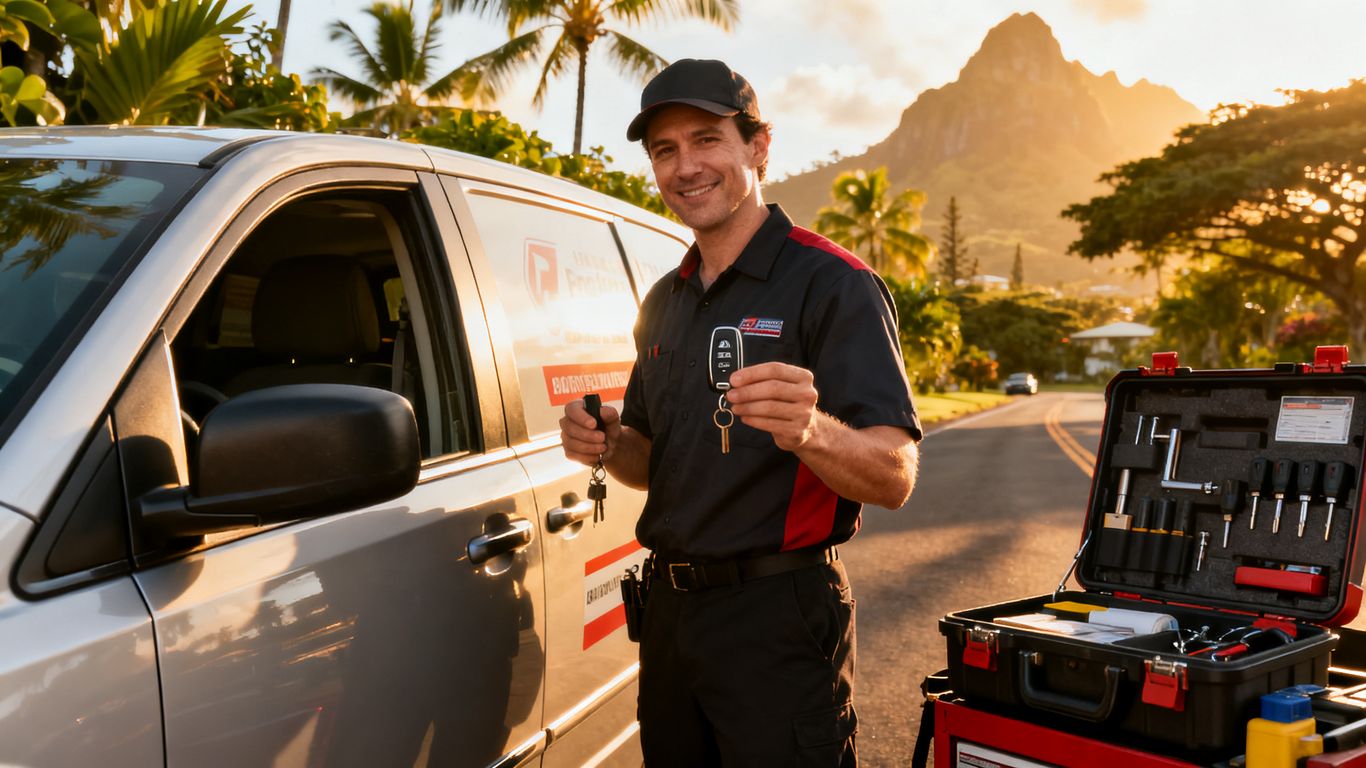
A lost or damaged car key does not always mean a dealership visit or a tow. The right mobile locksmith can often cut, program, and test a replacement at your location.
- A replacement car key locksmith can help with lost, broken, stolen, and malfunctioning keys.
- Traditional keys, transponder keys, remotes, and smart fobs require different replacement steps.
- Your vehicle’s make, model, year, and VIN help the technician bring the right equipment.
- Mobile service can be useful at home, at work, in a parking lot, or on the roadside.
- Making a spare after an emergency can reduce the risk of another lockout.
When you need a replacement car key locksmith
Car key trouble can stop an otherwise ordinary day with very little warning. A key may disappear, snap in the lock, or stop communicating with the vehicle. A replacement car key locksmith can assess the problem and determine whether you need a new key, programming, repair, or simply safe vehicle entry.
Lost, stolen, or misplaced car keys
When every key is gone, the first step is confirming the vehicle and ownership details before replacement work begins. A technician may be able to cut and program a new key even when there is no original to copy, depending on the vehicle. If a key was stolen, ask whether old keys can be deactivated so they no longer operate the vehicle.
The service described by Double Quick Locksmith includes mobile help for lost car keys and key replacement across Honolulu and Oʻahu. Have your location and vehicle information ready when calling, especially if the car is in a large garage or crowded lot.
Broken keys and damaged key blades
A bent or cracked blade can become harder to remove with every attempt to turn it. Stop applying force if the key is stuck, since fragments can remain inside the ignition or door cylinder. A technician can extract a broken fragment and determine whether the existing electronics can be reused or a complete replacement is more practical.
Damage is not always limited to the metal blade. A worn shell, loose buttons, or a cracked remote housing may also make the key unreliable. The right repair depends on which part has actually failed.
Dead key fobs and failed smart keys
A dead battery is one possible cause of a key fob that will not unlock or start the car, but it is not the only one. The remote may need reprogramming, the housing may be damaged, or the vehicle may no longer recognize the key. Replacing the battery first is reasonable, but persistent failure calls for a proper diagnosis.
Smart keys and push-to-start systems also involve vehicle security programming. A physical replacement alone may look correct and still fail to start the car, which is why cutting and electronic pairing are separate parts of the job.
Keys locked inside the vehicle
A lockout is different from a full key replacement, even though the two problems can happen together. Professional entry methods are designed to open the vehicle without damaging the door, window, or lock system. Once inside, you can decide whether the key is still usable or whether a duplicate or replacement is needed.
If a child, pet, or vulnerable person is locked inside, contact emergency services first. For ordinary vehicle lockouts, provide the exact location and vehicle details so the technician can choose suitable tools before arrival.
Types of car keys we can replace
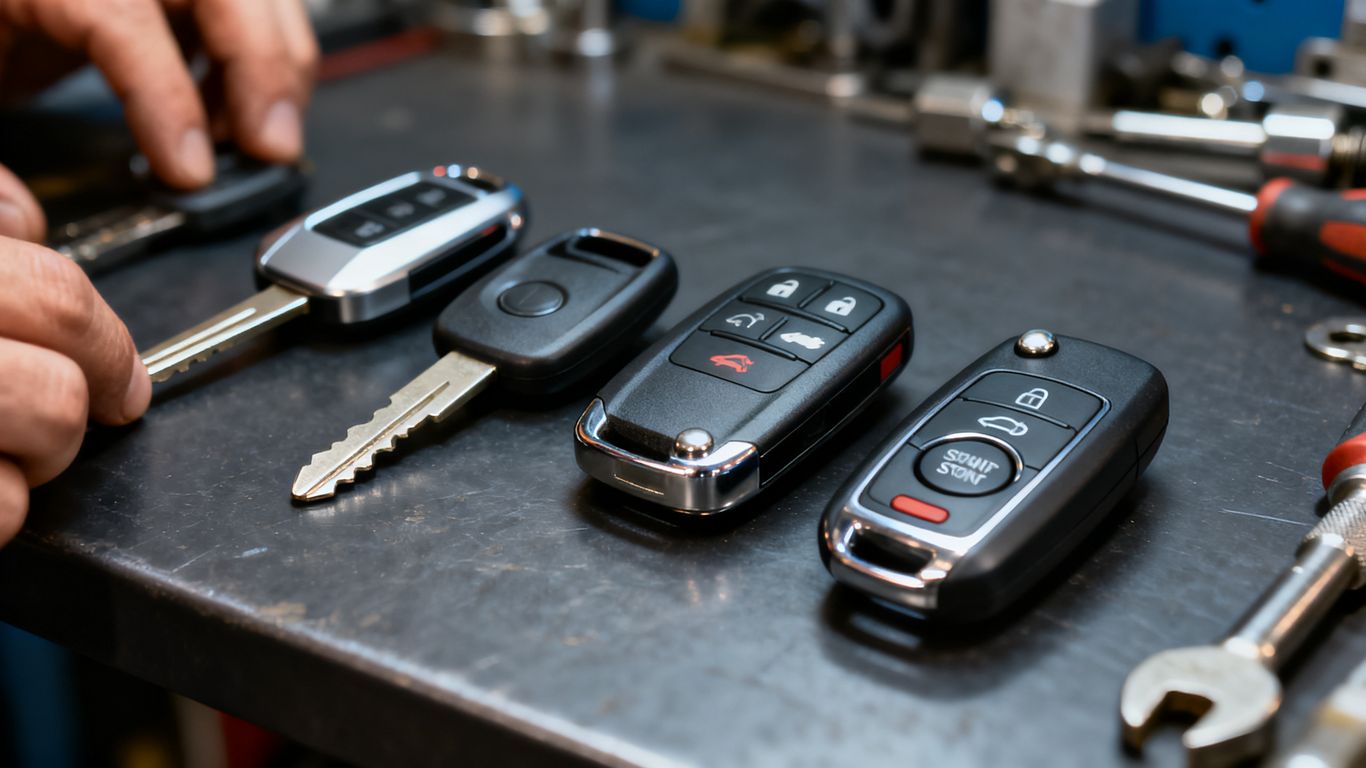
Car keys have changed from simple cut metal to electronic devices that communicate with an immobilizer or remote locking system. The visible shape of a key does not always reveal what is inside it. Knowing the type helps set realistic expectations about cutting, programming, and testing.
Traditional metal car keys
Traditional keys use a cut metal blade to operate the door and ignition. They are generally straightforward to duplicate, although the cut must still match the vehicle precisely. Some older-looking keys may also contain a hidden transponder, so appearance alone should not determine the replacement method.
A spare is usually easiest to make while the original still works. If the only key is worn or bent, replacing it before it breaks can avoid a more urgent service call.
Transponder and chipped keys
A transponder key contains an electronic chip that must be recognized by the vehicle before the engine will start. Cutting the blade creates the physical key, but programming connects the chip with the vehicle’s security system. Both parts need to be completed and checked.
The Car Key Programming service covers transponder key programming as part of mobile automotive locksmith support. This kind of work is why a hardware-store copy that turns the lock may still fail to start the vehicle.
Remote key fobs
Remote fobs control functions such as locking and unlocking, while some also contain the transponder used for starting. A damaged button, exhausted battery, or failed circuit can make the remote unreliable even when the blade remains intact. Depending on the condition, the answer may be a battery, repair, re-shell, reprogramming, or replacement fob.
The following comparison shows why two keys that look similar may involve different work:
| Key type | Main function | Typical replacement consideration |
|---|---|---|
| Metal key | Turns a lock or ignition | Accurate blade cutting |
| Transponder key | Starts the vehicle after chip recognition | Cutting and chip programming |
| Remote fob | Controls locks and remote functions | Battery, buttons, pairing, or replacement |
| Smart key | Enables proximity or push-to-start operation | Fob matching and security programming |
The table is a guide rather than a diagnosis. Vehicle year, trim, and security system can change the exact process, so confirm the details before ordering a key.
Push-to-start smart keys
Push-to-start vehicles use proximity technology instead of a conventional key that must be inserted into the ignition. The fob may unlock the car automatically and authorize starting when it is inside the cabin. If it is lost or no longer detected, the replacement must be compatible with the vehicle’s system and properly paired.
Keep a smart key away from water, excessive heat, and unnecessary drops. These small habits will not prevent every failure, but they can help protect a costly electronic component.
What the car key replacement process involves
A professional replacement is more than cutting a blank and handing it over. The technician has to identify the vehicle, choose a compatible key type, complete any required programming, and verify that the result works. The exact sequence varies by make, model, year, and key system.
Confirming your vehicle’s make, model, and VIN
The vehicle identification number, or VIN, helps confirm the correct vehicle information and key application. It may be found on the dashboard, registration, insurance documents, or title. Providing the year, make, model, trim, and VIN at the start can reduce unnecessary delays.
The technician may also ask whether any working key remains and where the vehicle is located. These details help distinguish a duplicate from an all-keys-lost replacement.
Cutting a key to match the vehicle
A replacement blade must match the locks and ignition, not merely resemble the old key. Some vehicles use high-security cuts or internal patterns that require specialized equipment. If a key broke in the ignition or door, the remaining fragment may help identify the cut, but it should not be forced back into use.
The cut is checked before programming whenever possible. That keeps a physical problem from being mistaken for an electronic one.
Programming the transponder or key fob
Programming allows the vehicle to recognize the replacement chip, remote, or smart fob. The process can involve pairing a new key, reprogramming an existing one, or replacing a fob that no longer communicates correctly. Not every vehicle uses the same procedure, and some require all available keys to be present.
This is also where a key that looks perfect can still fail. Proper programming matters because the blade and the vehicle’s security system must work together.
Testing the ignition, locks, and security features
Testing should cover more than whether the engine starts once. The technician can check the physical locks, ignition or push-to-start response, remote buttons, and other relevant functions. Any problem found during testing is easier to address before the technician leaves.
Ask what was tested and whether the replacement includes any written workmanship or guarantee terms. Clear answers make the handoff less stressful.
Mobile emergency car key replacement across Oʻahu
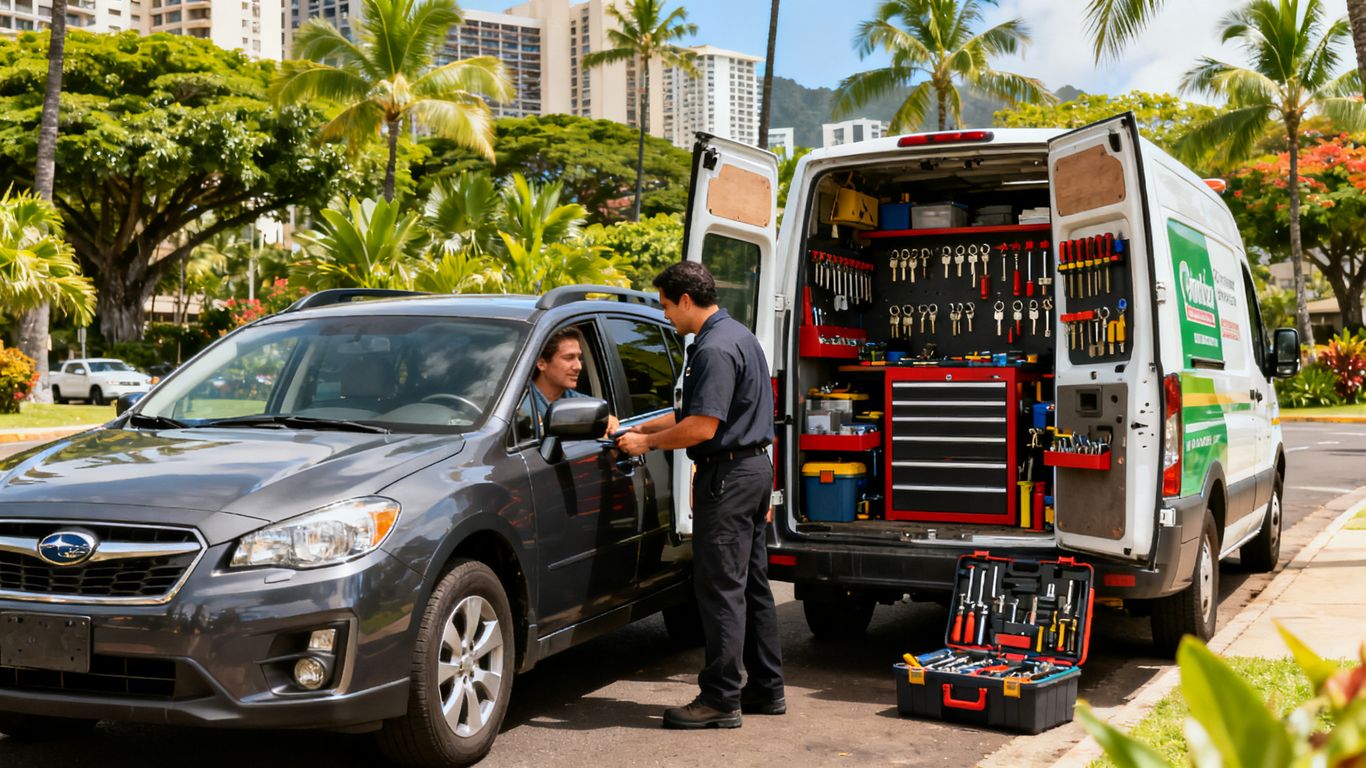
A mobile locksmith brings the work to the vehicle instead of requiring the vehicle to travel first. That can be especially useful when the car cannot start, the key is missing, or the vehicle is parked far from a service shop. Service may take place at a residence, workplace, roadside location, or parking facility.
On-site service in Honolulu and surrounding areas
Mobile service is designed around the vehicle’s actual location. The technician can bring key blanks, cutting equipment, and programming tools suited to the information provided during the call. Across Oʻahu, give a precise meeting point, such as a parking level, nearby business, or recognizable intersection.
The local automotive locksmith team handles key replacement, transponder programming, ignition work, and lockout assistance for many makes and models. Availability and compatibility should still be confirmed for the specific vehicle before dispatch.
Help for roadside and parking-lot emergencies
A parking lot can make a key emergency feel more complicated than it is. Note the lot entrance, level, stall number, and whether the vehicle is blocking traffic. If you are on the roadside, move to a safe location away from moving vehicles while waiting.
For a lost key, the technician may need to create and program a replacement. For a locked-in key, entry may solve the immediate problem without requiring a new key at all.
Non-damaging vehicle entry techniques
Vehicle entry should be performed with tools and methods intended to protect the door, weather seals, glass, and locking mechanism. Avoid trying improvised tools, coat hangers, or excessive force. Those attempts can turn a simple lockout into a door, paint, or window repair.
Professional lockout assistance focuses on safe, non-destructive unlocking methods. Once the vehicle is open, the key problem can be assessed separately.
When towing to a dealership may not be necessary
If the issue is a lost key, broken key, transponder, remote, or smart fob, mobile replacement may remove the need to transport the vehicle. The same can apply to some ignition and key-extraction problems. A dealership may still be appropriate when a vehicle has a highly unusual security requirement or when the necessary parts are unavailable on-site.
Ask about the likely scope before authorizing a tow. A quick description of the vehicle and the failure can help determine whether mobile service is a reasonable first option. You can also request mobile help when the car is stranded and you need an on-site assessment.
Replacement options for common key problems
Not every key problem calls for an entirely new assembly. A technician should identify the failed part before recommending the most expensive option. In some cases, a repair or re-shell is enough; in others, replacing and programming the complete key is safer.
Replacing a lost key without the original
A missing original does not automatically make replacement impossible. The vehicle can be identified using its VIN and other information, then a compatible key can be cut and programmed according to the vehicle’s requirements. Ownership verification may be requested before work begins.
If all keys are lost, tell the technician that clearly. The programming approach may differ from making a copy of one working key.
Re-shelling a damaged key fob
A re-shell replaces the outer housing while preserving usable internal components. It can be appropriate when the buttons are worn or the plastic case is cracked but the circuit board and transponder still function. The internal parts must be transferred carefully and tested afterward.
A re-shell is not the same as replacing a failed circuit board. If the fob has water damage or remains unrecognized after a battery change, a complete replacement may be necessary.
Repairing buttons and replacing batteries
Buttons that no longer click or respond can make a good fob feel completely dead. A battery replacement is a simple first check, but the correct battery type and installation still matter. If the remote continues to fail, testing can reveal whether the problem lies in the button contacts, circuit, or vehicle pairing.
Keep the old parts until the replacement is confirmed. They may help explain the failure or provide useful information about the key model.
Deactivating keys that were lost or stolen
A lost key creates both a convenience problem and a security concern. Depending on the vehicle, previously paired keys may be removed from the system while a new key is added. Ask specifically whether the missing key can be deactivated and what happens to any spare keys currently in use.
Changing the vehicle’s physical locks may be considered if there is a serious concern that someone can identify or access the car. The right choice depends on the circumstances and vehicle design.
Locksmith replacement versus dealership service
Both mobile locksmiths and dealerships may be able to provide a replacement, but the experience can differ. A dealership may require an appointment, transport, and access to parts through its own process. A mobile locksmith may be able to perform the work where the vehicle is parked, provided the key system is supported.
Upfront pricing and potential cost differences
Key replacement prices depend on the vehicle, key type, programming requirements, and whether the original is available. Request a clear estimate that separates service, cutting, programming, parts, and any emergency or travel charges. Avoid choosing solely on the lowest advertised number if it does not explain what is included.
A mobile option may reduce towing and transport costs, while a dealership quote may include different parts or warranty terms. Compare the complete job rather than one line item.
Faster mobile service and reduced waiting
The main practical advantage of mobile work is that the vehicle does not need to be delivered before assessment. This can be helpful after hours, during a roadside emergency, or when the vehicle is immobilized. Scheduling still depends on location, workload, vehicle complexity, and parts availability.
Ask for an estimated arrival window and explain whether the key is lost, broken, locked inside, or simply not communicating. Better information generally leads to a better-prepared visit.
Equipment for European and luxury vehicles
European and luxury vehicles can use specialized key shapes, security systems, and programming procedures. Experience with imported vehicles matters, but no provider should claim every model is identical. Confirm the exact make, model, year, and key type before service begins.
For example, Audi key replacement may involve advanced transponder or smart-key systems rather than a basic metal copy. Similar care is appropriate for other imported vehicles with electronic authorization.
Warranty coverage and technician credentials
Ask whether replacement work includes a written guarantee, what it covers, and how long it lasts. It is also reasonable to confirm that the technician is licensed or insured where applicable and that the business can explain its programming and testing process.
A warranty does not remove the need to test the key before leaving. Check the locks, remote functions, and starting system while help is still available.
How to prepare for a car key replacement
A few details can make a mobile visit more efficient. Gather the vehicle information, identify the exact location, and decide whether you need emergency access, a working replacement, or an additional spare. Preparation also helps you compare estimates fairly.
Documents and vehicle information to provide
Have your registration, identification, and insurance information available if ownership verification is requested. The make, model, year, trim, VIN, and exact location are also useful. If the vehicle has a push-to-start system, mention that when calling rather than describing it only as a “remote.”
For general background, unrelated reference topics such as an IPTV buying guide, a Finnish IPTV guide, pillow lifespan advice, a solar carport guide, and a disability insurance broker guide are separate from automotive service and should not be used to evaluate a locksmith. The relevant information for this job remains your vehicle and key system.
Checking whether a spare key still works
If you have a spare, test it before an emergency. Confirm that it unlocks the doors, turns the ignition or authorizes push-to-start, and operates the remote buttons. A spare that has been sitting unused may have a weak battery or may not be fully functional.
Tell the technician about every key you still possess. This can affect programming and helps avoid leaving an old or unreliable key as your only backup.
Choosing between a duplicate and full replacement
A duplicate is usually appropriate when one dependable key remains and you want another. A full replacement may be needed when the original is lost, stolen, broken beyond repair, or electronically rejected. The distinction affects both the work and the information the technician needs.
If you are already paying for an emergency visit, consider whether adding a spare would be practical. It may be easier to prepare a second key while the equipment and vehicle are already together.
Preventing future lockouts with a backup key
Once the replacement works, store the spare somewhere secure and separate from the primary key. Avoid leaving both keys in the same bag or vehicle. For a smart fob, protect it from moisture and keep track of its battery condition.
Useful habits include:
- Store a spare with a trusted household member.
- Keep the key away from water, heat, and heavy pressure.
- Replace weak fob batteries before they fail completely.
- Record the vehicle details and VIN in a secure place.
These steps do not prevent every emergency, but they can make the next one shorter and less disruptive. A little planning is especially valuable when the vehicle is used daily.
Conclusion
When a car key is lost, broken, locked inside, or no longer recognized, start by identifying the key type and the vehicle details. Mobile replacement can often bring cutting, programming, entry, and testing directly to the vehicle, helping you avoid unnecessary delays. If you need assistance, contact a qualified local locksmith and ask clear questions about compatibility, pricing, testing, and warranty coverage.
Frequently Asked Questions
Can a locksmith replace a car key if the original is lost?
Often, yes. The technician may use the vehicle’s identification details and VIN to create and program a compatible replacement, subject to the vehicle’s security system and ownership verification.
Does a replacement car key need programming?
Many transponder keys, remotes, and smart keys do. A traditional metal key may only need accurate cutting, but the vehicle should be identified before assuming programming is unnecessary.
Can a broken key be repaired instead of replaced?
Sometimes. A damaged shell, button, or battery may be repairable, while a broken blade, failed circuit, or water-damaged fob may require a complete replacement.
Can a locksmith make a key from the VIN?
A VIN can help identify the correct key application and support the replacement process. It is not, by itself, a substitute for cutting, programming, vehicle access, or ownership verification.
Is it possible to unlock a car without damaging it?
Professional locksmiths use vehicle-appropriate entry methods intended to avoid damage. Improvised tools and excessive force can harm the door, weather seals, window, or lock mechanism.
Should I make a spare key after an emergency replacement?
Usually, having a tested spare is sensible. It gives you another option if the primary key is lost, damaged, or has a depleted battery later.
What information should I give when requesting mobile key service?
Provide the vehicle’s year, make, model, trim if known, VIN, key type, nature of the failure, and exact location. Also state whether any working key remains and whether the vehicle is locked or immobile.