Key Takeaways
A failing key fob does not always require a full replacement, but modern vehicles often need professional diagnosis and programming. The right mobile locksmith can solve the problem at your location and help you avoid unnecessary towing.
- Check the fob battery, contacts, signal range, and vehicle battery before replacing the entire unit.
- A damaged shell may be repairable if the original circuit board and transponder chip still work.
- Lost, stolen, and push-to-start keys usually require cutting, programming, or both.
- Compare the complete cost of mobile service with dealership labor, towing, and waiting time.
- Keep your VIN, ownership documents, and any spare or damaged keys ready for the locksmith.
When you need car key fob replacement
A key fob can fail because it is lost, physically damaged, electronically faulty, or no longer recognized by the vehicle. Some problems are simple battery issues, while others involve the transponder, immobilizer, or vehicle receiver. Identifying the symptom first helps prevent paying for a replacement when a repair or reprogramming service would be enough.
Lost, stolen, or completely missing fobs
When a fob is lost or stolen, there is usually no battery test or button repair that can restore access. A locksmith may need to verify the vehicle, supply a compatible replacement, and program it to the car. If the missing fob could be found by someone else, ask whether the old key can be removed from the vehicle’s memory so it cannot continue to operate the system.
Broken shells, worn buttons, and physical damage
A cracked case, broken key ring, or worn button does not automatically mean the electronics are ruined. If the circuit board and transponder remain intact, the internal parts may be transferred into a replacement shell. Work carefully, since a small chip or spring can fall out and leave the key unable to start the vehicle.
Fobs that unlock the car but will not start it
Unlocking and starting may depend on different parts of the key system. The remote can still send a door-lock signal even when the transponder is not being recognized by the immobilizer. If the engine cranks and quickly stops, or an immobilizer warning appears, the issue may require programming or a replacement chip rather than another battery.
Push-to-start and proximity key failures
A push-to-start vehicle may fail to detect a proximity fob even when its buttons appear normal. Weak batteries, internal damage, interference, or a lost registration between the fob and vehicle can all produce similar symptoms. Because smart keys combine remote, proximity, and security functions, professional testing is usually safer than repeated trial-and-error replacement.
How to diagnose a faulty key fob
Diagnosis should begin with the simplest possibilities and move toward electronic testing only when needed. A spare fob, a fresh battery, and a few observations can reveal whether the fault is in the remote, the car, or the communication between them. A practical key fob troubleshooting guide can help organize these first checks.
Replacing the battery and checking battery contacts
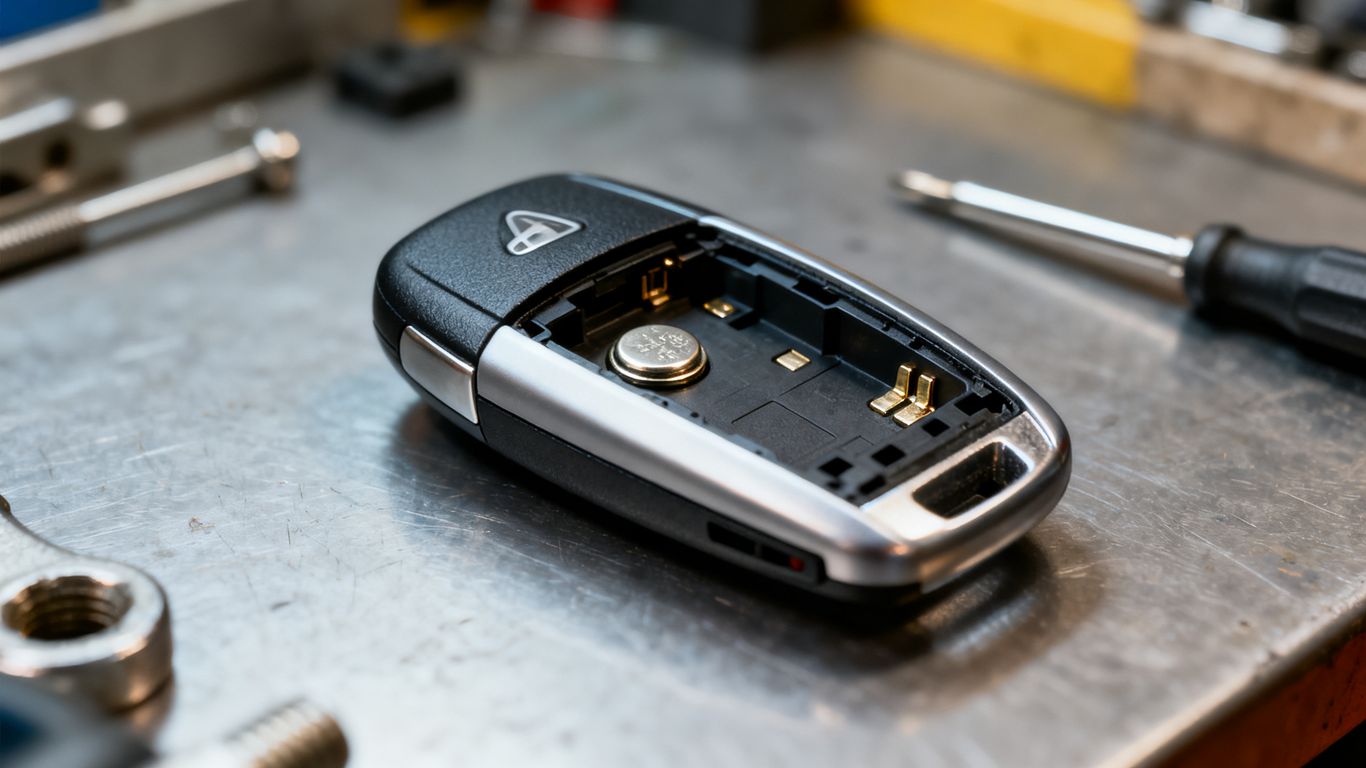
Install the correct battery type and confirm that it sits in the proper direction. Inspect the metal contacts for corrosion, looseness, or dirt, since a new battery cannot help if power is not reaching the circuit board. Avoid forcing the case open; broken clips or a damaged seal can create another problem.
Testing signal range and button response
Try each button from several distances and note whether the response is immediate, intermittent, or completely absent. If the fob works only when held close to the vehicle, the battery may be weak or the internal antenna may be damaged. Testing the spare fob, if available, helps separate a fob problem from a vehicle-side problem.
Ruling out a dead vehicle battery
A low vehicle battery can make a functioning fob appear useless. Interior lights, the horn, dashboard displays, and other electrical functions may be weak or absent when the car battery is discharged. If neither the main fob nor the spare produces a response, check the vehicle’s power supply before ordering a replacement.
Identifying signal interference or receiver problems
Metal objects, nearby electronics, and unusual parking environments can sometimes interfere with a key signal. Move away from the suspected source and try again, then test the fob at another location. If multiple known-good fobs fail consistently, the vehicle receiver or related wiring may need diagnosis.
Recognizing moisture and circuit-board damage
Water exposure, heat, and impact can damage the circuit board even when the outside shell looks acceptable. Sticky buttons, corrosion, flickering response, or a fob that works only after being squeezed are warning signs. Keep the unit dry and avoid applying household cleaners inside it; a technician can determine whether repair is realistic or replacement is more dependable.
Repair, reprogramming, or full replacement
The least expensive solution is not always a new key. A battery, shell, or programming service may restore a usable fob, while a missing transponder or damaged circuit board usually calls for a complete replacement. The choice should account for both the physical condition of the key and what the vehicle’s security system needs.
When a battery replacement is enough
A fresh battery is often enough when the fob is clean, undamaged, and simply has a short range or weak button response. After replacing it, test every function rather than assuming the repair worked because one door unlocked. If the vehicle still does not recognize the key, further programming or electronic diagnosis may be necessary.
Replacing a damaged fob shell without losing the transponder
A shell swap can preserve the original identity of the key when the internal components remain functional. The circuit board, battery contacts, flip-key mechanism, and transponder chip must be moved into the new casing in the correct orientation. A useful damaged key shell guide explains why the chip matters and why a perfectly cut metal blade alone may not start the car.
Reprogramming an existing fob
Reprogramming or re-syncing may help when a remote has lost communication with the vehicle but its electronics are otherwise sound. The procedure varies by vehicle and may require specialized equipment, especially for proximity and smart keys. Once complete, every button and starting function should be checked rather than relying only on a successful pairing message.
Choosing a new OEM or aftermarket fob
OEM fobs are made for the vehicle’s original system, while quality aftermarket or OEM-equivalent options may cost less. Compatibility is more than matching the shape: frequency, chip type, buttons, vehicle year, and security system all matter. Ask whether the quoted price includes the fob, cutting, programming, testing, and any emergency or travel charges.
Deactivating lost or stolen keys for vehicle security
A replacement is only part of the solution when a key has disappeared. Ask the technician whether the lost key can be deleted from the vehicle’s authorized-key list while the replacement is added. This is especially worthwhile when the fob was stolen or lost near the vehicle, since physical door access and electronic starting are separate security concerns.
What the locksmith replacement process includes
A professional replacement is a sequence of checks rather than a quick exchange of plastic. The technician confirms the vehicle and key type, prepares the mechanical and electronic components, then tests the finished result. Clear verification at each stage reduces the chance of an incompatible fob or an incomplete programming job.
Verifying the vehicle, VIN, and key compatibility
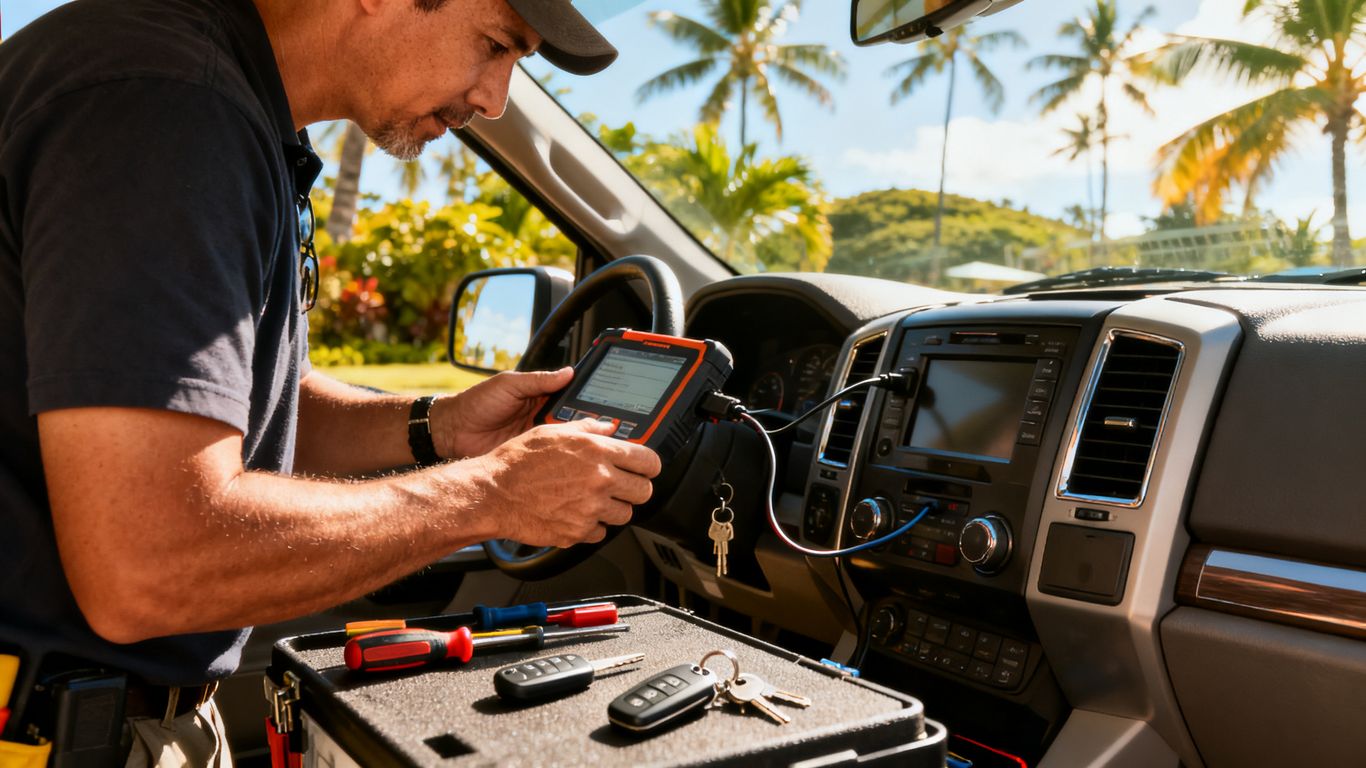
The make, model, year, VIN, and exact location help the locksmith identify the correct key structure and bring suitable equipment. Ownership information may also be requested before a replacement is made. VIN-based verification is particularly useful when no original key is available or several fob versions look nearly identical.
Cutting mechanical blades and matching transponder chips
Some fobs include an emergency blade or a traditional key that must be cut to the vehicle’s lock pattern. The transponder chip is a separate electronic identity and must match the vehicle’s immobilizer system through proper programming. A metal blade can fit the lock and still fail to start the engine if the chip is absent or unrecognized.
Programming remotes, smart keys, and immobilizer systems
Programming pairs the replacement remote or smart key with the vehicle’s security system. Depending on the vehicle, this can include door-lock buttons, proximity detection, the immobilizer, and push-to-start authorization. The technician should explain which functions are being programmed and whether any existing keys need to be present.
Testing locks, ignition, alarm, and push-to-start functions
A completed job should be tested at the car, not assumed from a programming screen. Check locking and unlocking, the alarm response, the mechanical blade, ignition recognition, and push-to-start operation where applicable. A written quote and a clear car key replacement cost guide can also help you understand which parts of the service affect the final price.
Completing the service at your location
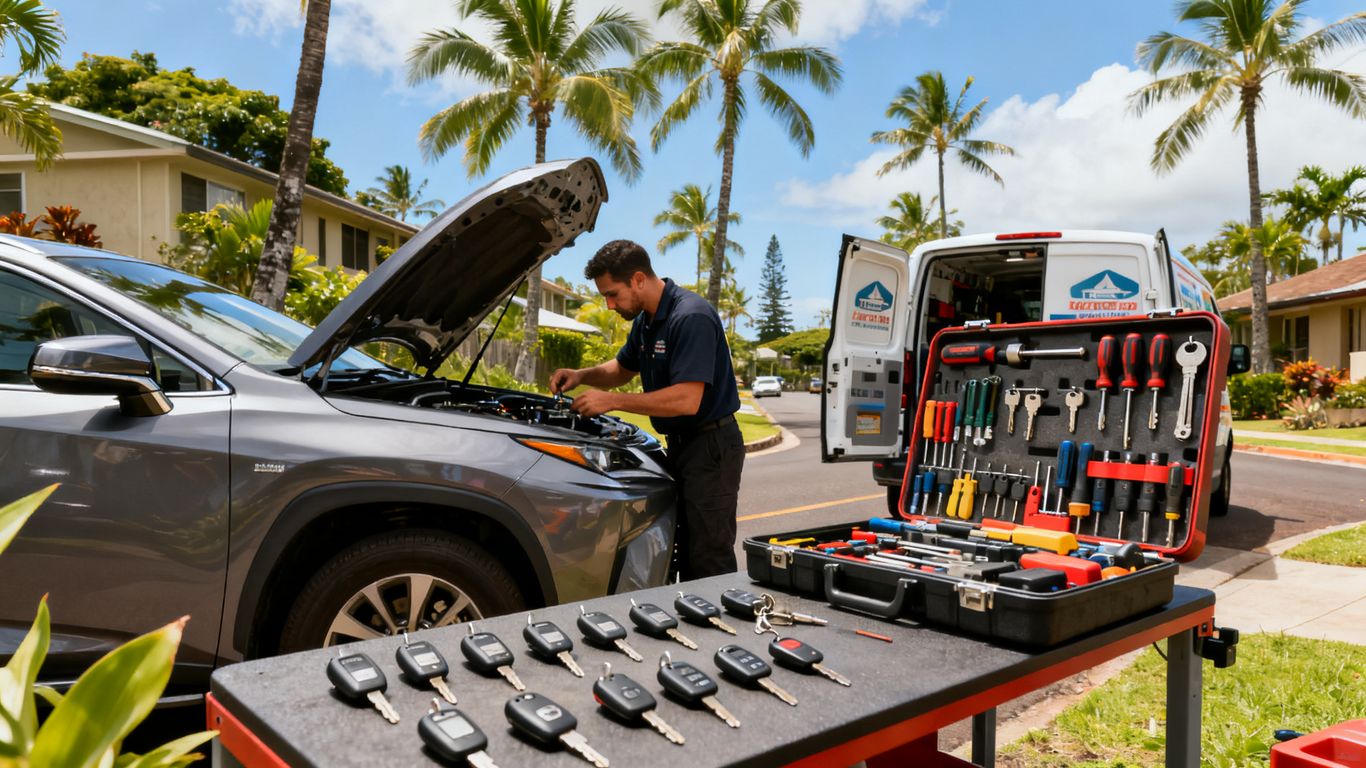
Mobile service is useful when the vehicle cannot be driven or the key has been lost away from home. The technician can work at a residence, workplace, parking area, or other suitable location after confirming the vehicle and service requirements. This avoids arranging a tow solely to deliver a car that needs a key before it can start.
Mobile locksmith versus dealership service
Both a dealership and a qualified locksmith may be appropriate, depending on the vehicle and the type of programming required. The practical comparison is not just the advertised key price; it includes travel, towing, scheduling, parts availability, and testing. For a broader local comparison, see this mobile locksmith comparison before deciding.
Comparing replacement costs and hidden fees
Dealership pricing commonly reflects OEM parts, service-bay labor, and the cost of getting the vehicle to the dealership. Mobile pricing may include an aftermarket or OEM-equivalent fob, cutting, programming, and a service call. Ask for an itemized estimate so emergency, travel, extra-key, and programming charges do not appear unexpectedly.
| Cost factor | Mobile locksmith | Dealership |
|---|---|---|
| Vehicle transport | Often unnecessary when service is available on-site | May require a tow if the car will not start |
| Key choices | OEM and quality aftermarket or OEM-equivalent options may be available | Usually centered on factory OEM parts |
| Scheduling | Can often be arranged at the vehicle’s location | Usually tied to service-bay availability |
| Programming | Completed with compatible mobile equipment | Completed with manufacturer systems |
The better value depends on the vehicle and key type, but the complete out-of-pocket total is the figure worth comparing. A lower initial quote is not useful if it excludes programming or requires a costly tow.
Evaluating response times and towing requirements
A dealership appointment can involve waiting for a part, finding an open service slot, and arranging transportation. A mobile locksmith brings the work to the vehicle, which is particularly helpful when the car is parked in a garage or will not start. This difference can matter more than the part price when the driver is stranded or has to get to work.
Understanding OEM, aftermarket, and OEM-equivalent options
OEM keys follow the vehicle manufacturer’s specifications, while aftermarket keys vary in quality and compatibility. OEM-equivalent does not mean every option works with every vehicle, so the key still needs to be matched and tested. Tell the technician whether factory equipment is a priority or whether a reliable lower-cost alternative is acceptable.
Reviewing warranties and programming reliability
Ask what warranty applies to the fob, shell, cutting, programming, and labor. A warranty is useful only when its coverage and duration are clear. Before the technician leaves, test the key repeatedly and make sure the remote, alarm, locks, and starting functions all work as expected.
Knowing when dealership programming is necessary
Most replacement decisions can be made after checking the vehicle’s key system, but some newer or highly secured vehicles require manufacturer-only access. A factory warranty, recall, free programming campaign, or VIN-to-OEM server authentication requirement may make the dealership the appropriate choice. A reputable locksmith should tell you when those limits apply rather than promising a service that the vehicle will not accept.
How to prepare for a locksmith car key fob replacement
A little information can make the appointment faster and reduce the chance of bringing the wrong equipment. Gather the vehicle details, describe what happened, and be ready to explain whether the car is drivable. The same preparation helps whether you need a battery diagnosis, a shell, programming, or a complete replacement.
Gather your vehicle identification and ownership documents
Have the make, model, year, VIN, registration, and a valid form of identification available. The VIN may be on the registration, dashboard, or insurance documents, although access can be difficult when the car is locked. Ownership verification protects the vehicle and helps the technician confirm the correct key system.
Keep the original fob, spare key, or damaged shell available
Bring every key or fob you still have, including one that seems dead. A technician can compare the working and faulty units, recover usable components, or program multiple keys during one visit. If the shell is damaged, keeping all of its internal parts together is especially helpful.
Ask for an upfront quote and service coverage
Describe the problem accurately and ask what the quote includes. The estimate should identify the key or fob, cutting, programming, travel, testing, and any additional key requested. For more context on the options that affect price, review this car key price guide before calling.
Confirm programming, testing, and warranty details
Ask whether the quoted service includes programming the remote, transponder, proximity functions, and immobilizer as applicable. Confirm that the locks, alarm, ignition, and push-to-start system will be tested before the job is finished. You should also know what happens if the fob is incompatible or a programming issue appears later.
Plan for a spare fob to prevent future lockouts
A spare is usually easier to arrange while the vehicle is already being serviced. Keep it somewhere secure and separate from the primary key, not inside the car or on the same key ring. A working backup can turn a future emergency into a simple handoff rather than a complete lost-key replacement.
Why choose a mobile locksmith in Honolulu
Honolulu drivers may need help at home, at work, in a parking structure, or along the road. A mobile technician brings key-cutting and programming equipment to the vehicle, which can remove the need for towing and a dealership appointment. The right provider should explain the solution plainly, verify compatibility, and test the result before leaving.
On-site service across Oʻahu
A mobile service can meet drivers at locations across Oʻahu, provided the vehicle and access point can be safely reached. This is useful when the car is immobilized or the only key has disappeared away from home. Honolulu car key replacement offers additional guidance on preparing for on-site service and avoiding unnecessary towing.
24-hour help for stranded drivers
Key failures do not follow business hours, and a dead fob can leave someone stuck after work, during travel, or late at night. Twenty-four-hour availability gives drivers a way to discuss lockout, replacement, and programming needs when ordinary service counters are closed. Keep the vehicle location and VIN ready so the call can begin with useful information.
Support for popular, luxury, and European vehicle brands
Key systems differ widely across ordinary commuter vehicles, luxury cars, and European models. The provider should confirm capability for the exact make, model, year, and key type instead of relying on a general promise. For an additional example of automotive service information, A-1 Lock Service describes mobile support for lost keys, lockouts, and automotive key repairs, although local coverage and vehicle capability should always be confirmed directly.
Fast replacement without a dealership visit
On-site replacement can be a practical alternative when the vehicle does not require manufacturer-only programming. The technician can assess the fob, supply a compatible option, and program it where the car is parked. The resulting convenience is greatest when towing would add cost and delay.
Key fob, transponder, ignition, and emergency lockout services
A key problem may involve more than the remote itself. A mobile automotive locksmith may also handle transponder programming, ignition concerns, emergency entry, and spare-key duplication, depending on the vehicle. When comparing providers, focus on the actual service needed rather than ordering a generic fob online and hoping it can be paired.
Some online information is useful for basic checks, but it should not replace vehicle-specific diagnosis. The same principle applies to unrelated home-service guides: Appliances Repair, All City Bathroom Remodeling, and On Scene Gutters each address a different type of local service, so their advice should not be treated as automotive guidance. Likewise, Reclaim Dental Milling and Gemini concern entirely different subjects and are not substitutes for a qualified automotive technician.
Contact Double Quick Locksmith
When you need locksmith car key fob replacement in Honolulu, Double Quick Locksmith can come to your vehicle for key fob replacement, transponder programming, smart key replacement, and emergency lockout help. Contact Double Quick Locksmith for a clear quote and practical next step.
Conclusion
A failed key fob may need nothing more than a battery, but lost, damaged, and push-to-start keys often require accurate compatibility checks and professional programming. Preparing your VIN, documents, and remaining keys makes the process smoother, while comparing the full cost of mobile service and dealership work helps avoid unnecessary towing and delays. For Honolulu drivers, an on-site locksmith can often restore access where the vehicle is parked.
Frequently Asked Questions
How do I know whether my key fob needs a new battery?
A short operating range, weak button response, or intermittent locking often points to a depleted battery. Replace it with the correct type, check the contacts, and test the fob again before assuming the electronics have failed.
Can a damaged key fob shell be replaced without programming?
Often, yes, if the original circuit board and transponder chip are still working and can be transferred correctly. A shell replacement does not solve a damaged circuit board, missing chip, or programming problem.
Why does my key fob unlock the car but not start it?
The remote-locking function and the immobilizer transponder perform different jobs. The car may receive the door signal while failing to recognize the chip needed to authorize starting.
Can a locksmith replace a lost push-to-start key?
A qualified automotive locksmith may be able to supply and program a compatible smart key, depending on the vehicle. Some highly secured systems require manufacturer-only authentication, so compatibility should be confirmed first.
Is a dealership always cheaper for key fob replacement?
Not necessarily. A dealership may include OEM parts and factory programming, but the total can also include service-bay labor, waiting, and towing. Compare an itemized total for both options.
What information should I give the locksmith?
Provide the vehicle make, model, year, VIN, exact location, and a description of the failure. Tell the technician whether you have a spare, damaged fob, or no working key at all.
Should I make a spare key after replacing a lost fob?
Having a spare can reduce the cost and disruption of a future emergency. Store it securely away from the primary key and vehicle so it remains available when needed.